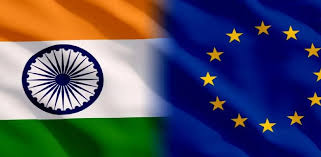
The India–EU Free Trade Agreement is a historic milestone in Prime Minister Narendra Modi’s economic diplomacy. It will generate millions of jobs, create vast opportunities for India’s youth and farmers, and create wealth for nearly 2 billion people who together account for a quarter of the global economy.
The agreement between the world’s second- and fourth-largest economies is among the biggest trade deals ever signed. In fact, it is far more than a trade deal. It represents a comprehensive partnership that fosters cooperation in critical sectors such as artificial intelligence, defence, and semiconductors. The FTA will benefit every region and citizen of India, particularly the poorer sections.
The FTA ensures rules-based trade and stability in economic policies, making India even more attractive for domestic and foreign investment. This will create numerous opportunities for small businesses, startups, and workers.
The world has applauded PM Modi’s announcement, calling it the “mother of all deals”. It reinforces stability at a time of global uncertainty. The agreement positions India and the European Union as trusted partners committed to open markets, predictability, and inclusive growth.
India has secured unprecedented market access for more than 99 per cent of its exports to the EU by trade value, strongly bolstering the Make in India initiative. The FTA gives a decisive boost to labour-intensive sectors such as textiles, apparel, leather, footwear, marine products, gems and jewellery, handicrafts, engineering goods, and automobiles.
It will eliminate tariffs of up to 10 per cent on nearly $33 billion worth of Indian exports. The agreement also empowers workers, artisans, women, youth, and MSMEs, while integrating Indian businesses more deeply into global value chains and reinforcing India’s role as a key supplier in global trade.
The deal also eases mobility for businesspersons and professionals and opens new opportunities in services such as education, information technology, financial services, and computers. These commitments unlock high-value employment opportunities and further strengthen India’s position as a global hub for talent, innovation, and sustainable economic growth.
Trade agreements are part of the Modi government’s broader strategy to improve the lives of the poor — first by strengthening the economy through path-breaking reforms and prudent fiscal management, and then by negotiating with developed and complementary economies with the objective of a win-win deal. This approach enables India to leverage its comparative advantages access markets which are key for growing its labour-intensive sectors while safeguarding sensitive sectors such as agriculture and dairy.
Trade agreements with developed countries expose Indian industry to healthy competition and provide consumers with world-class products. Unlike the UPA, which recklessly opened India’s markets, the Modi government has negotiated agreements in which tariff reductions are gradual, giving industry adequate time to improve competitiveness and quality with appropriate policy support.
The supply of high-quality products at competitive prices is central to the PM’s Viksit Bharat 2047 vision. Reiterating this commitment last week, the Prime Minister said: “Come, let us prioritise quality with all our might this year. Let our only mantra be quality, quality, and only quality. Better quality today than yesterday. Let us resolve to improve the quality of whatever we manufacture.”
The India–EU FTA is fully aligned with PM Modi’s vision of making India a developed country. It positions India as a dynamic, trusted, and forward-looking partner on the global stage, laying the foundation for inclusive, resilient, and future-ready growth for both regions. The Modi government has concluded trade agreements only with developed countries, which do not compete with India’s major job-creating sectors such as textiles, footwear, gems and jewellery, and handicrafts. This stands in sharp contrast to the UPA regime, which rushed into agreements with competing economies and often conceded far more than India gained.
Moreover, there is no evidence that the UPA government conducted meaningful consultations with stakeholders before signing trade agreements. In contrast, the Modi government has signed FTAs only after rigorous consultations with economists, industry bodies, experts, and multiple government departments and ministries. As a result, every FTA signed by the Modi government has received widespread appreciation from industry. Every FTA concluded by the Modi government has created new opportunities for both sides and expanded global opportunities for India’s labour-intensive sectors. These agreements have accelerated India’s journey towards becoming a developed country by 2047.
During the UPA’s tenure, developed countries, including the European Union, had lost interest in India as economic growth slowed, inflation remained high, and business sentiment was pessimistic. India lost valuable opportunities to conclude win-win trade deals that could have accelerated growth and generated employment.
The India–EU FTA, along with other trade agreements concluded by the Modi government, underlines the difference between drift and decisive leadership. While earlier regimes hesitated and compromised, the Modi government has delivered a transformative agreement that expands markets, creates jobs, and protects India’s core interests. It is a clear demonstration of how strong leadership and strategic clarity can unlock new opportunities which can propel the nation on the path of prosperity.
Courtesy PIB, Srinagar
(The author is Union Minister for Commerce and Industry)