United Nations: India is projected to grow at 6.6 per cent in 2026, registering an “exceptionally high growth in a challenging global environment”, with resilient private consumption and strong public investment largely offsetting the impact of high US tariffs, the United Nations has said.
The World Economic Situation and Prospects 2026 report released on Thursday by the UN Department of Economic and Social Affairs said that economic growth in India is projected to “moderate” from an estimated 7.4 per cent in 2025 to 6.6 per cent this year. India will remain the world’s fastest major economy, it said.
“Resilient private consumption, strong public investment, recent tax reforms, and lower interest rates are expected to support near-term growth. However, higher US tariffs could weigh on export performance in 2026 if current rates persist, as the US market accounts for about 18 per cent of total exports from India,” the report said.
It added that while tariffs may adversely affect some product categories, key exports such as electronics and smartphones are expected to remain exempt.
“Moreover, strong demand from other major markets, including Europe and the Middle East, is projected to partially offset the impact,” it said, adding that on the supply side, continued expansion in manufacturing and services sectors will remain a key driver of growth throughout the forecast period.
The report stressed that India’s growth will be supported by resilient consumption and strong public investment, which “should largely offset the adverse impact of higher US tariffs”.
“Recent tax reforms and monetary easing should provide additional near-term support,” it added.
Ingo Pitterle, Senior Economist and Officer-in-Charge, Global Economic Monitoring Branch, Economic Analysis and Policy Division, UN DESA, told reporters at a briefing here that South Asia will remain the world’s fastest growing region expanding by 5.6 per cent and much of this growth “comes from India where robust domestic demand, easing inflation supported by a strong harvest and continued policy support are driving growth”.
On the macroeconomic situation in India, Pitterle said the agency has “significantly upgraded” its 2025 and 2026 GDP forecast for the country, reflecting an “exceptional combination of factors which have all worked in the direction of stronger growth in India, of a very dynamic economy”.
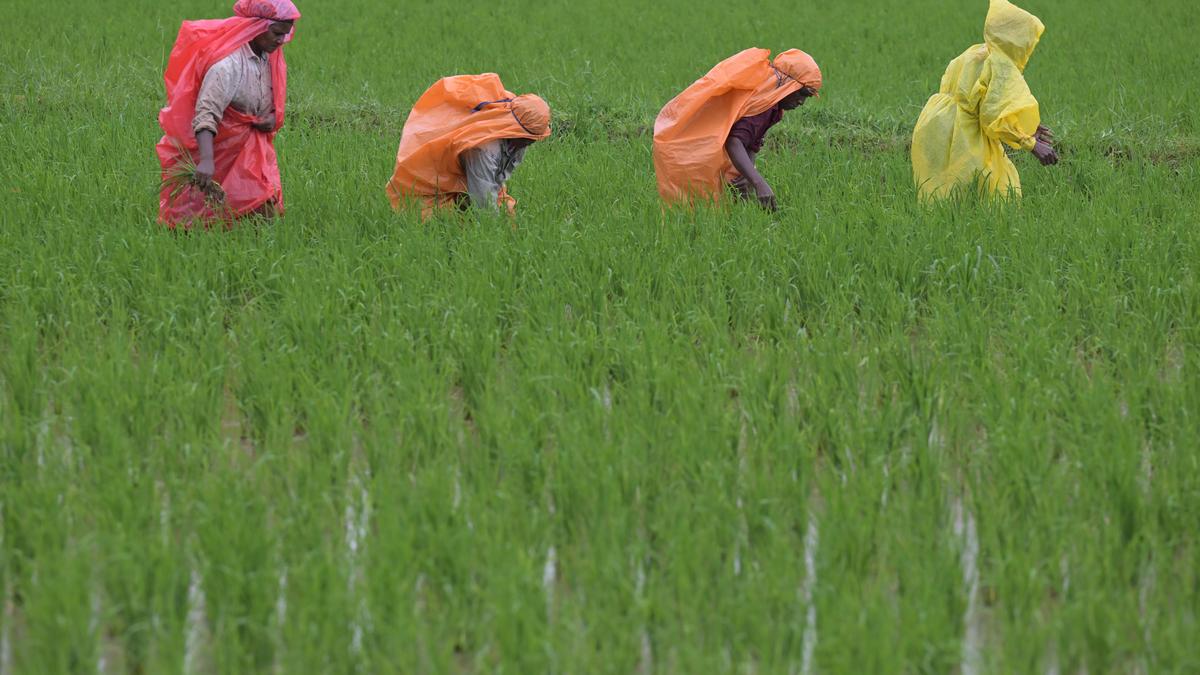
He pointed to the strong consumer demand, public investment and falling inflation in India, partly due to a very abundant harvest.
The Reserve Bank of India could also lower interest rates and provide a monetary impulse.
“So we had monetary impulse, we had a positive fiscal impulse to investment and we had positive impact on GDP from the agricultural sector on top of all the other strong growth drivers India was having. That’s why we’re seeing exceptionally high growth even in a context of a relatively challenging global environment,” Pitterle said.
Director, Economic Analysis and Policy Division, UN DESA Shantanu Mukherjee added that there has been diversification of India’s export markets to the European Union and the Middle East.
Reiterating that “domestic drivers of growth have been exceptionally strong” in India, Mukherjee said that one of the strongest exports from India at this point in time is services exports.
“This has remained resilient even if merchandise exports have been affected by tariffs. Perhaps one way for India to continue to take advantage” as AI is involved, is to “further strengthen its services exports and rely on its skilled manpower to develop some of the applications that will take AI into a productivity boosting factor beyond where it is right now”.
In India, consumer price inflation fell more than expected, averaging three per cent in the first nine months of the year amid favourable base effects and lower food prices. Inflation is forecast at 4.1 per cent, close to the central bank’s midpoint target.
India also recorded strong growth in gross fixed capital formation, led by higher public spending on physical and digital infrastructure, defence and renewable energy.
In India, employment indicators remained broadly stable in 2025. The unemployment rate stood at 5.2 per cent in October 2025, compared with 4.9 per cent in 2024, while the labour force participation rate edged up in both rural and urban areas during the second half of the year.
The Indian rupee stabilised against the US dollar in the first half of the year, supported by broad dollar weakness. However, in the second half, the Indian rupee edged lower following stronger-than-expected growth in the US and ongoing trade negotiations.
Portfolio outflows and higher US tariffs added to depreciation pressures on the Indian rupee.
Nonetheless, robust economic performance in India is expected to provide support for the country’s currency in the near term, it said.
The report highlighted that developments in India and Brazil illustrate how industrial policies that address structural supply constraints can mitigate inflationary pressures.
In India, programmes to expand the domestic production of edible oils and pulses, modernise fertilizer and storage infrastructure, and improve logistics — even if conceived mainly to boost rural incomes and food security — have reduced dependence on imports and exposure to global shocks.
The report said that global economic growth, estimated at 2.8 per cent for 2025, is forecast to decline slightly to 2.7 per cent in 2026 before edging up to 2.9 per cent in 2027—remaining well below the pre-pandemic (2010–2019) average of 3.2 per cent.
Growth in Europe, Japan, and the US is projected to hold broadly steady but proceed at a moderate pace, with monetary or fiscal support continuing to underpin demand.
Several large developing economies, including China, India and Indonesia, are expected to continue experiencing solid growth driven by resilient domestic demand or targeted policy measures.
It noted that the value of countries’ merchandise exports to the US also changed. A sharp decline in shipments from China — particularly of electronic goods such as laptops and smartphones — was offset by increased imports from Vietnam and other Association of Southeast Asian Nations (ASEAN) economies.
“India has also strengthened its position within global electronics supply chains,” it said.