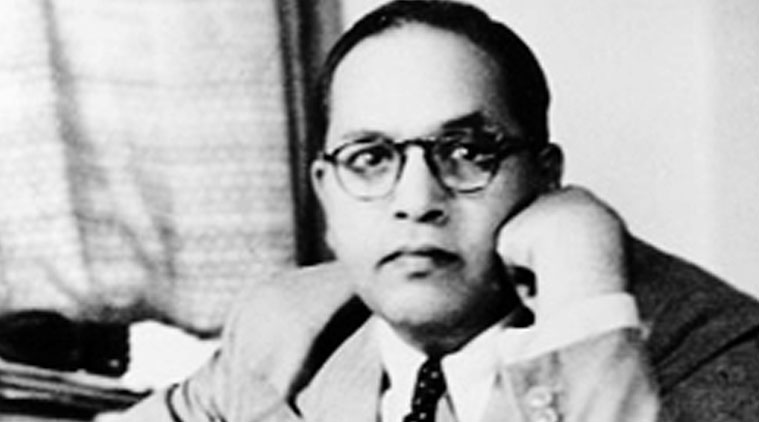
It is the sun that puts brightness into the moon- This simple yet profound observation becomes an illuminating metaphor when placed in a philosophical context. Just as the sun lends its radiance to the moon, truth bestows clarity upon human understanding. Plato, in The Republic, identifies the Form of the Good as the highest and most fundamental reality—an ultimate principle that illuminates the intelligible realm, allowing us to know anything at all. Without this metaphysical “sun,” human perception remains confined to shadows, illusions, and fragmented impressions.
Plato’s allegory of the cave reminds us that to remain a prisoner of one’s own ignorance is to accept distorted shadows as reality. The cave-dwellers who stare at the wall see only silhouettes—mere appearances. They are “blissful in their ignorance,” mistakenly believing they possess knowledge. But as Plato insists, enlightenment requires the courage to turn one’s gaze toward the source of truth itself. The journey upward, though painful, is the only path to genuine understanding. To “be true like the sun” is to stand firm in authenticity and clarity, even when others may prefer the comfort of darkness.
Aristotle deepens this insight by linking knowledge to purposeful action. For him, the ultimate human goal—eudaimonia or flourishing—arises through the proper cultivation of virtue and reason. If Plato’s sun reveals reality, Aristotle’s practical wisdom (phronesis) teaches us how to act in accordance with that truth. Human beings, as rational and social animals, carry responsibilities toward one another. Our moral life is never isolated; it is woven into the fabric of the polis, the community. Thus, our role in society echoes the sun’s function in the cosmos: to illuminate, to guide, and to sustain life. One does not shine for oneself alone, but for the entire shared human world.
Modern philosophers have also grappled with the foundations of understanding. Ludwig Wittgenstein, for instance, famously remarked, “The limits of my language mean the limits of my world.” While Plato speaks of metaphysical illumination, Wittgenstein directs our attention to linguistic clarity. We do not merely discover meaning; we make it intelligible through the forms of language we inhabit. Shadows in the cave persist not only because people refuse truth but because language itself can mislead, trap, or confuse us. For Wittgenstein, clarity is a moral and intellectual achievement: “What can be said at all can be said clearly; and what we cannot speak about, we must pass over in silence.” To live truthfully is, therefore, also to speak truthfully. The sun of understanding does not only illuminate the world—it illuminates our words, thoughts, and gestures.
Gottlob Frege, another pillar of modern Western philosophy, expands this reflection by emphasizing the distinction between sense and reference. Understanding a statement involves grasping both its meaning and the object it refers to. In many ways, Frege’s theory echoes Plato’s insight about mistaking shadows for reality. Much human confusion arises when we cling to the “sense” or appearance of things without grasping their true nature, their “reference.” Frege teaches us that precision in thought is a moral duty, especially in a world that increasingly demands intellectual responsibility. Our conceptual clarity becomes part of our ethical life: to think carefully is to respect the world and others.
Bertrand Russell, bridging logical analysis with moral concern, warns against the dangers of intellectual complacency. According to Russell, philosophy aims to free the mind from “the tyranny of custom.” Like Plato’s liberated prisoner, the philosopher must challenge assumptions, question inherited beliefs, and refuse easy answers. Russell’s commitment to clarity, skepticism, and the pursuit of truth is a modern rearticulation of the ancient call to step out of the cave. His famous line—“To be without some of the things you want is an indispensable part of happiness”—also hints that truth often requires sacrifice. The light may dazzle, but it also transforms.
Human beings today often fall prey to what may be called “linear intellectualism”—the belief that reason must operate in rigid, narrow sequences. But the universe, from its physical structure to its moral complexity, rarely conforms to linear patterns. Thought, like light, spreads, refracts, and reveals. Our intellectual constructs help us navigate the world, but they are not the world itself. The sun shines not in straight lines but in boundless radiance, touching what lies open to receive it. Likewise, the intellect must remain flexible, expanding, and humble in the face of reality’s vastness.
To be “true like the sun” is to embody sincerity, transparency, and constancy. It means radiating honesty even when dishonesty seems easier, giving warmth even when the world grows cold, and shining with moral courage even when others prefer shadows. Truth, in this vision, is not merely an abstract ideal but a lived virtue—a way of being. The sun does not calculate whether to shine; it shines because that is its nature. In the same way, human beings—when anchored in truth—naturally illuminate the lives around them.
Our responsibilities toward one another arise from the simple recognition of shared human experience. Just as the sun nourishes all life indiscriminately, we too must cultivate a moral outlook that transcends narrow self-interest. Aristotle’s ethics, Russell’s rationalism, Plato’s metaphysics, Wittgenstein’s linguistic clarity, and Frege’s logical precision all converge on one fundamental principle: to live truthfully is to live responsibly.
In a world filled with shadows—misinformation, prejudice, false appearances, and self-deception—the need for luminous authenticity becomes ever more urgent. The sun does not merely brighten the sky; it orders the entire cosmos. Truth does not merely inform our thoughts; it shapes our very existence. To embrace truth is to embrace our highest calling as human beings.
Let us, then, strive neither to remain in the comfort of the cave nor to retreat into narrow intellectual constructs. Instead, let us walk courageously toward the light, carry its warmth to others, and shine with the constancy of a moral sun. For in illuminating the world around us, we also illuminate the depths within ourselves.
javidqureshi139@gmail.com