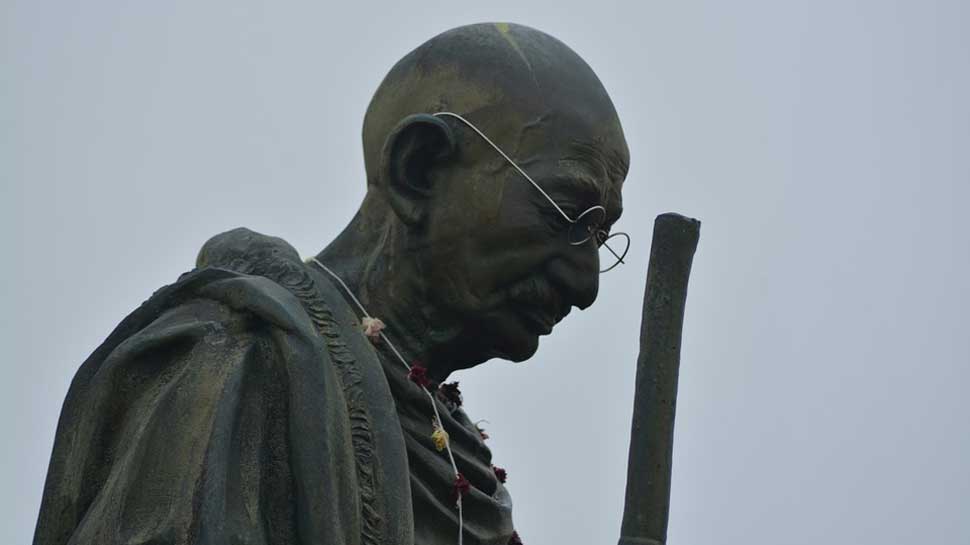
In the annals of global resistance, few figures command the reverence accorded to Mahatma Gandhi. His philosophy of nonviolence, rooted in spiritual conviction, has inspired generations across continents and creeds. Among those deeply moved by Gandhi’s ethical stance was Shaheed Murtaza Mutahhari, the Iranian philosopher, cleric, and martyr of the Islamic Revolution. Though separated by geography and tradition, Mutahhari saw in Gandhi a kindred spirit—one who embodied the moral courage and spiritual depth that he believed were essential to true social transformation.
The Spiritual Grammar of Resistance
Mutahhari’s admiration for Gandhi was not based on political success alone. He saw Gandhi as a man who “revived religious ethics in politics,” a rare feat in an age increasingly dominated by secular ideologies. Gandhi’s insistence on Satyagraha—the force of truth—and Ahimsa—nonviolence—resonated with Mutahhari’s own Islamic worldview, which emphasized Tazkiyah (self-purification), Adl (justice), and Sabr (patience) as prerequisites for meaningful change.
In one of his lectures, Mutahhari remarked, “The greatness of a leader is not in his ability to command armies, but in his ability to awaken the conscience of a people.” Gandhi, he believed, had done precisely that. His moral appeal, rather than coercion, had galvanized millions. This, to Mutahhari, was reminiscent of the prophetic tradition in Islam, where reform begins with the soul and radiates outward into society.
Gandhi and the Islamic Ethos
Mutahhari’s reflections on Gandhi were part of a broader critique of Western materialism. He lamented the loss of spiritual values in modern political movements and found in Gandhi a counter-example—a leader who fused religious conviction with social activism. “Gandhi’s politics,” Mutahhari noted, “were not divorced from his prayers. His fasts were not mere rituals but acts of resistance.”
This synthesis of faith and action reminded Mutahhari of Islamic reformers like Imam Hussain, whose stand at Karbala was both a spiritual and political act. Just as Hussain refused to bow before tyranny, Gandhi refused to compromise on truth. Both, in Mutahhari’s eyes, were martyrs of conscience.
The Pakistani philosopher Muhammad Iqbal, too, had recognized Gandhi’s spiritual stature, writing, “Though not a Muslim, Gandhi’s heart beats with the rhythm of divine truth.” Mutahhari echoed this sentiment, arguing that ethical resistance transcends religious boundaries when rooted in universal values.
Gandhi in Mutahhari’s Writings
While Mutahhari did not devote entire treatises to Gandhi, his references are telling. In his essays on ethics and revolution, Gandhi appears as a model of principled leadership. In contrast to secular revolutionaries who, in Mutahhari’s words, “sought change without inner reform,” Gandhi insisted on the transformation of the self as the foundation of societal change.
In his critique of Marxism, Mutahhari warned against revolutions that ignore the soul. “A revolution that does not begin with the purification of intention,” he wrote, “will end in tyranny.” Gandhi’s life, marked by simplicity, prayer, and sacrifice, offered a living rebuttal to such failures.
The Iranian thinker Ali Shariati, a contemporary of Mutahhari, also admired Gandhi’s spiritual politics. Shariati wrote, “Gandhi taught us that the path to justice is not paved with hatred but with love and suffering.” Mutahhari, who shared Shariati’s concern for ethical revolution, found in Gandhi a beacon of hope.
Lessons for Our Time
In today’s world, where political discourse is often marred by cynicism and violence, Mutahhari’s reflections on Gandhi offer a timely reminder. They urge us to reconsider the role of ethics in public life and to seek leaders who, like Gandhi, embody humility, integrity, and spiritual depth.
Gandhi’s relevance, Mutahhari believed, lay not in his nationality or religion but in his universal message. “He was,” Mutahhari said, “a man who walked barefoot into the heart of history, armed only with truth.” That image—of a frail figure confronting empires—continues to inspire those who believe that moral force can triumph over brute power.
As we commemorate Gandhi’s legacy, it is worth revisiting Mutahhari’s insights. They remind us that true resistance is not merely political but profoundly spiritual. It begins with the courage to speak truth, the discipline to live it, and the compassion to extend it to others.
In the words of Rabindranath Tagore, “Gandhi has become the voice of the ancient soul of India.” And in Mutahhari’s vision, that voice echoes across faiths and frontiers, calling us to a higher path.
The writer is a columnist from sonawari bandipora and can be reached at azaadbhat28@gmail.com.