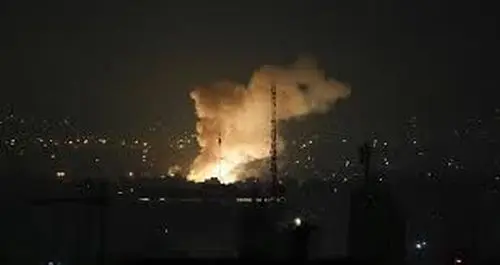
After the October 1 missile attack by Iran, Israel had “promised” a retaliatory strike, asserting that this would be “deadly, painful, and surprising” for the Islamic Republic of Iran. However, despite the rhetoric, Israel is yet to carry out its promised retaliation, raising questions whether Israel has the capability or resolve to carry out such an act of war against a powerful country like Iran which is suspected to possess a nuclear arsenal.
Maybe the Israelis are still mulling over the “perfect” method of attack on Iran, as Israel wants the attack to be “extremely disastrous” to send a message to the entire world, or maybe it is being cajoled by its biggest ally and patron – the US, not do so. Further, for any such move, the biggest challenge Israel is facing is an Iranian “invisible wall”, which is its strong air defence system.
United States, Israel’s staunch ally, has voiced concerned while Arab nations, many of whom have good relations with the Jewish nation, have openly stated they will not allow their air or land to be used to carry out an attack against Iran. President Joe Biden told reporters on October 9, that the US would not support Israeli attacks on Iran’s nuclear sites.
Further, as of now, Israel is fighting a bloody war on several fronts in the middle-east, including in Gaza, Yemen, Syria, and Lebanon, and it has witnessed its allies backing away from its plans, as it is widely believed that an Israel-Iran conflict would result into a full-blown war in the entire region and might possibly be the trigger of World War 3.
Moreover, to avenge the Iranian attack, Israel has two options, either to attack Iran’s nuclear plants or Iranian oil installations. If Israel retaliates, Iran’s military bases, its air defence systems and missile launch capabilities will be the primary target. However, even if Israel’s fighter jets manage to penetrate the Iranian air space and disable its missile capabilities for a short while, its biggest spectre, Iran’s nuclear capabilities will still remain unscathed.
In fact, Iran has prepared a strong air defence system to protect its important military and nuclear sites. This includes modern systems like Russian-made S-300, SA-22 and indigenous Khordad 15 and Bavar 373 systems. With the help of these air defence systems, Iran’s airspace is considered extremely safe, which makes air attacks challenging for Israel.
The most important system in Iran’s air defence system is the S-300 received from Russia. This system is capable of targeting fighter planes from 100 miles (160 km) away. And it could fire dozens of missiles at multiple targets simultaneously, five times faster than the speed of sound.
Due to this Iranian capability, it may prove difficult for Israeli fighter jets to dodge it. However, if Israel knows the exact location of these systems, its fighter jets can attack while staying out of the S-300’s range.
Apart from this, the high mobility of the SA-22 system makes it even more dangerous. This system is mounted on trucks, making it easy to be deployed anywhere, easily. It has the capability to shoot down planes flying at a height of 40 thousand feet. Additionally, Iran also has advanced systems like Khordad 15 and Bavar 373 which are based on the old Soviet SA-6 system. All these systems together make Iran’s airspace more secure.
Israel has state-of-the-art stealth fighter jets like the F-35, which may be able to evade Iran’s radar system. However, as these aircraft fly with larger bombs, their structure changes and they can be detected on radars. This also increases the challenge for Israeli pilots.
Further, Israel, despite the US asking it not to, may decide to strike Iran’s nuclear facilities. However, according to experts, over 90 percent of these facilities are located deep underground, making it impossible for an Israeli airstrike to penetrate them, even with the bunker buster bombs which they used to assassinate Hezbollah chief Hassan Nasrallah.
Another challenge for Israel is the distance. Israel is over a thousand miles (more than 1,600 kilometres) away from Iran’s primary nuclear facilities. To reach these sites, Israeli planes would need to fly through the airspace of several countries, including Saudi Arabia, Jordan, Iraq, Syria, and possibly Turkey. Most of these countries have already refused any cooperation with Israel on this issue.
Another challenge is fuel. According to a report from the US Congressional Research Service, a round trip to the targets would consume all of Israel’s aerial refuelling resources, leaving little to no room for mistakes. And further, this would necessitate a strike group of around 100 aircraft, which is nearly one-third of Israel’s 340 combat-ready planes.
Also, Israel faces a major challenge in dismantling or destroying Iran’s two primary nuclear enrichment sites. Iran’s major fuel-enrichment facility at Natanz is buried deep underground, while the second-largest site at Fordow is built into a mountain. Destroying them would require weapons capable of penetrating several metres of rock and reinforced concrete before exploding.
Israel used bunker-buster bombs, including 2,000lb GBU-31 bombs, which its air force dropped on four buildings in Beirut on September 27, killing Hezbollah chief Hassan Nasrallah.
However, Israeli reports indicated that 80 bombs were used in that strike, and it is doubtful that a similar attack would be enough to destroy Iran’s more heavily fortified nuclear sites.
Experts believe that the only conventional weapon likely capable of doing the job is the GBU-57A/B Massive Ordnance Penetrator (MOP), as reported by the Financial Times, from a B-2 bomber through a joint Israeli-US attack. But the moot question is whether the US would be ready to be involved directly in launching an attack on Iran? As the move would have serious repercussions for the regional and global geopolitics.
In view of these logistical obstacles, the only option available to Israel to retaliate and save its pride might be to launch a series of covert operations against the top Iranian leadership, just like the attacks on Qasem Soleimani and Hassan Nasrallah.
(Asad Mirza is a New Delhi-based senior commentator on international and strategic affairs, environmental issues, an interfaith practitioner, and a media consultant.)