Sydney: The past century of human-induced warming has increased rainfall variability over 75% of the Earth’s land area – particularly over Australia, Europe and eastern North America, new research shows.
The findings, by Chinese researchers and the UK Met Office, were published overnight in the journal Science. They provide the first systematic observational evidence that climate change is making global rainfall patterns more volatile.
Climate models had predicted this variability would worsen under climate change. But these new findings show rainfall variability has already worsened over the past 100 years – especially in Australia.
Past studies of the observational record either focused on long-term average rain, which is not systematically changing globally, or rainfall extremes where changes are hard to measure accurately. This study looks solely at variability, which refers to uneven timing and amount of rainfall.
The results are consistent with previous research, including ours. This means dry periods are drier than in the past, and rainy periods are wetter.
Alarmingly, the problem will worsen as global warming continues. This raises the risk of droughts and floods – a pertinent issue for Australia.
What the study found
The research shows a systematic increase in rainfall variability since the 1900s. Day-to-day rainfall variability increased by 1.2% per decade, globally. The trend was more pronounced in the latter half of the century, after 1950.
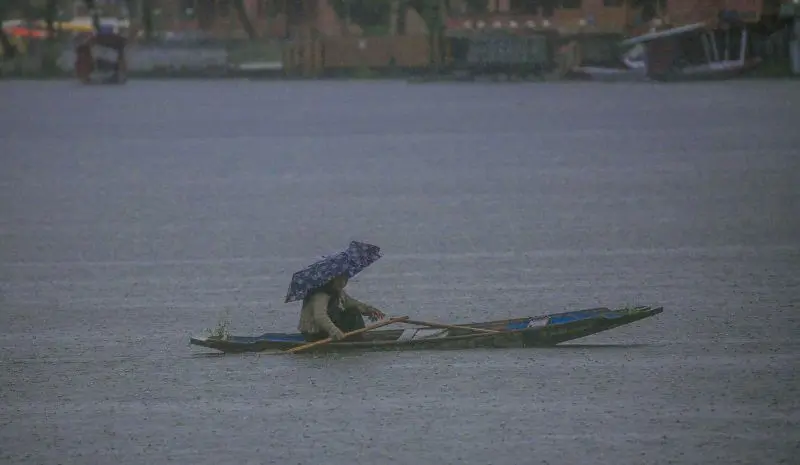
The increase in variability means rain is more unevenly distributed over time. It might mean a year’s worth of rain at a given location now falls in fewer days. It can also mean long, dry periods are interspersed by torrential downpours, or drought and flooding in quick succession.
The researchers examined observational data and found since the 1900s, rainfall variability has increased over 75% of the land areas studied. Europe, Australia and eastern North America were particularly affected. These are areas for which detailed and long-running observations are available.
In other regions, the long-term trend in rainfall variability was less prominent. The authors said that may be due to random changes in variability, or errors in the datasets.
The increase in daily rainfall variability occurred in all four seasons worldwide, although seasonal differences emerged at smaller, regional scales.
The authors say the increase is largely the result of human-caused greenhouse gas emissions, which have created a hotter and more humid atmosphere, more intense rain events and greater swings between them.
They say the findings pose new challenges for weather and climate predictions, as well as for resilience and adaptation by societies and ecosystems.
How global warming affects rainfall
To come to grips with these findings, it helps to understand the factors that determine how much heavy rain a storm produces – and how these factors are being affected by global warming.
The first factor is how much water vapour is present in the air. Warm air can contain more moisture. Every degree of global warming creates a 7% increase in the average amount of water vapour over a given patch of the surface.
Scientists have known about this problem for a long time. Earth has warmed 1.5°C since the industrial revolution – equating to a 10% increase in water vapour in the lower atmosphere. So this is driving storms to become rainier.
Second is how strong the storm winds can get, and third is how easily large raindrops form from smaller cloud particles. More research is needed to understand how these factors are affected by climate change, but the current evidence is that together they further amplify increases in rainfall over short time intervals and for very extreme storms, while reducing the increases for weaker storms.
How does this fit in with Australian research?
The findings released overnight confirm research by us and others into rainfall variability in Australia.
Analysis of daily extreme rainfall totals across Australia in present and future simulations revealed future increases were likely to exceed expectations from many past studies. Rainfall is likely to increase more sharply in the most extreme events, and appears to do this nearly everywhere on the continent.
In 2022, we looked at rainfall hour-by-hour in Sydney using radar data. We found the maximum hourly rainfall increased by 40% in Sydney over the past two decades.
Our findings have major implications for Sydney’s preparedness for flash flooding. More intense downpours are likely to overwhelm stormwater systems designed for past conditions. But it is not clear how much of this remarkable regional increase in severe rains is due to climate change, or how widespread it is.
Increasing variability also means a greater risk of drought. Climate models suggest rainfall variability in many parts of Australia will keep increasing, unless greenhouse gas emissions are rapidly reduced.
A change in only a handful of heavy rainfall days can make or break a drought in Australia. This means even small changes in variability can bring more devastating droughts in the future as dry periods become drier.
Heeding the warning
Policymakers can often be overly focused on whether their part of the world is becoming wetter or drier overall. But as this new research shows, it’s variability they should be worried about.
This volatility might come in the form of worse droughts. Or it might mean much bigger increases in extreme rainfall and flooding.
The variability will challenge governments and communities in many ways, from managing scarce water resources to coping with natural disasters. We should start preparing for these future challenges now.
And as this dire global problem worsens, the need to reduce greenhouse gas emissions and limit global warming, becomes ever more pressing.
(The Conversation)