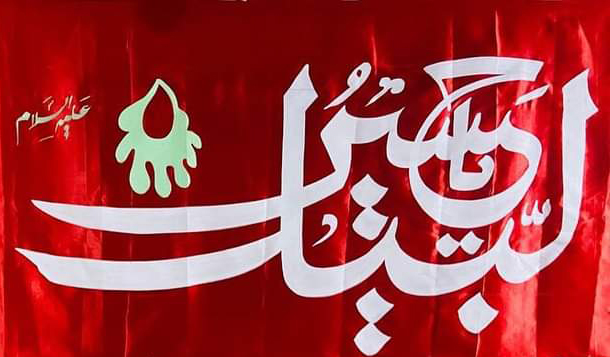
 Calligraphy, often referred to as the “noblest of the arts,” holds immense historical significance in Islamic culture. It is not only a form of artistic expression but also a means of preserving and presenting religious texts. In the context of Muharram, the first month of the Islamic calendar and a period of mourning for Shia Muslims, calligraphy plays a crucial role in conveying the messages of remembrance, devotion, and spirituality. This article explores the rich history and importance of calligraphy in Muharram, shedding light on its various forms and the impact it has on the commemoration of this sacred month.
The art of calligraphy has a long and intricate history, with its roots deeply embedded in ancient China and Islamic culture. In ancient China, calligraphy evolved during the Shang dynasty and became more prevalent during the Han dynasty. The term “calligraphy” itself derives from the Greek words kallos, meaning “beautiful,” and graphia, meaning “writing.” This art form gradually spread across the Islamic world, gaining prominence for its ability to beautifully capture the written word.
Calligraphers are deeply respected for their ability to infuse meaning and spirituality into their work, serving as a bridge between the divine word and the human eye. One of the remarkable aspects of Islamic calligraphy is its adaptability. While some calligraphic art might not prioritize readability, Islamic calligraphy, especially when portraying Quranic words and ayahs, demands the utmost care to maintain legibility without compromising on elegance. The graceful strokes and precise lettering exhibit a balance between artistic expression and the reverence for sacred words.
Beyond the traditional use of black ink on white surfaces, Islamic calligraphy flourishes with artistic exploration. Calligraphers employ vibrant colors and intricate background patterns, adding depth and vitality to the words. In some instances, they embellish texts with a combination of various sizes, colors, and styles, and on special occasions, words are even engraved or written in gold, symbolizing the profound spiritual significance of the content. As Islamic calligraphy expanded its reach across the globe, it intermingled with other styles of text writing, giving birth to an innovative form known as calligraffiti. This fusion art form combines the timeless elegance of calligraphy with the modernity and boldness of graffiti, allowing for politico-social messages to be conveyed through public art or to embellish public spaces and buildings.
Notable Islamic calligraffiti artists like Yazan Halwani in Lebanon, el Seed working in France and Tunisia, and Caiand A1one in Tehran have played pivotal roles in popularizing this artistic movement. Their works transcend geographical boundaries, creating a universal appeal that bridges cultures and promotes understanding.
The Evolution of Calligraphic Styles
Calligraphy holds a significant place in Islamic art, serving as a visual representation of the divine. Islamic calligraphy developed as a means to preserve and present the words of the Qur’an, the holy book of Islam. The Arabic script, with its intricate and flowing lines, became the foundation for various calligraphic styles.
Over time, Islamic calligraphy diversified into several distinct styles, each with its own unique characteristics and historical significance:
Kufic: The earliest formal calligraphic style, Kufic is known for its angular and geometric script. It was widely used for Qur’anic manuscripts and inscriptions on buildings, showcasing a sense of grandeur and permanence.
Naskh: A more rounded and fluid script, Naskh replaced Kufic as the standard script for Qur’anic manuscripts. Its readability and elegance made it more accessible to a wider audience.
Thuluth: Thuluth is a highly ornate and decorative script characterized by elongated vertical strokes and curved lines. It was commonly used for inscriptions on monuments and architectural decorations, adding a touch of splendor to sacred spaces.
Diwani: Developed during the Ottoman Empire, Diwani is a highly stylized script known for its intricate ligatures and close arrangement of letters. It was primarily used for official documents and royal decrees, reflecting the opulence and authority of the empire.
In Islamic art, calligraphy goes beyond its functional role as a means of transmitting text. It is regarded as a form of artistic expression and a way to connect with the divine. Calligraphic compositions, whether linear arrangements or complex geometric patterns, transform words and phrases into beautiful works of art. These compositions often incorporate verses from the Qur’an, the names of Allah, and phrases with spiritual significance. The artistry and skill required to create these calligraphic works are highly regarded, and master calligraphers are held in great esteem.
Muharram holds deep significance for Shia Muslims, as it commemorates the martyrdom of Imam Hussain, the grandson of Prophet Muhammad. During this month, calligraphy plays a pivotal role in expressing grief, remembrance, and devotion to Imam Hussein and the tragedy of Karbala.
Mourning gatherings, known as Majalis, are organized during Muharram to remember the sacrifices made by Imam Hussein and his companions. Calligraphy is often incorporated into the banners, backdrops, and posters displayed during these gatherings, creating a visually impactful setting. The names of Imam Hussein, his family members, and other revered figures are written in elaborate calligraphic styles, emphasizing their significance, and inviting reflection and reverence.
Processions, known as Muharram processions or Azadari processions, are an integral part of Muharram observances. These processions involve participants marching through the streets, carrying banners and flags adorned with calligraphic inscriptions. The calligraphy used in these processions often includes verses from the Qur’an and phrases expressing devotion and mourning.
Taziyah, or the reenactment of the events of Karbala, is a significant element of Muharram rituals. Calligraphy is intricately woven into the Taziyah structures, which are symbolic representations of the mausoleums of Imam Hussein and his companions. These structures often feature calligraphic inscriptions of religious verses, names, and phrases related to the tragedy of Karbala, creating a profound visual impact.
During Muharram processions one can see huge black banners displayed around with text written on them, and kids carrying black flags with written messages and slogans. There is a display of calligraphy to commence an emotional religious event. Written in varied styles and fonts the messages are informative as well as sympathetic mostly to invoke a sense of gratitude. The major procession is held on the 10th of Muharram or YoumAshoora commemorating martyrdom of Imam Hussain (AS) and his family. In Kashmir However major mourning processions were banned by the Government of Jammu and Kashmir since the 1990s, small processions are however held in some parts, including in the districts of Baramulla, Kulgam, Leh and Kargil.