

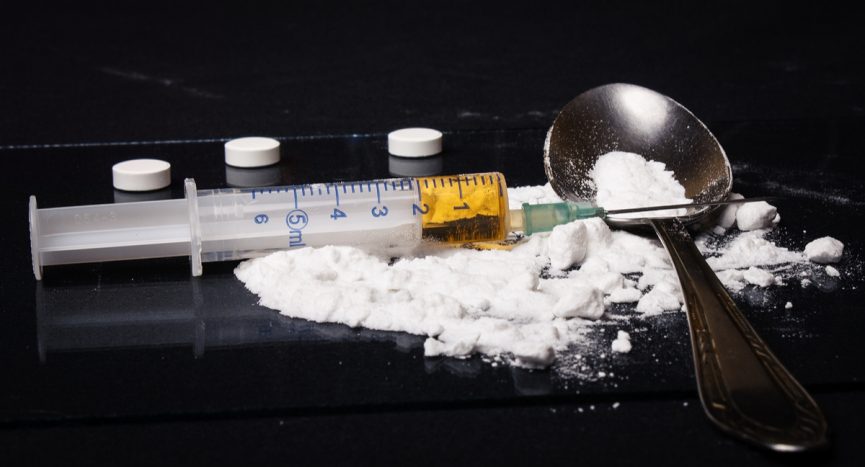

The ‘Magnitude of Substance Use in India’ Report, was released in 2019 by the Ministry of Social Justice and Empowerment (MoSJE) and the National Drug Dependence Treatment Centre (NDDTC), AIIMS, Delhi that showed increasing trends of drug use in India. Several drugs have been a part of the tradition and continue to be so in some parts of the country, even today. However, the use of drugs has spread beyond traditional use and is surfacing as an issue of abuse among youth. As per medical research, it is accepted that drug addiction or substance use disorder is a chronic, relapsing health condition caused by a multitude of genetic, biological, environmental and lifestyle-related factors and can be cured by a combination of approaches such as counselling, lifestyle changes and medical treatment involving medicines. Therefore, responding to drug problems in any society requires an informed, multi-pronged strategy that simultaneously addresses the drug supply and reduction of drug demand.
On the occasion of International Day against Drug Abuse and Illicit Trafficking, the Hon’ble Prime Minister tweeted “I laud all those working at the grassroots to eliminate the menace of drugs from our society. Every such effort to save lives is vital. After all, drugs bring with it darkness, destruction and devastation”.
The government’s NCORD mechanism has assisted in addressing drug use on a greater level. Its direction and convergence have led to unified action by all agencies and stakeholders confronting substance use on a single platform.
On 15 August 2020, a community-driven mass movement campaign, Nasha Mukt Bharat Abhiyaan of the Ministry of Social Justice and Empowerment, was launched against substance use in 272 vulnerable districts of the country. As a second step of this mass movement, another 100 vulnerable districts were added to the list in 2022.
Since its inception, Nasha Mukt Bharat Abhiyaan has made enormous changes in drug demand reduction with the help of stakeholders who actively envision and work for better community outreach through advocacy-related activities. To date, more than 9.3 crore people have been sensitized on substance abuse, including more than 3 crore youth and more than 2 crore women; and more than 2.7 lakh educational institutions have participated in this mission.
The Nasha Mukt Bharat Abhiyaan, hand-holds women, children, educational institutions, and civil society organizations to lead and become the torchbearers in this course of action. The campaign has a strong force of more than 8000 master volunteers, who are trained and sensitized to deliver the message of adverse effects of using drugs, course of redressal and rehabilitation for those struggling with the substance in the most distant sectors. A range of events like marathons, folk musicals, local sports events, boat or cycle rallies and numerous other activities are organized to connect with the masses in regional languages and more culturally, engaging ways to create a more profound impact and eventually affect the demand for substances. It commits to partner with higher educational institutions, universities, campuses and schools in reaching out and identifying dependent populations; by focusing on counselling and providing treatment facilities in hospitals and rehabilitation centres along with capacity-building programmes for service providers, the campaign is an end to end resolution to the increasing trends in drug usage.
The National Action Plan for Drug Demand Reduction, the umbrella scheme of the Ministry of Social Justice and Empowerment, provides financial assistance to state governments, union territories, NGOs/ other voluntary organizations, districts and government hospitals for preventive education, awareness, rehabilitation treatment, to integrate those at the margins of the
society back into the mainstream and provide them substantial support to live a life of dignity. There are 341 Integrated Rehabilitation Centres for Addicts (IRCAs), 49 Community-based Peer-Led Intervention (CPLIs), 72 Outreach and Drop in Centres (ODICs), and 14 District De-Addiction Centres (DDACs) across the country, providing free-of-cost facilities to the people struggling with the menace of drugs. The idea is to offer a helping hand to those on the margins, help their families and social circles understand the challenges, and provide a positive space for them to thrive.
In this tally of progress, the Ministry of Social Justice and Empowerment is now ready to add 25 Addiction Treatment Facilities (ATFs) in collaboration with National Drug Dependence Treatment Centre (NDDTC) AIIMS, New Delhi.
Ministry dedicated 25 addiction treatment facilities to the nation, under the banner of the Ministry of Social Justice and Empowerment-led campaign, Nasha Mukt Bharat Abhiyaan. The 25 ATFs are located in government hospitals across the country and will be scaled-up further to cover most cities and districts in the country. The types of hospitals range from district hospitals in Simdega, Jharkhand or Azamgarh, Uttar Pradesh to larger academic institutions like Siddhartha Medical College, Vijayawada, Andhra
Pradesh or Sher-i-Kashmir Institute of Medical Sciences, Benmina, Kashmir.
These Addiction Treatment Facilities (ATFs) will be established in government hospitals across 125 districts and provide treatment to addiction patients as part of the general healthcare framework. The Ministry of Social Justice and Empowerment fully funds the scheme and supports the participating government hospitals in the provision of trained health professionals, free of cost, medicines, and sustainable infrastructure support services.
As the Minister of Home Affairs said in the Parliament, “Our government’s policy is very clear, those consuming drugs are victims. We should be sensitive towards them and give victims a conducive atmosphere for their rehabilitation.” The issue of substance use is a more significant social problem that cuts across sections of society across age groups, gender, communities and regions and affects families and the personal growth of individuals. It requires a multi-pronged strategy to simultaneously address the issue of demand for substances by providing opportunities for rehabilitation, dismantling the stigmas associated with those engaged and by effectively ingraining the idea of ‘no first touch of drugs’ among the youth. The campaign successfully draws on these ideas and seeks the support of the masses to come forward in attaining the goal of ‘Nasha Mukt Bharat’.
The writer is Hon’ble Minister of Social justice and Empowerment.
Courtesy:PIB




