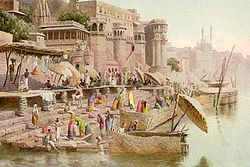
Kitsch” initially originated in the art markets of Munich during 1860s and the 1870s. The term was generally used to separate cheap, popular, and marketable pictures and sketches intended to please the viewer from actual serious art. What in other words can be defined as art or other objects intended to appeal popular rather than “high art” tastes. It was seen mostly as a derogatory term and to brand visual art as “kitsch” was generally considered pejorative as the term reducesthe importance of an art work to an object of a rather ornamental and decorative purpose
As initially a harsh and unfair approach to downgrade some art works kitsch later represented international movement of classical painters founded in 1998.The movement was based on the philosophy proposed by Odd Nerdrum, who declared himself a Kitsch Painter. The movement reframed the meaning of kitsch as synonymous with the art of the ancient Rome and Greek. Artists associated with kitsch movement embraced it as a positive term and incorporated the techniques of the Old Masters with narrative, romanticism, and emotionally charged imagery. They defended Kitsch for its independent superstructure, based on a strong philosophical background.
 The study of Kitsch remained limited until 1970s and Walter Benjamin was only recognized scholar in the field. Moreover, most of the studies on Kitsch studies were exclusively done in German. According to Walter Benjamin, kitsch is, unlike art, a utilitarian object lacking all critical distance between object and observer; it “offers instantaneous emotional gratification without intellectual effort, without the requirement of distance, without sublimation”.
Kitsch is generally an approach in art to present palatable, pleasant and romantic themes and visuals without any shock or disagreement for the common audience. It typically attempts to superficially applause the standards of beauty, neglecting any unattractive or controversial factors. According to Modernist writer Hermann Broch the essence of kitsch is imitation: he argues that Kitsch mimics its immediate predecessor with no regard to ethics—it aims to copy the beautiful, not the good.
Kitsch has also been defined as a thing observed than about the observer. According to Roger Scruton, “Kitsch is fake art, expressing fake emotions, whose purpose is to deceive the consumer into thinking he feels something deep and serious.”
Kitsch is regarded as a modern phenomenon and is the product of the industrial revolution. With the rise of the middle class, the demand for the mass-produced objects and reproductions of famous artworks increased. People were keen to buy objects and art works that matched with their sensibility. As Kitsch typically employs entertaining and enjoyable subjects which are easily recognizable without much concern for sublime or higher art general audience where able to make a connection with it. Thomas Kulka states in his book titled Kitsch and Art, “If works of art were judged democratically–that is, according to how many people like them–kitsch would easily defeat all its competitors.” Before the rise of kitsch, the wealthy consumed high art and left the rest of the population without much access or ability to attain art. Kitsch art attempted to close the gap that existed between the wealthy and the middle class.
Milan Kundera in his 1984 novel The Unbearable Lightness of Being describes kitsch as a fundamental of a society. It furthermore expresses Kitsch as an aesthetic ideal which excludes everything from its purview which is essentially unacceptable in human existence. In an unseemly definition the book’s narrator at the end of the novel posits that the act of defecation poses a metaphysical challenge to the theory of divine creation: “Either/or: either shit is acceptable (in which case don’t lock yourself in the bathroom!) or we are created in an unacceptable manner”. Thus, for us to continue to believe in the essential propriety and rightness of the universe, we live in a world “in which shit is denied and everyone acts as though it did not exist”. As per the narrator of the book kitsch provides us with everything which is acceptable.
 The novel furthermore relates kitsch to politics and defines it as the aesthetic ideal of all politicians and all political parties and movements. He gives the example of the Communist May Day ceremony, and of the sight of children running on the grass and the feeling this is supposed to provoke. This emphasis on feeling is fundamental to how kitsch operates:
As per the Novel, Kitsch causes two tears to flow in quick succession. The first tear says: How nice to see children running on the grass! The second tear says: How nice to be moved, together with all mankind, by children running on the grass! It is the second tear that makes kitsch kitsch.
Although Art critics consider Kitsch poor, false and compromising but certainly it is enjoyed by most people who can easily relate to it for its funny appearances. According to Walter Benjamin, “ kitsch is unlike art, it’s a utilitarian objects lacking all critical distance between object and observer; it offers instantaneous emotional gratification without intellectual effort, without the requirement of distance, without sublimation”.
As the definition given by Walter Benjamin kitsch is not art, it lacks basics requirements to compensate to be recognized as art. Kitsch’s sole purpose is pure enjoyment of aesthetical while as art demands critical stance, it contemplates viewer to perceive and question. By all these statements kitsch remains in a category termed as bad art but that does not matter much at least for most popular artists like Andy Warhol, Jeff Koons and many more.