By: Kamal Uddin Mazumder
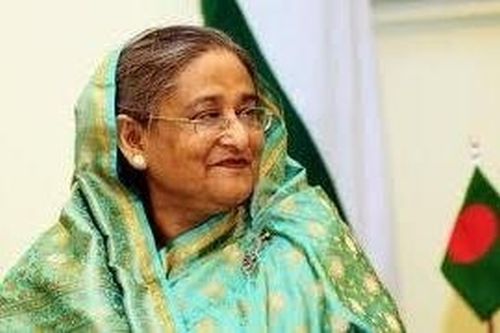
Sheikh Hasina, the prime minister of Bangladesh, will travel to India from September 5 to September 8. The last time she travelled to India was in 2019. Every time the prime minister of Bangladesh travels to India, hopes are raised that the two nations will make substantial strides in resolving some of the unresolved problems that have been a source of friction between them for the past fifty years. The heads of governments of the two nations have met several times over the course of Bangladesh’s last fifty years of existence. During these meetings, a number of bilateral issues have been effectively handled to the advantage of the citizens of both nations.
Since the time of division in 1947, Bangladesh has inherited the majority of the ongoing issues with India, the most significant of which is the equal sharing of the common river water between the two nations. Similar issues also existed in West Pakistan at the time, although they were resolved in 1960. (Indus Water Treaty). But no such efforts were ever made to address the comparable problems in East Bengal, the modern-day Bangladesh.
Only in 1972, following the establishment of Bangladesh, did India’s Prime Minister Indira Gandhi and Bangladesh’s Prime Minister Bangabandhu Sheikh Mujibur Rahman address the issues and sign the comprehensive Indo-Bangladesh Treaty of Friendship, Cooperation, and Peace. They also agreed to create the Joint River Commission to work for the common interest and sharing of water resources, irrigation, flood control, and cyclone prevention. Prior to the Farakka Barrage going into operation, a deal was also made in 1974 to settle the Ganges water-sharing issue.
A temporary arrangement was then made in 1975, allowing India to run the feeder canals of the Barrage for brief durations as necessary while keeping Bangladesh informed. The Land Boundary Agreement (LBA) and exchange of adversely possessed enclaves, a historic agreement between two nations, was signed in 1974.
As this was an international treaty, Bangladesh’s parliament had to ratify it, which Bangabandhu did right away. India didn’t ratify the agreement until 2015, under the leadership of the country’s current prime minister, Narendra Modi. From the events of the past fifty years, it is clear that Bangladesh has always taken the initiative to resolve outstanding difficulties, and this only occurs when a government led by the Awami League is in office.
After Bangabandhu was killed, Bangladesh turned into a haven for militants determined to destabilize India’s North-Eastern States. These insurgents received considerable funding and support from vested quarter. Only under Sheikh Hasina’s leadership were these institutions destroyed, and the North Eastern States experienced a significant increase in stability and security.
Nothing could be more priceless than a nation’s security and sovereignty, which Bangladesh provided for India. The connectedness between the two nations has greatly strengthened over the past 15 years, especially during Sheikh Hasina’s leadership. Bangladesh has made it possible to go to India via both land and ocean, saving both time and money. But regrettably, India has not yet provided Nepal and Bhutan with the transit services necessary for them to utilize the port facilities in Chittagong and Mongla.
Solving the Teesta Water sharing issue is currently the most annoying issue. Bangladesh has been attempting to find a solution to the issue through bilateral discussions for many years, and in 2011, when India’s then-prime minister Manmohan Singh visited Bangladesh, the two nations were getting closer to striking an agreement. Even on the eve of the Indian Prime Minister’s visit, Bangladesh’s then Foreign Minister Dr.Dipu Moni was upbeat and even predicted that the Teesta Water Sharing Agreement will be inked.
The Bengal Chief Minister Mamata Banerjee, however, decided to postpone her travel to Bangladesh, and without her approval, no such treaty could be made under an Indian federal system of government. As a result, everything broke apart at the last minute. Since then, Bangladesh has made numerous unsuccessful attempts to get along with Mamata Banerjee. Even India’s current Prime Minister, Narendra Modi, made a clear commitment that the issue will be fixed within his first term in office, but nothing to that effect has occurred yet.
Sheikh Hasina wants to meet Mamata Banerjee on her upcoming visit to New Delhi, according to Indian media, and the Teesta River water sharing problem is obviously the only significant topic that the two leaders could discuss.
Defense cooperation and regional stability in South Asia are two potential topics for discussion during Sheikh Hasina’s visit to New Delhi. Each of these topics is interconnected with the other. However, it is unclear how any regional stability is feasible while the Rohingya issue remains unaddressed.
When it came to exerting pressure on Myanmar to return the Rohingya to their home country, India, which continues to be a close friend of Myanmar, always responded with ambivalence. India, China, and Russia all have significant economic ties to Myanmar. Ironically, each of these nations is a key devolvement partner as well as a friend of Bangladesh. Unfortunately, all of these nations, including the US, have angered not only Bangladesh but also its citizens when it comes to the Rohingya repatriation issue.
The Akhaura-Agartala rail link will reopen soon, and it is anticipated that Agartala and Chittagong will be connected by air in a few weeks. If the circumstances allow, Bangladesh’s Padma Shetu could be utilized to transport passengers and cargo between the North-East Indian States, including Tripura, and the Indian subcontinent, in addition to the normal delivery of Indian commodities to Bangladesh. It is past time for India to acknowledge Bangladesh as a significant natural ally in addition to a strategic ally.
The upcoming trip to India by Sheikh Hasina is significant for these factors. The people of Bangladesh will eagerly await Sheikh Hasina’s upcoming trip to New Delhi and anticipate some potential outcomes.
The writer is human rights activist and independent researcher based in Bangladesh. kamalmazumderju@gmail.com