The new financial year has begun. Last month (March) was very hectic for the government departments. The government departments had busied themselves with every kind of task and work under their responsibility – thus trying to spend as much money as they could. The roads and streets of Srinagar were as busy as was the Government e-Marketplace (GeM) portal. The money that the government was supposed to expend throughout the year was spent in few days. What a sad state of affairs!
Of course, this time around the officials have an excuse for not executing developmental projects within a given timeframe. That is to say, COVID-19 lockdown. Could the situation have been different without the lockdown? No chance. Because the government officials never run out of reasons to explain away their failures to deliver public services, which ultimately constitute the governance deficit.
How does low-level of development, political and social marginalization increase a particular region’s susceptibility to conflict?
“The origins of conflict are largely socio-economic in nature, and that state failure is a consequence of the breakdown of public service delivery.” Jammu and Kashmir is certainly a practical example of this observation. Right from the inception of the political trouble – and in fact even before it began, if one goes on analyzing the socio-economic issues, the developmental and governance deficit during the late eighties – the conflict here has been, and still is, the product of, and propelled by the low-level of development as well as political and social marginalization.
This recognition of the causes of conflict has elsewhere led to the formulation of the various models, such as the “comprehensive approach,” “3D” (defense, diplomacy, development), “whole of government,” and “integrated approach.” Unfortunately, none of these approaches seem to be in the plans of the authorities in Jammu and Kashmir. The officials are making incongruent, scattered and disjointed efforts, and instead of following coherent and planned strategies they only end up doing things in peace-meals, and then leaving them, most of the time, half-way. As a result, the projects consistently miss deadlines and by the time they are completed after huge time and cost overruns, their utility remains uncertain. For instance, a developmental project planned for the needs of a given population for 25 years will deliver minimally for only 10 years if it is completed after a delay of 15 years!
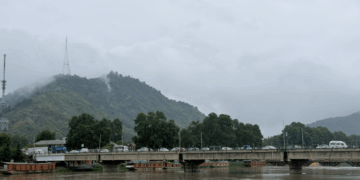
With broken roads and streets in Srinagar narrating the story of abject neglect; the unclean and dilapidated sideways and footpaths, bridges and marketplaces hired out to shopkeepers and roadside vendors by the authorities in exchange for a ‘hafta’ (sleazy money); overflowing drains pouring muck and murk on roads and stink in the air; broken streetlights; and hundreds of thousands of stray canines openly preying upon the people, especially children and the elderly, it is sheer mockery and grave insult of the public intellect and sensitivity to see huge LED screens being installed on streets to announce the advent of Srinagar Smart City project. If only the presence of smart TVs could turn things smart, then perhaps every household in Srinagar is already smart with several of their rooms – drawing-rooms, living rooms, kitchens and even bedrooms – having smart TVs installed in them!
Since, as previously described, the conflict is seen as a product of low-level of development as well as political and social marginalization, the intervention by the governments, and police or military needs to be based on the theory that “tactical military progress cannot be consolidated or translated into strategic success, and viable states cannot be built, without the host government constructing legitimacy through the provision of public services.” It simply means that even the police or military measures aimed at containing militancy in Kashmir will have limited success unless and until the government improves its own legitimacy/acceptability and re-cultivates lost trust and establish a good rapport with the public by focusing on the welfare state and the delivery of public services. This of course goes beyond smart TVs, and actually starts with the development of smart roads and streets – and the amount of safety and security available to the general public while walking on those streets. This is because these are the areas of highest public importance.
The theory is that when government ensures the availability of adequate infrastructure and facilities (such as proper roads, hospitals and health clinics, good schools, and transparent and accountable governance, etc.), the population is encouraged into collaborative relationships with the government and its various agencies —“reducing opportunities for insurgents and providing intelligence to the counter-insurgent forces”. For instance, the U.S. DOD (Department of Defence) has made considerable efforts to develop the capacities for what it terms as “stability operations” and to link these with the work of the Department of State and USAID. This is an approach to security that makes a fundamental break with the past – giving developmental initiatives and activities a priority comparable to combat operations. The strategy emphasizes that “stability operations were likely to be more important to the lasting success of military operations than traditional combat operations” and “elevated stability operations to a status equal to that of the offence and defence.” This represents a significant reorientation of the U.S. military’s traditional focus on “warfighting.”
The available literature on conflicts, causation and resolution strategies offers a lot of creative inputs; which if implemented with some sincerity, would certainly spell out the roadmap for how the government can improve the situation. As of now, and given the way the administration has conducted itself, for instance in Srinagar, its disoriented and disparate measures vis-a-vis the Smart City project, is, besides other things also indicative of misplaced priorities. This is perhaps why despite huge money being spent on various projects, the governance deficit in every area of society, which has all along been endemic, is not showing any real signs of reversing.
- Source: jkpi.org