By: Sreejith Sugunan
As part of the Cultural Cognition Project, which aims to study how individuals with preconceived group identities perceive their risk in society, law professor and psychologist Dan Kahan found that people generally engage in “identity protective cognition”. Kahan used this term to refer to our tendency to “selectively credit and discredit evidence” based on the beliefs that predominate our group. One can conclude from Kahan’s analysis that an individual is likely to prioritise evidence that re-affirms one’s weltanschauung (worldview), and may actively resist information that can be “identity-threatening”, thus engaging in politically-motivated reasoning.
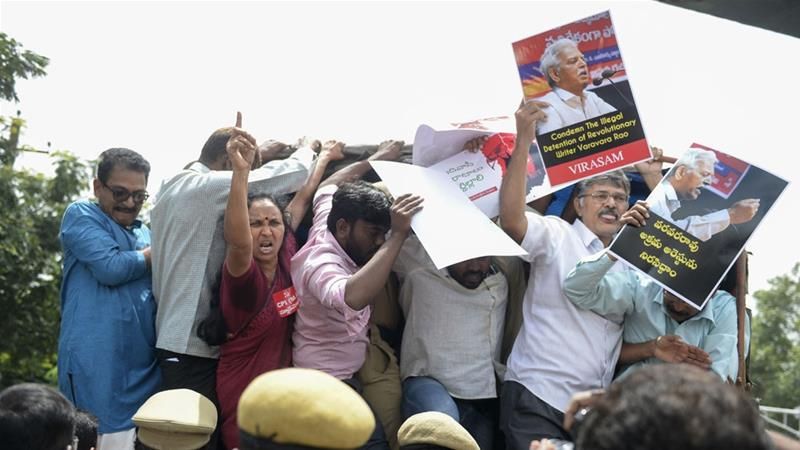
Apart from a humanistic consideration, identity protective cognition can explain why the killing of Kashmiri journalist Shujaat Bukhari sparked a greater outrage from liberal quarters than the murder of Kashmiri soldier Aurangzeb. The same framework also explains why the anti-liberal camp in India reads a studied indifference among the Indian liberal intelligentsia towards the sacrifices made by the armed forces, or towards the concerns of Hindu community. The point here is that our interpretation of political events, and the image of the other produced by it, are likely to be affirmative reiterations of those ideological positions we are sympathetic to. Relying on Kahan’s findings, one can argue that there is a definite lack of reason, or at least it’s partial absence, when it comes to our political positions, though we believe them to be well-thought out and rational.
A partially reasoned political judgement, coupled with a post-truth environment, makes it all the more easy to reify the liberal or the anti-liberal as the antagonist of our political imagery. And this is the kind of cognitive template that plays in to the selective information or misinformation campaigns led by divisive political forces, be it from the left, right or centre. A common approach to resist such trappings of political agenda has been to prod us to cultivate scientific temper, specifically a narrow brand of it that recommends a submission of our faculties of judgement to the triad of facts, trials and tests — a mode of rote empiricism. The assumption behind this is that a scientifically-informed public is the best line of defence against politically-motivated news campaigns. But this may not be true according to Kahan’s findings. The smarter we are, the more likely we are to use our intelligence to appropriate information selectively.
German thinker Carl Schmitt, in his 1932 essay, ‘The Concept of the Political’, pointed out that politics, in its most primitive and naked form, is founded on a public distinction between friends and foes. In this framework, politics subscribes to the logic of cultivating the threat of an “enemy” for a group. And this threat may be real, or a mere perception. Being “political”, then, is our ability to recognise our affinity to specific group cognitions that help us identify our friends and enemies. Political parties and identity-focused pressure groups are “political” associations in this sense. Such organisations are appealing to our sense of “difference” from the other. The more these political associations can evoke in us this sense of “difference”, the likelier we are to strengthen our support for them. Perhaps, this explains why some political parties witness an increase in their voteshares when they instigate riots, or at least create a polarised environment.
Given the clout political judgements enjoy over scientific rationality, it becomes all the more important to be cautious and methodical in the reasoning we employ to support a specific political argument. Today, we don’t think twice about endorsing political positions that ignore humanistic principles, just for the momentary satisfaction of expressing anger, disgust or disappointment. But, by doing this, we are merely being pawns in a game orchestrated by our own faulty cognition, which select groups of hate-mongering media houses and political parties capitalise. The sad reality seems to be that we are wielding no true political agency. Contemporary political action should be less about acting against the enemy and more about attaining a mature scepticism towards our own biases.
Courtesy Indian Express