By: Jalaluddin Mughal


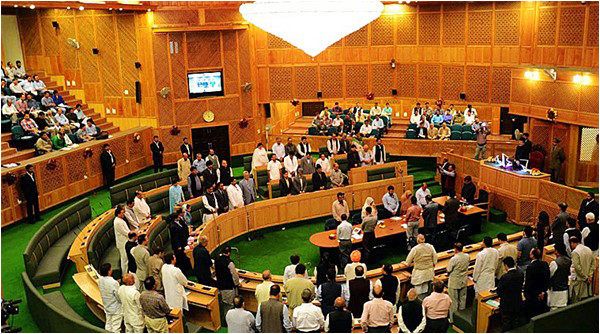
The long-awaited, greatly advocated and now, over-celebrated constitutional reforms in Azad Jammu and Kashmir (AJK) have triggered a hot debate among stakeholders whether the 13th amendment in AJK Interim Constitution Act 1974 will empower the governments in Muzaffarabad or will it gradually increase federal influence in administrative, legislative and judicial affairs and prove to be a mere change in the controlling mechanism, firmly in the hands of federal government.
Whereas the Pakistan Muslim League Nawaz (PML-N) led government and allies portray the constitutional reforms as “the greatest achievement” under Prime Minister Farooq Haider, opposition parties term the new constitutional arrangements between Muzaffarabad and Islamabad “another wolf in sheep’s disguise” and the beginning of “provincialisation of AJK” which, they claim, will ultimately end in the integration of the region as another province of Pakistan.
For many years now, the government in Muzaffarabad has been seeking constitutional reforms in the region aimed at shifting of powers and control over resources from Kashmir Council to the democratically elected government in AJK
For many years now, the government in Muzaffarabad has been seeking constitutional reforms in the region aimed at shifting of powers and control over resources from Kashmir Council to the democratically elected government in AJK. Headed by the prime minister of Pakistan, Kashmir Council has had administrative and legislative control over 52 major subjects, including tax collection, natural resources, and tourism while its head, as well as half of its members, are neither elected representatives, nor answerable to the people of AJK at any forum. Unaccountable movement of money and unquestionable authority of Islamabad-based supra-constitutional body has remained the major bone of contention in the political discourse between Muzaffarabad and Islamabad. The Council enjoyed an ambiguous status for many years by establishing an Islamabad-run parallel government to curtail the elected government’s wings as well as influencing the electoral process in the region.
The amendments have somehow managed to rectify the situation by changing the status of Kashmir Council to an advisory body and shifting most of its powers directly to the prime minister of Pakistan. For Prime Minister Farooq Haider and some other political actors, the amendments are like a dream-come-true situation, whereas some constitutional experts see the future role of the Council as much bigger than an advisory body. According to Advocate Sheikh Muhammad Ahmed, the appointment of the judges and some other key positions in AJK is still subjected to the Council’s advice.
Pakistan People’s Party, the main opposition party in AJK Legislative Assembly, has widely appreciated the withdrawal of powers from Kashmir Council. However, PPP AJK President Choudhry Latif Akbar has raised serious concerns over shifting of the legislative powers to the executive without any other example in the country. “Across the world, legislation is the domain of the parliament and not the government. But here it has been given to the federal government in what amounts to a great anomaly,” Akbar said during a news conference, concluding that, “in fact, it has undermined the authority of the AJK government.”
The ‘post-haste’ approach has also raised some serious question over the process itself. Previously, a unanimous draft proposal for the amendment in the constitution was prepared under the PPP-led parliamentary committee after rigorous consultation with all mainstream political stakeholders, but it could not attain approval from the PML-N led federal government. Rather, the Law Ministry prepared a draft without any consultation with political stakeholders other than the PML-N and managed approval at the eleventh hour from the outgoing federal cabinet.
However, the federal government has tried to cater to the growing dissent in the region over the years with more and more stakeholders demanding greater autonomy, the impacts of the ‘reforms’ have so many apprehensions attached. Majority of the subjects previously dealt by the Kashmir Council have now been transferred to the federal government of Pakistan, which will be able to directly legislate on these matters. According to some experts, since AJK remains a disputed territory and constitutionally the government of Pakistan is not supposed to exercise such power in the region. Activists, such as Muhammad Ahmed Sheikh, are terming the amendment as a further ‘colonisation’ of the region, with more powers being given to Pakistan under the pretext of empowerment. Some even fear that this amendment will bring AJK closer to a province and may result in a one-sided resolution of Kashmir dispute once and for all.
The true impact of the 13th amendment will unfold over time. However, in days and months to come, the debate is expected to get even more heated as a result of emerging questions about the direct role of the federal government in the disputed region. However, Muzaffarabad will get control over some assets, financial resources, and some extra legislative powers—which were previously vested in PM Pakistan’s office via Kashmir Council. It yet to be determined whether curtailment of Kashmir Council’s wings will give more powers to the government in Muzaffarabad or whether it will further strengthen the federal control in the region. Apparently, these constitutional reforms seem to be, “less an empowerment and more an illusion.’’
The author is a researcher and freelance writer based in Islamabad/Neelum Valley. He can be reached at:jalaluddin.mughal@gmail.com
Courtesy http://www.thefridaytimes.com