By: Ayesha Siddiqa
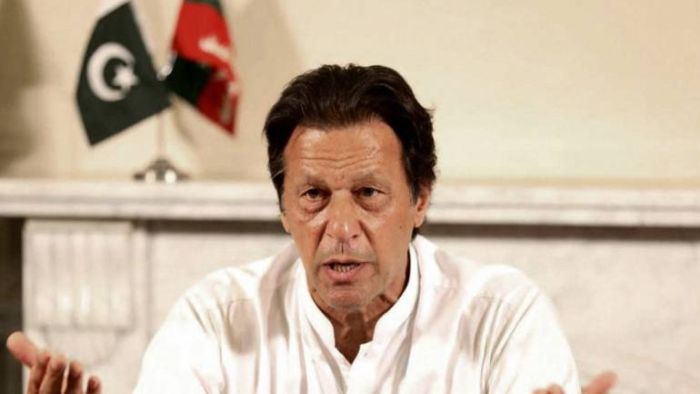
Pakistan is on the verge of getting a new prime minister, the cricketer-turned-politician Imran Khan. Many of the social media accounts linked with the Pakistan Army are presenting the victory of Khan’s Pakistan Tehreek-e-Insaaf (PTI) as a new era in the country’s politics, outlined by the emergence of a non-dynastic leadership (similar to what was said about Narendra Modi’s election in 2014) and the breaking up of the clout of the Bhuttos’ Pakistan People’s party (PPP) and Nawaz Sharif’s Pakistan Muslim League (PML-N).
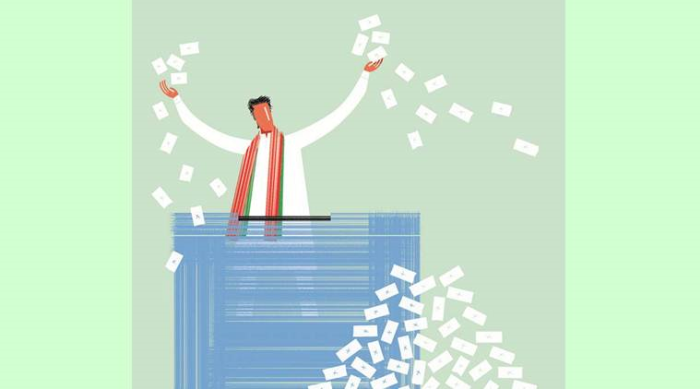
Khan’s victory is certainly not decisive since the PTI has not swept elections in either the Centre or in Punjab province, which represents the core of Pakistan’s politics. The PTI has managed to get 116 seats in the National Assembly against 64 by PML-N and 43 by the PPP. In Punjab, the PTI is behind the PML-N (129) with 123 seats. Khan’s victory comes amidst the uproar by the Human Rights Commission of Pakistan and the European Union election observers that the polls were less fair than in 2013. It is worth mentioning that Khan had acrimoniously contested the last elections as being rigged in favour of the PML-N. Even the PPP and PML-N had claimed in 2013 that elections were rigged.
Khan will be sworn in at the Centre this week and the chances of his party forming a government in two other provinces (Punjab and KP) are bright. This is primarily because the Opposition parties are divided and under pressure from unseen quarters to let Khan lead the country. The PML-N under its new de facto leader, Shahbaz Sharif, is too weak to take a stand. The younger Sharif doesn’t quite have the makings of a leader. He wouldn’t be able to get other parties to agree with him, especially the PPP. The Bilawal Bhutto-Zardari led PPP is not likely to cooperate with the PML-N to form a coalition government in either the Centre or Punjab. Its instinct will be to save its government in Sindh, where it has emerged as the largest party (74/130). A PTI government in Punjab would break the three-decade hold of the PML-N over the province. In many ways, history seems to be repeating itself. The evolving situation is a reminder of 1990 when the military’s intelligence agencies had used resources to form the Islami Jamhoori Ittihad (IJI) led by Nawaz Sharif to break the PPP’s hold over Punjab, the same way as may happen now.
Is this the beginning of a new Pakistan that has shunned dynastic politics? No, because the dynastic PPP has gained more seats than it did in 2013, and, as mentioned earlier, the PML-N has not been routed. This indicates that the problem lies less with dynastic politics but in the patronage structure of Pakistan’s political system, in which various parties and even non-parliamentary institutions represent patron groups with their specific clientèle.
The patronage structure tends to encourage corruption, which is what Imran Khan claims he wants to fight. However, the question is whether he will be able to embark on this task given that he won these elections by including the “electables” — a term used for candidates who have no ideology and keep shifting from one party to the other.
Despite the problems of the 2018 election, the results also offer the older parties an opportunity to re-think their political outreach strategy. The PML-N has suffered due to its decision-making and party political structure, which is centralised and revolves around the Sharif family. Its inability to reach the grass roots means that in the coming days, there will be less inclination of the lower and mid-level party management to protest in favour of Nawaz Sharif or challenge the government by coming out on the streets, especially if he is sentenced in other cases as well. The inability to demonstrate leadership could also result in the party losing supporters to the PTI that still has to build its organisation in Punjab. The PPP, which is currently operating in the largest province on the basis of strong electables, will have to find its feet, which includes grooming a younger and promising leadership.
Notwithstanding these issues, Khan has emerged as the hope for a younger Pakistan which believes that the country has a serious corruption and image problem. The popular narrative is that a more determined and patriotic leadership that will not secretly negotiate with foreign powers like the US and India would be able to deliver the country from under-development, poverty and global infamy. And a stronger leader could solve much of its geopolitical problems.
This perception follows the path of the acclaimed Bajwa doctrine, ascribed to the current army chief. Imran Khan’s offer to India in his victory speech to negotiate on Kashmir and willingness to trade is being seen in many quarters as a possible opening. But the door remains as shut, as it was in the past. Khan’s team will have to work out the contours of negotiations with the military establishment that was resentful of trade in the past on the grounds that Nawaz Sharif was more keen to discuss trade than resolving the Kashmir issue. The only difference is that unlike Sharif, Khan would not be in a position or inclined to establish an independent line of communication with New Delhi.
The foreign policy contours under Khan will denote the status-quo — greater inclination towards China than the US, except that the country’s financial needs may make him want to open some door towards Washington unless someone offers a financial lease of life. A major issue in this regard will be dealing with terrorism and extremism, for which there are limited plans. Although the Lashkar-e-Taiba (LeT)-related Allah-u-Akbar Tehreek (AAT) party did not win any seats, such mainstreaming of violent extremists is a contentious issue as far as the US is concerned.
Khan will be inclined to present the AAT’s defeat as a victory for peace and democracy. But would he be able to convince an equally egoist leader like Donald Trump? In any case, the fact that the various religious parties put together managed to bag about 4.6 million votes, the largest number yet in Punjab (1.8 million), says something about issues that the prime minister must concentrate on. The risk is that Khan’s ambition to establish an Islamic welfare state might get muddled somewhere, like Bhutto’s, and produce more religious agenda than welfare.
Courtesy Indian Express