By: I.A. Rehman
THE Pakistan government has consistently attracted criticism for lack of correct motivation for creating human rights institutions, leaving almost all of them at the mercy of an unsympathetic officialdom that obstructs their work and, finally, ignores their reports. All of this should be unacceptable.
It is possible that the organisations under reference fail to satisfy the junior officials who alone are believed to leaf through their submissions, but there should be a way of objectively assessing all reports, getting them revised and improved if necessary, and taking appropriate action on them. Apart from a waste of resources, the danger in ignoring reports on human rights is that the opportunity of applying corrective measures could be lost.
For instance, the National Commission on Human Rights, one of the unlucky victims of bureaucracy’s hostility, does not know if any high authority has bothered to look at the 24 reports it has submitted.
We have before us at the moment three NCHR reports that call for remedial action without delay.
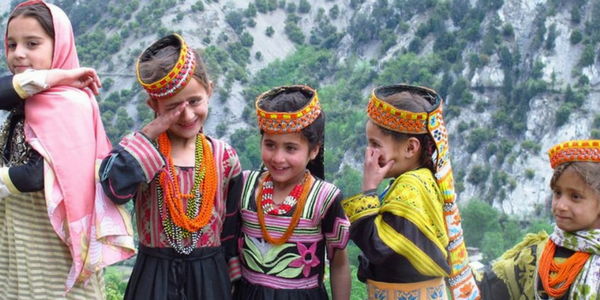
The report on the Kalash people, Saga of Survival, is a devastating commentary on the state’s apathy towards this community’s brave though apparently hopeless struggle to survive as an ethnically and culturally distinct entity.
With a view to beginning on a positive note perhaps, the commission notes with satisfaction that the Kalash practice of suri jagek has been put on the list of Unesco’s List of Intangible Cultural Heritage in Need of Urgent Safeguard. The effort to prepare an inventory of the intangible cultural heritage of the Kalash, consisting of more than 40 cultural practices and symbols, is also lauded. The commission hopes this work will inspire the government and NGOs to strive to conserve the Kalash culture.
There are some salient features of the tale of woe of the 4,000 or so surviving members of the Kalash community.
They are extremely bitter about the denial of their right to ancestral lands, especially to Silver Oaks forests. The community elders complain that they were not allowed any say in the land settlement carried out some years ago. According to the commission, “the gradual loss of the Silver Oaks forests of Kalash valley is depriving the Kalash of a cultural symbol and severely endangering the indigenous identity of the Kalash people.”
The second major Kalash grievance is that they do not have the necessary education facilities. The people are too poor to go to college in Chitral. The school syllabus does not include any material on the Kalash way of life.
The third major issue is early divorce without any relief of Kalash girls after marriage to Muslims and conversion to Islam.
The NCHR has proposed a number of steps to remove the Kalash grievances and allow them the rights recognised in the Pakistani Constitution and international law and conventions.
The report includes a passionate appeal, an SOS, to save the Kalash, described as one of the world’s few oldest surviving indigenous communities, and one of the most colourful components of Pakistan’s pluralist society,
Quite important and relevant is the commission’s study titled Understanding the Agonies of the Ethnic Hazaras. The main conclusions of the study are that several factors have made the Hazara community a soft target for militant outfits, hate campaigns and acts of terrorism. The atrocities committed against the Hazaras over two decades have negatively impacted their education, health, livelihood and mobility.
The persecution of the Hazara community stems from “a combination of complex factors including geopolitics, security, ethnic rivalries, sectarian extremism and spillover of militant extremism from across the border and other parts of the country”. Reference is also made to “Indian involvement” to damage Pakistan’s economic and strategic interests associated with CPEC, a proxy war between Saudi Arabia and Iran, and the land mafia.
While this analysis of the Hazara community’s tribulations is a bit sketchy as compared to other studies, the recommendations made by NCHR include a number of sound and practicable ideas.
For instance, the suggestion to address the Hazara issue as persecution (the UNHCR definition), adoption of a concrete plan for prevention and elimination of religious terrorism instead of mere firefighting, call for the establishment of a federal commission on the Hazara killings and the strict enforcement of laws against hate speech, sectarianism and violence. A long-term proposal calls for the overhaul of the criminal justice system so that “loopholes are plugged and the perpetrators of violent attacks against Hazaras are brought to justice”. Another suggestion is that the victims of violence should be economically rehabilitated.
A number of proposals call for increasing educational facilities for the Hazara children, including their placement in institutions outside Balochistan.
The report on the procedure for the implementation of blasphemy- related laws offers significant and enforceable suggestions for preventing the misuse of the law to the detriment of innocent parties. These proposals were in line with the ideas expressed in the Senate committees on human rights.
In a covering note addressed to the Senate Functional Committee, the NCHR chairman has pointed out that “Provisions of Pakistan Penal Code (PPC) on offences against religion are viewed incompatible with Pakistan’s obligations under the international law, including the guarantees to freedom of expression, freedom of thought, conscience and religion, and equal protection of the law. … However, repeal or substantial amendment in these laws is not immediately feasible.” Hence some non-controversial changes in the procedure are suggested. Here are some of proposals for consideration:
In order to reduce false complaints, all blasphemy-related provisions of the PPC should be included in Sec 156-A of the Code of Criminal Procedure, and this section must be firmly enforced (295-C cases to be investigated by officers of SP’s rank); criminal cases against complainant/witness should be instituted if they commit perjury; sessions judges should hear blasphemy cases; and the example of the Prophet (PBUH) in cases where repentance was accepted as a ground for forgiveness should be followed.
Courtesy Dawn