By: Christophe Jaffrelot
Years ago, the late Ravinder Kumar, then Director of the Nehru Memorial Museum & Library, defined India as a civilisation-state, rather than a nation-state, because of its capacity to amalgamate into one coherent whole a large number of cultural influences. This approach — articulated by an historian in a longue durée perspective — has a clear political implication: India is also a coalition-state.
In contrast to some European countries or China, India has never been governed successfully in a centralised manner. During the few, ephemeral phases of unity that India experienced from the reign of Ashoka onwards, the sovereign had to build coalitions of regional satraps and maintain them through a constant bargaining process. The great Akbar spent half of his life traveling across the Mughal Empire to pacify mansabdars turned feudal lords to retain their support and resist the “fitna” syndrome.
Independent India inherited a centralisation legacy from the British Raj, including the steel frame that was the ICS. But when the country became a full-fledged democracy, Nehru had to build coalitions again. He did not travel as much as Akbar, but he sent letters to chief ministers every 15 days. These fortnightly letters showed the extent to which he had to negotiate with regional Congress bosses who not only were often at the helm of Pradesh Congress Committees, but also, after 1956, represented linguistic states that had their own identities. Nehru was against the redrawing of the Indian map according to linguistic criteria, but Mahatma Gandhi had already reorganised the Congress along these lines in the 1920s and state party bosses were adamant — Nehru had to fall in line.
That was a blessing in disguise from his own point of view because federalism and democracy took roots in the 1950s and 1960s also thanks to this power structure that reflected a coalition culture: The prime minister was primus inter pares who recognised the autonomy of the states. In fact, he had no other choice as he would have lost his support base otherwise. This arrangement found institutional translation in the making of the Planning Commission where state leaders met and negotiated under the aegis of the Centre — something the Niti Aayog has not replaced — and laws such as the Inter-State Water Disputes Act (1956).
It is when prime ministers have tried to emancipate themselves from coalitions that the quality of governance has suffered the most. The Indira Gandhi years are a case in point. She won the 1971 election by relating directly to the people, like any populist, and then short-circuited the local party leaders and indulged in overcentralisation. She appointed docile but incompetent chief ministers who were accountable to her alone and had hardly any support base. In the 1980s, she was so determined to rule each and every state, she wanted so much to win all local elections, that she took the risk of destabilising Assam, Punjab and Jammu and Kashmir for years — and resorted to President’s Rule in an unprecedented manner.
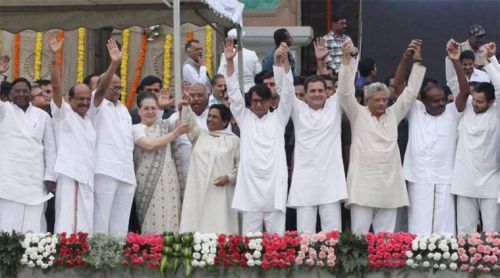
Paradoxically, after a difficult transition of 10 years, India experienced more stability under coalition governments, from 1999 onwards. These coalitions were different from those of the 1950s-60s because they amalgamated different parties. But the NDA under Atal Bihari Vajpayee and the UPA under Manmohan Singh had one thing in common with the Nehruvian pattern: They forced the Centre to acknowledge the states’ autonomy because the BJP and the Congress depended upon regional forces. In Vajpayee’s NDA, there were 13 state parties; in the UPA, regional parties numbered between 11 and 14.
Coalitions imply transactional mechanisms which have been the essence of the Indian polity and which have been good for federalism and democracy because they limit concentration of power. Coalitions do not include parties representing only provinces, but also social groups. It is more difficult for the Centre to ignore OBCs or minorities when it depends upon parties claiming that they are their spokespersons in the ruling coalition.
One may argue that India cannot afford a coalition government because it needs reforms and strength in a complicated international environment. But some of the most difficult decisions and some of the most ambitious reforms have been implemented by coalition governments since 1991 and the economic liberalisation. Under Vajpayee, the nuclear test was a critical move that was not prevented from happening by the fact that the NDA gathered together more than a dozen parties. UPA I and even UPA II offer a rich report card: The 123 agreement was ratified with the US by a jumbo coalition, India joined the BRICS in the first year of UPA II and became a key member of this new grouping of emerging countries, the Special Economic Zones Act, liberalisation of the FDI policy (regarding retail or financial sectors), reservation of 27 per cent seats in universities for OBCs, Right to Information Act, NREGA, Lokpal Act, Land Acquisition, Rehabilitation and Resettlement Act. All these reforms were made by coalition governments supported by more than a dozen parties. The policies of coalition governments tend to be more socially inclusive, precisely because the coalitions supporting them comprise a wider array of groups and communities.
But opponents of coalition politics may reject it in spite of its effectiveness — for ideological reasons. Coalition politics may be problematic, in their view, because it implies a recognition and promotion of the country’s territorial and cultural diversity. Hindu nationalists have traditionally considered that India is one and should have a unitary state. In the 1950s, the Organiser fought against the redrawing of the Indian map along linguistic lines. For RSS leaders, that was bound to give birth to mini nations. They believed in Savarkar’s definition of India as a punyabhoomi — how can a sacred land be divided according to cultural lines?
This approach reflects another idea of India, other than the one presented by Sunil Khilnani and before him, Ravinder Kumar, in terms of a civilisational state. In fact, the Hindu nationalist idea of India is more in tune with the European idea of a nation-state rooted in the exclusivist triad, “One country, one culture, one people”. This is not surprising, given the fact that key ideologues like M S Golwalkar cited European (mostly German) authors in the books and articles they wrote in the inter-war period.
The 2019 elections will be an important moment to see whether India can remain a civilisational state cultivating coalition politics as a way to perpetuate the “unity in diversity” formula the federalist way, or it will continue its recent march towards a unitary, ethno-religious state.
Courtesy Indian Express