BY: Moeed Yusuf
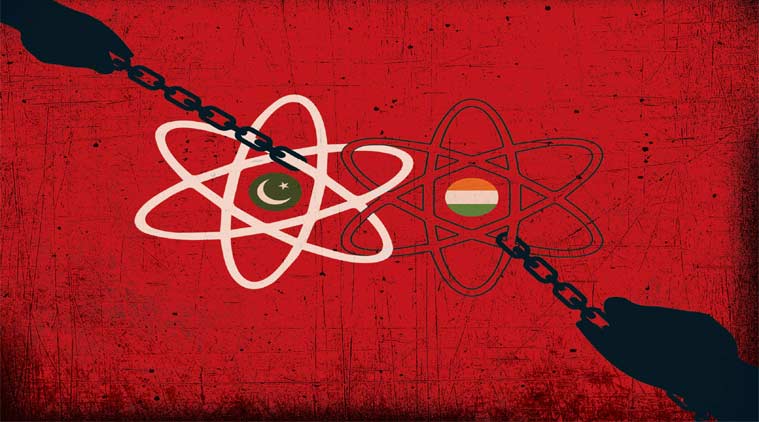
It’s been two decades since India and Pakistan forced their way into the coveted nuclear club. As the leaders of the two countries talked about the importance of nuclear weapons in the wake of the nuclear tests in 1998, they promised their people much. Nuclear weapons were to offer everything from security to elevated international status and greater freedom from international pressures otherwise exerted on countries such as India and Pakistan.
This last aspect was especially poignant for India given the centrality of strategic independence in Indian foreign policy thinking. Pakistan wasn’t far behind. Disappointed by America’s volte-face after the Cold War, the country saw nuclear weapons as a welcome antidote to external influences.
In international relations, periods of heightened tension offer the best test of how effectively countries can hold their own against external influencers. As the theory goes, if you have nuclear weapons, you are immune to major military action from your adversary or its stronger third-party patrons; by extension, you also have greater freedom to push back against external pressure and act more independently in crisis moments.
I have spent the last five years studying India-Pakistan crises — Kargil, the 2001-2002 military standoff, and the Mumbai crisis being the most prominent ones. My conclusions, presented in my book, Brokering Peace in Nuclear Environments, are unequivocal: In the two decades since the nuclear tests, the two sides became far more — and not less — dependent on the US and other third-party states to bail them out of crises. Ironically, this wasn’t because they buckled under pressure. Rather, and this is the most intriguing part, they willingly let outsiders play broker.
Here’s how.
Nuclearisation led the world to maintain a microscopic eye on South Asian crises. Anytime the US and other strong powers smelt a crisis, they mediated with or without an invitation to do so — frankly because they didn’t (and still don’t) trust India and Pakistan to manage things amicably. The US and others used their leverage over both sides, promising inducements and threatening punishment, to achieve just one goal: De-escalation of the moment of crisis. At Kargil, this amounted to pressuring Pakistan to withdraw its troops to its side of the Line of Control in Kashmir while in subsequent crises, the US played down the middle, promising both sides that it will do their bidding vis-à-vis the opponent.
In reality, outside actors never delivered on the concessions India and Pakistan ultimately wanted. From India’s perspective, the world has not kept up on promises of putting Pakistan in the dock on the issue of anti-India militancy. Pakistan, on its part, could never get the world to move the needle from crisis management to dispute resolution on Kashmir. Yet, India and Pakistan continued to allow the US and others to play broker in crises. Pakistan’s willingness, one could argue, isn’t all that surprising given its openness to third party mediation. But why India?
First, because the inevitability of US and others showing up to broker crises creates a set of paradoxical choices for Indian leaders. The natural urge for strategic independence competes with the cost of ignoring the US. Indian leaders have tended to worry that resisting Washington staunchly could allow Pakistan greater room to curry favour with the US and tilt the crisis in its favour. The Indian belief, misplaced in reality, that the US is deliberately soft on Pakistan and that China could team up with Pakistan against India made its decision-makers even more sensitive to this concern.
Second, the willingness to allow the US and others to play broker reflects on the lack of alternative mechanisms of crisis management — this represents South Asia’s greatest failing. The truth is that India and Pakistan know how to get into a crisis but they don’t inspire any confidence about getting out of an already-escalated scenario. This is the big difference between South Asia and the Cold War: For all their failings, the US and Soviet Union did institute robust risk reduction and crisis management protocols that defined the rules of the game. Crucially, they followed them scrupulously to avoid a major war. The absence of a dependable equivalent in South Asia generates an inherent incentive for India and Pakistan to transfer the crisis management burden to outsiders.
The corollary: India and Pakistan are dependent on the whims of the external actors whose sincerity both regularly question.
When I make this argument to Indian strategists (and I have presented enough evidence to get the conversation past the inevitable reflexive rejection of the idea that India has used third party mechanisms in crises with Pakistan), they contend that this dynamic is passé. Future crises will be different, I am told: Prime Minister Narendra Modi already broke from India’s strategic restraint by conducting surgical strikes in 2016 and his government has continued to signal its willingness to act forcefully against Pakistan next time too. India has also codified its intent to keep the third party out through the Cold Start Doctrine that seeks military action against Pakistan before international pressure sets in.
Ironically, this script forces India to depend even more heavily on the US. India can fire the initial salvo but it has no mechanism to hold Pakistan back from responding if Pakistan feels compelled to do so. Default: Look for a helping hand. The obvious expectation at this point, at least as many in Washington have read it, would be that the US will back India and prevent Pakistan from reacting. Pakistan is equally interested in a third-party role but to either prevent India from acting militarily in the first place or to pull the two sides apart only after Pakistan has responded. Unlike before, it may now feel far more emboldened to do so given its deepening partnership with China.
Here we are then. Two proud nuclear powers that hoped for greater strategic independence through nuclear weapons are left managing crises at the behest of external powers.
Reversing this is only possible if India and Pakistan enter into dependable bilateral arrangements that can prevent crisis and bind them to clear rules of the game if there is a crisis. For starters, this requires a sustained dialogue on all things nuclear that is truly isolated from the whims of the broader relationship. We’ve tried but failed in the past. It’s time to try again.
Yusuf is associate vice president, Asia US Institute of Peace and author of Brokering Peace in Nuclear Environments: U.S. Crisis Management in South Asia
Courtesy Indian Express