BY: C. Raja Mohan
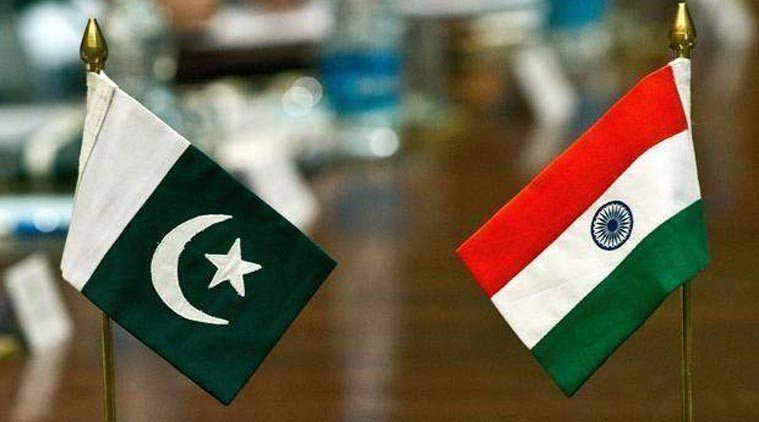
As hopes for peace and reconciliation surge in the Korean Peninsula after last week’s summit between the leaders of North and South, there is some wistfulness in the Subcontinent at the absence of a peace process between India and Pakistan. Is there something Delhi and Islamabad can learn from the unfolding prospects for a major transformation in the relations between Seoul and Pyongyang?
Although neither region figures prominently in the political imagination of the other, there are some common features between the conflicts in the Peninsula and the Subcontinent. For one, both the regions were partitioned after the Second World War. For another, nuclear weapons loom large over them. That is probably where the similarity ends.
The differences between the two regions, however, are far more striking. The religious and voluntary basis of the South Asian partition stands in contrast to the primacy of the geopolitical in the division of the Korean Peninsula.
Both the North and South Korea are formally committed to the idea of unification. In the Subcontinent, though, the idea of unification is taboo. After all, many in Pakistan fear that India is not reconciled to the Partition and wants to undo it.
The shared commitment to unification, however, has not gotten the divided Peninsula very far. At least until now. Even the most optimistic scenario does not envisage the disappearance of North Korea as a state. What is being considered is a peace treaty, an open border, greater economic and commercial cooperation. But the current peace process is certainly animated by the idea that Korean people are one.
The idea of a shared identity, of course, faces much resistance from the deep state in Pakistan. But the agenda for negotiation has not been very different between Delhi and Islamabad — resolving long-standing political disputes and normalising economic and cultural relations.
The same can’t be said about the the nuclear question in the Subcontinent and the Peninsula. In Korea, the entire focus is on the “denuclearisation” of the Peninsula. While the North that has its own nuclear weapons, the South depends on the extended deterrence offered by the US nuclear arsenal.
After the Indian and Pakistani nuclear tests in the summer of 1998, the world first demanded that Delhi and Islamabad roll back their nuclear and missile programmes. But soon enough it was clear that the international community had to live with a nuclear South Asia. On top of it, India has been nearly integrated into the global nuclear order and Pakistan wants the same status accorded.
The relationship between nuclear weapons and peace is also framed differently in the two regions. In Korea, denuclearisation is seen as a precondition for peace. In South Asia, political reconciliation between India and Pakistan, many argue, will help reduce the salience of nuclear weapons.
An equally important difference relates to the way North Korea and Pakistan have defined the strategic value of nuclear weapons. In the last few years, Kim Jong-Un accelerated the development of nuclear weapons and missiles. Once he was confident of his deterrent, Kim opened the door for peace negotiations with the South and the US.
It is not difficult to understand that Pakistan’s nuclear arsenal was a response to its division in 1971 and the creation of Bangladesh. By late 1980s, Pakistan’s military leadership was claiming nuclear weapon capability. Unlike Kim, Rawalpindi adopted a very different approach to nuclear weapons. If Kim sees nuclear weapons as the key to unlocking peace, the Pakistan army saw them as providing the impunity to conduct a low intensity conflict against its neighbours — India and Afghanistan — through cross-border terrorism.
A major difference between the two regions is the role of great powers. Although no region in Asia was immune from the great power rivalry during the Cold War, the degree of that intervention varied quite a bit. The Peninsula was a frontline theatre in the conflict between the East and West. The US and the People’s Republic of China fought each other in the Korean Peninsuala during 1950-53.
Since the end of the Cold War, the US, China, Russia and Japan have played an active role in promoting peace in the Peninsula through the framework of six-party dialogue involving the two Koreas. India took the Kashmir question to the United Nations Security Council. It accepted American and Soviet mediation with Pakistan during the 1960s. After 1971, India insisted on the bilateral approach with Pakistan and fended off frequent efforts by the major powers to butt in.
In the end, there is no escaping that the Peninsula and the Subcontinent have to find their own paths to peace. If there is one lesson for India from the current political dynamism in Korea, it is this: For the strong-willed, there is always room for creative diplomacy.
For Pakistan too, Kim offers a lesson — that nuclear weapons are not an end in themselves. And that the leverage offered by nuclear weapons could be traded for economic benefit and normalisation of relations with adversaries. But Pakistan army is a long way from that recognition. The South Asian stalemate, then, is likely to endure even as South and North Korea appear poised to turn the page.
Courtesy Indian Express