BY: Sameer Arshad Khatlani
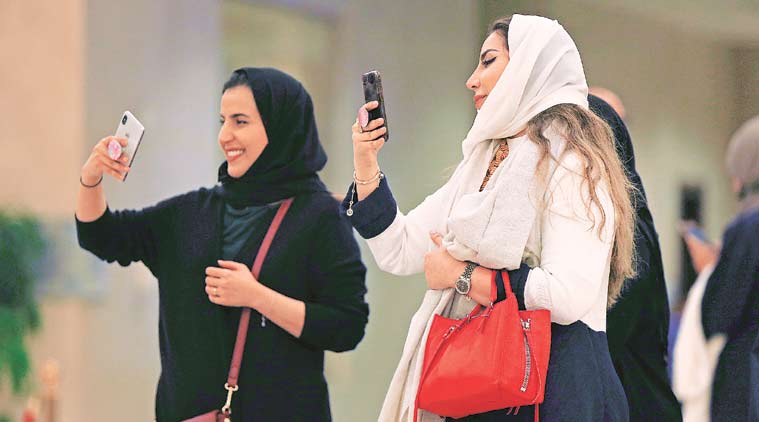
The global media has been abuzz with the pace of the Saudi Arabian reforms. And rightly so. After all, Saudi Arabia has come a long way. From being the world’s only country to bar women from driving, it has now even made the abaya, a loose-fitting robe that covers a woman’s body, optional. The gender-segregation rules have eased dramatically. Once restricted to public-sector jobs, women can now even join the military.
On the face of it, the feverish reforms look extraordinary. But they may not seem so if seen in the backdrop of pragmatism Saudi rulers have followed since al Saud family patriarch, Abdul Aziz, founded the country in 1932. The kingdom was built with the West’s help on the ruins of the Ottoman Caliphate, whose caliph was considered as the global Muslim religious head.
Nothing illustrates Saudi realpolitik more than its ties with the US. The relationship survived the betrayal Arabs faced with Israel’s creation with the US help in 1948. The betrayal counted for little in view of the protection the alliance with the US offered from the Hashemite tribe in exchange for concessions offered to American oil corporations. By 1960s, the alliance was elevated to a level just below that of the almighty. Prince Faisal, who took over as the king a year later, is reported to have told a US diplomat in 1963 that “after Allah we trust America”.
Common foes — secular Arab nationalists and Communism — cemented the ties. Islam’s use as a political and strategic tool became par for the course. President Dwight D Eisenhower assigned the Saudi king the role of Islamic pope in the 1950s. The legacy injected the poison of sectarianism that was exported at a great cost to counter the 1979 Iranian revolution. To cap it all, the promotion of a perverse form of jihad in the 1980s led to the collapse of the Soviet Union. But it unleashed forces that continue to extract a heavy toll on the Afghans, who are reaping the bitter fruits of the millions of dollars the Saudis poured into the anti-Communist campaign. A large part of this money was used for preparing textbooks that radicalised a generation of young men.
The chickens came home to roost for the Americans in September 2001 and the so-called Islamic State (IS) reared its ugly head next door for Saudis in Iraq in 2014. The developments underscored the hydra-headed monster their adventures abroad had created. The IS’s rise has played a part in the Saudi course-correction for ensuring stability and order the Saudi rulers have always put a premium on.
Conservatism was Saudi state policy when the situation demanded. The rulers have shifted their ground because it is in the interest of the maintenance of order. Dipping oil prices have hurt the economy and affected the allocation of funds for welfare schemes and patronage, which have played a key role in ensuring the status quo. The rentier economy is no longer viable — it must diversify to end the dependence on oil and keep the welfare schemes going.
Reforms are the key to diversification along with the demographic realities that make them necessary. As many as 75 per cent people in Saudi Arabia are aged below 30 and the adult female literacy rate was 91 per cent in 2013. The people are conditioned to see the rulers as providers and the source of their luxuries, which make it easy for them to affect change. The clergy is no different. It has endorsed the reforms and has, for instance, conveniently linked issues like the ban on women driving to culture. The clergy even legitimised American troop presence in the country with Islam’s holiest shrines in the 1990s.
The reforms, however, are better late than never. Their impact will be felt beyond Saudi borders. The Saudi rulers’ position as the custodians of holiest shrines gives them much leverage over Muslims globally. The positive developments will hopefully accelerate the pace of women’s emancipation beyond Saudi Arabia. They will help end — in some cases — the less than equal status for women the export of their conservatism has legitimised. The success of the reforms would also have to be measured in terms of its impact in reversing the poisoning of minds and returning to the essence of Islam: Compassion.
The focus needs to shift to the Islamic mandate of the creation of an egalitarian society based on forgiveness. The focus should go back to the bigger jihad, the struggle against evil within and to dissuasion from fighting (qital or harb) that features in the Quran 70 times against the reference to jihad (41 times). This spirit underlined by the Quranic verse calling the killing of an innocent akin to slaying all of humanity has to prevail to rid the world of destabilising scourge of terrorism and Islamophobia.
- indianexpress.com