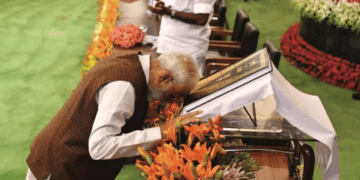

At the reopening of a temple in Kashmir, there is a place for the chief guest, a place for the donors and a place for the photographers. Where is the place for the woman who once walked there every morning to light a lamp? Did anyone ask her what she remembered of the shrine, what she hoped would be preserved, or whether she could come back on an ordinary Tuesday? The answers may tell us how much of the restoration was for the deity, how much was for the community, and how much was for those who wanted their names on the stone.
There is nothing wrong with thanking a donor. Some restorations would never begin without people willing to spend their own money, give up their weekends and make a dozen trips to government offices. A public ceremony can bring scattered families together and draw attention to a neglected shrine. The trouble begins when the people who finance or organise the work assume that they alone get to decide what the temple should become. A cheque can pay for a new doorway. Does it also buy the right to decide who holds the keys?
A temple’s character often survives in details that a contractor could easily overlook. An old threshold, a spring, a weathered inscription or the route by which worshippers approached the shrine may matter enormously to the people who remember it. Ask an elderly devotee to describe the temple before drawing up the plan. She may recall where families left their offerings, which day drew people from nearby villages, or how the shrine was cared for through winter. Once a familiar feature is removed, even an expensive renovation may leave a returning family looking for the place it remembers.
That family may now be scattered across Jammu, Delhi and farther afield. Its eldest members may remember the deity by a name rarely found on a signboard. Its youngest may know the village only from an address written on an old document. A restored shrine can give them a reason to go together. Whether they go a second time may depend on ordinary things. Can they find out when it opens? Is there someone they can call? Can an elderly parent get to the entrance? Will there be someone who can tell their children why their grandparents came here?
We are entitled to ask harder questions when taxpayers pay for the work. Who proposed it? Who was consulted? Can the public see the approved scope and the expenditure? Who will look after the repaired roof, the drainage and the shrine’s records five years from now? The department that sanctions the money may have a different role from the trust or committee that runs the temple. The public should know where one responsibility ends and the other begins. A completion certificate tells us that a contract has ended. A worshipper still needs to know whom to call when the gate is locked.
Ego can operate inside the community too. Two groups can agree that a temple needs saving and spend their energies disputing who has the right to lead the effort. Each may have a genuine connection with the place. In the meantime, a family that simply wants to offer puja can find itself drawn into a quarrel it never chose. People who put years into a restoration deserve acknowledgement. They also have an obligation to make room for worshippers who had no money to give, no position on the committee and no invitation to the ceremony.
Local neighbours can also have something to contribute. Someone may remember who looked after the premises when families could no longer visit regularly. Someone else may know where an old path ran or have a photograph that fills a gap in the record. Listening to them can recover part of the shrine’s history and help solve practical problems. The displaced families should have a meaningful say in how their places of worship are cared for, and that responsibility gives them every reason to hear what others remember.
A temple can reopen while the families who once worshipped there still face unresolved questions about housing, property, safety and livelihoods. Some may want to settle again in Kashmir. Others may begin with a visit at a time of their own choosing. Both should be able to enter the shrine without needing a personal connection to whoever is in charge. And both should be able to bring their children and show them a place their family once knew well enough to take for granted. That is a modest expectation for any restoration that claims to serve a community.
So let us go back a year after the reopening, without an entourage. Is the gate open at the stated hour? Has the worship continued? Is there still someone to answer for the money raised and the promises made? And did that woman ever get to light her lamp again?
What the Public and Government Can Do
The public. Before contributing, ask who has been consulted, which features of the shrine will be preserved and who will care for it once the work is over. Families with ties to a temple can share old photographs, record elders’ recollections and document customary worship before building work begins. Donors can earmark part of their contribution for recurring needs such as cleaning, upkeep and the costs of regular worship where appropriate. Temple committees can publish opening hours, a contact number and a simple annual statement of receipts and spending.
The government. For every publicly funded temple restoration, publish the approved scope, budget, implementing agency and planned handover. Require consultation with custodians, displaced worshipping families and qualified conservation specialists before approving alterations to historic fabric. Invite nearby residents to flag practical issues such as access and drainage. At handover, identify who will handle maintenance, visitor access and complaints. A year later, check whether the shrine opens as stated, whether the work has held up through a winter and whether the agreed arrangements are functioning. Publish the findings and name the office responsible for addressing any gaps, so families know where to go when an issue remains unresolved months after the ceremony.