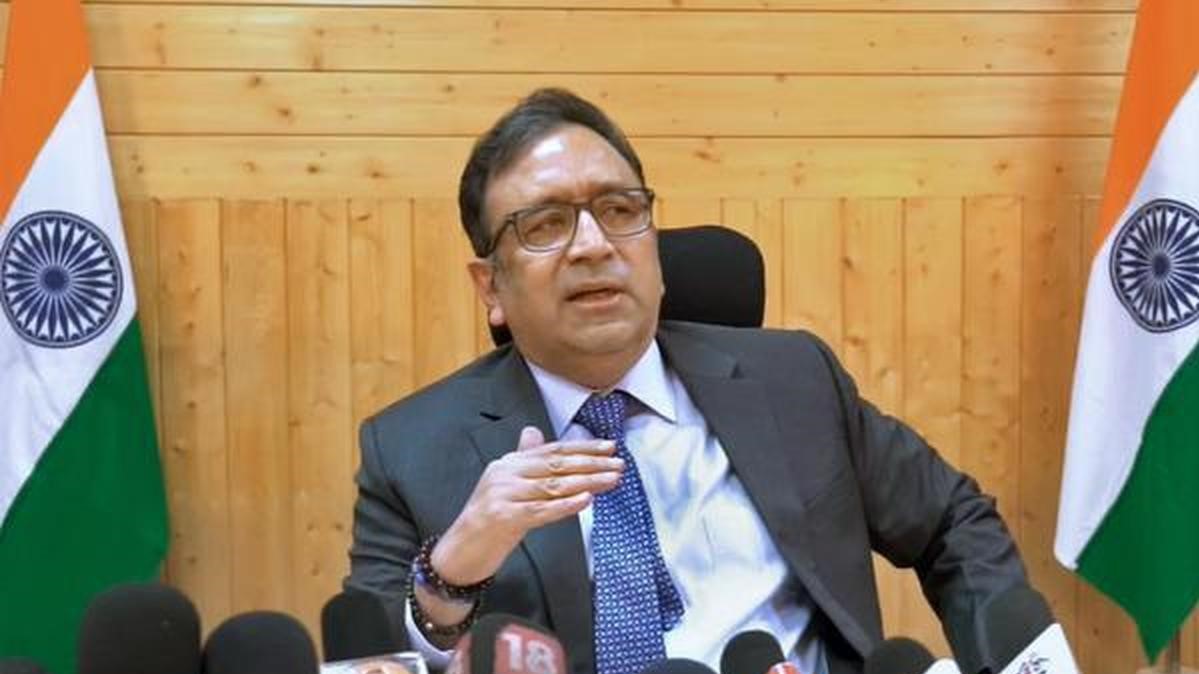
LEH/JAMMU: Political dialogue between the Ministry of Home Affairs (MHA) and Ladakh’s leadership is expected to resume after December 15, with newly elected representatives of the Ladakh Autonomous Hill Development Councils (LAHDCs) also likely to participate in future negotiations alongside the Leh Apex Body (LAB) and Kargil Democratic Alliance (KDA), Ladakh Chief Secretary Ashish Kundra said on Sunday.
Addressing a press conference in Leh, Kundra clarified that the inclusion of elected representatives in the dialogue would not mean sidelining or replacing the LAB and KDA, which have jointly engaged with the Centre for the past five years seeking constitutional safeguards and statehood for Ladakh.
He said the ongoing election process and the Model Code of Conduct had temporarily put political discussions on hold, but the Centre was committed to resuming the dialogue after the elections.
The next round of talks is likely to take place after December 15, keeping in view the Losar festivities, he said.
Kundra disclosed that he had personally spoken twice with LAB Chairman Chering Dorje Lakruk and conveyed that the MHA would resume discussions on the proposed larger institutional structure or Union Territory-level body once the election process was over.
“I suggested that he could propose a date after December 15. We can mutually agree on a convenient date and resume the dialogue. I am now waiting for him to inform us when they would like the talks to take place. We are ready from our side,” he said.
On the participation of elected representatives in the negotiations, Kundra said they would also have to be included as they represented the people through an electoral mandate.
“The elected representatives are also the voices of the people, and they will naturally have to be involved,” he said.
However, he rejected suggestions that the government intended to engage only with the newly elected representatives while excluding the LAB and KDA, describing such claims as incorrect.
He reiterated that the participation of elected representatives would complement the existing representative platforms and would not bring an end to the dialogue with the two bodies.
The proposed institutional framework for Ladakh, including the creation of a larger Union Territory-level elected body, is among the key issues expected to figure in the negotiations.
Kundra indicated that the proposed body could comprise directly elected representatives, with its constituencies to be demarcated afresh.
He said the distribution of powers between the proposed UT-level institution and the eight district councils would also be determined through negotiations.
Emphasising the need for consensus, the Chief Secretary said the proposed arrangement should emerge through constructive engagement rather than rigid positions.
“Negotiations should never stop. One should never outright reject what is on the table,” he said, adding that meaningful dialogue required mutual trust, accommodation and a spirit of give and take.
He said no stakeholder could adopt a maximalist position and insist that only its demands be accepted, as all sides would have to accommodate each other’s concerns to arrive at a workable solution.
“The Government of India is committed to providing the best possible solution for the people of Ladakh within the framework of the Constitution under Article 371,” Kundra said.
His remarks come amid protests by the LAB and KDA against the timing of the December 4 LAHDC elections. The two organisations have sought deferment of the polls, citing harsh winter conditions and the migration of a significant section of Ladakh’s population outside the region.
LAB Chairman Chering Dorje Lakruk had earlier expressed apprehensions that the conduct of the hill council elections could be aimed at ensuring the participation of the administration’s preferred representatives in the proposed negotiations and weakening the position of the LAB and KDA.
The two bodies have also been demanding the resumption of political dialogue with the Centre, which seeks to address their demands for statehood and constitutional safeguards.
The last meeting between the MHA sub-committee and representatives of the LAB and KDA was held on October 15.
Meanwhile, Kundra appealed to activist Sonam Wangchuk and other political leaders to participate in the December 4 elections and exercise their voting rights.
He cautioned political leaders against making statements during the election period that could disturb the electoral atmosphere.
“During elections, certain statements are sometimes made with the intention of provoking people. I would appeal to Sonam Wangchuk, just as I have appealed to others, to participate in the elections and exercise his right to vote. Making provocative statements during the election period can disturb the electoral atmosphere,” he said.
Kundra also urged all stakeholders to exercise responsibility in their public statements and avoid creating confusion over the ongoing dialogue process, reiterating that the inclusion of elected representatives would not undermine the role of the LAB and KDA.