Srinagar: Traditional water-powered flour mills, locally known as Gratas, continue to preserve a centuries-old milling practice in parts of North Kashmir, sustaining rural livelihoods and supplying traditionally ground maize and rice flour to customers from across the Valley. However, erratic weather, declining maize production and limited institutional support are posing challenges to their survival.
In Nowshera village of Boniyar in Uri, around 10 to 12 such watermills remain operational. Customers from neighbouring villages and other districts of Kashmir visit the area to purchase Makai Atta and rice flour produced through the traditional stone-grinding process.
Mill operators said frequent rainfall this year damaged the maize crop, reducing the availability of locally grown grain and affecting flour production. The resulting shortage has made it difficult for them to meet consumer demand.
“People come here from different parts of Kashmir specifically to purchase maize flour prepared in these traditional watermills. But this year, frequent rains damaged the maize crop, affecting the overall production. We are facing a shortage of maize, and consequently, the availability of flour has also declined,” said Bashir Ahmad, a watermill operator in Nowshera.
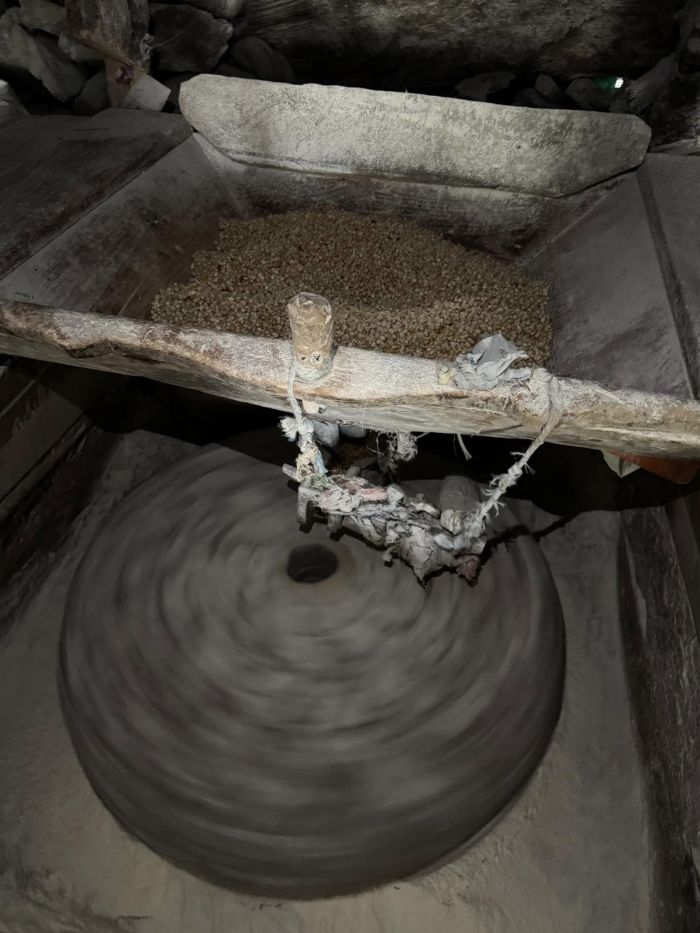
Unlike modern flour-processing units, Gratas operate without electricity or conventional fuel. Flowing water is diverted through a narrow channel to turn a wooden wheel or turbine connected to a vertical shaft. This mechanism rotates an upper circular grinding stone over a stationary lower stone, crushing the grain fed through a wooden hopper into flour.
For generations, rural households in Kashmir have relied on these mills to grind maize, rice and wheat. Despite the availability of commercially processed flour, many consumers continue to prefer traditionally ground Makai Atta, citing its distinctive taste and texture.
The mills also provide a source of livelihood for families who have inherited the occupation and the skills required to operate and maintain the machinery.
Ghulam Nabi, an elderly mill operator from Audora who has spent nearly five decades in the profession, described the occupation as both a means of earning a livelihood and a service to the community.
“It has been almost 50 years since I started grinding maize and rice in this Grata to earn my livelihood. I feel proud that I am serving people, particularly those from economically weaker sections of society,” he said.
Under the customary arrangement followed by traditional millers, operators retain a portion of the grain as their service fee. Nabi said the practice traditionally involved retaining approximately one kilogram of flour for every eight kilograms of grain brought for grinding.
He said the mills could operate for extended hours, depending on water availability, the condition of the grinding stones and the quantity of grain supplied. Regular repairs and maintenance of the wooden and stone components are essential to keep them functional.
Another operator, Abdul Ahad, explained that the design of a Grata reflects the ingenuity of traditional Kashmiri engineering. A wooden, fan-shaped wheel fitted beneath the structure is turned by flowing water, transferring motion through a vertical shaft to the upper grinding stone. Grain is fed gradually through a funnel-shaped hopper, while friction between the two stones crushes it into flour that is discharged through a specially designed outlet.
Traditionally built near streams and irrigation channels, these mills represent an indigenous technology developed around the natural resources of Kashmir’s mountainous landscape.
However, operators said the future of the traditional establishments remains uncertain, with younger people increasingly reluctant to take up the occupation because of limited financial returns, maintenance costs and changing livelihood preferences.
“These Gratas are our rich cultural heritage. They have served generations of people, but there is little effort to preserve them. The younger generation is not showing much interest in continuing this occupation, and many traditional skills may disappear if timely steps are not taken,” Ahad said.
The operators said that although the mills do not require electricity, maintaining them involves considerable effort and expenditure, particularly when wooden wheels, shafts and grinding stones need repairs.
They believe the watermills should be recognised not merely as old structures but as heritage assets that also offer an environmentally sustainable method of food processing by using flowing water instead of electricity or fossil fuels.
The mill owners have appealed to the government to extend financial and technical assistance for renovation, maintenance and promotion of the mills. They have also called for greater support to maize growers through the Agriculture Department to ensure a reliable supply of locally produced grain.
They have suggested exploring the possibility of developing suitable watermill sites into small-scale renewable energy installations, wherever technically and environmentally feasible, to help rural communities make better use of local water resources and generate livelihood opportunities.
The decline is not limited to operational mills. Several traditional Gratas across villages have fallen into disuse following the drying up of their water sources.
“Dozens of traditional Gratas across several villages have fallen into disuse after their water sources dried up. Although their structures still stand, they remain silent reminders of neglect and a fading heritage. Budmulla village alone has four such defunct watermills, reflecting the gradual disappearance of this centuries-old tradition,” said Dr Manzoor Ahmad Rather, a heritage enthusiast and cultural activist.
Heritage enthusiasts have stressed the need to document traditional technologies such as Gratas, which bring together local craftsmanship, ecological knowledge and community-based economic activity.
The damage to this year’s maize crop in Nowshera has once again highlighted the vulnerability of the traditional milling economy to weather-related agricultural losses. Since the availability of locally grown maize directly affects the functioning of the mills, crop damage translates into reduced business for operators and a shortage of traditionally ground flour for consumers.
For residents of Nowshera and other villages where Gratas continue to operate, the mills remain more than traditional grinding machines. They represent a way of life shaped by natural resources, indigenous knowledge and community practices.
Preserving them through agricultural support, technical assistance, heritage documentation and appropriate financial incentives could help protect a declining rural occupation while safeguarding an important part of Kashmir’s cultural and economic heritage.