Srinagar: The Jammu and Kashmir Government is set to implement the provision of Section 12(1)(c) of the Right of Children to Free and Compulsory Education (RTE) Act, which mandates 25 per cent reservation of entry-level seats in private schools for children belonging to Economically Weaker Sections (EWS) and disadvantaged groups.
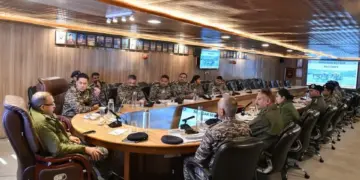
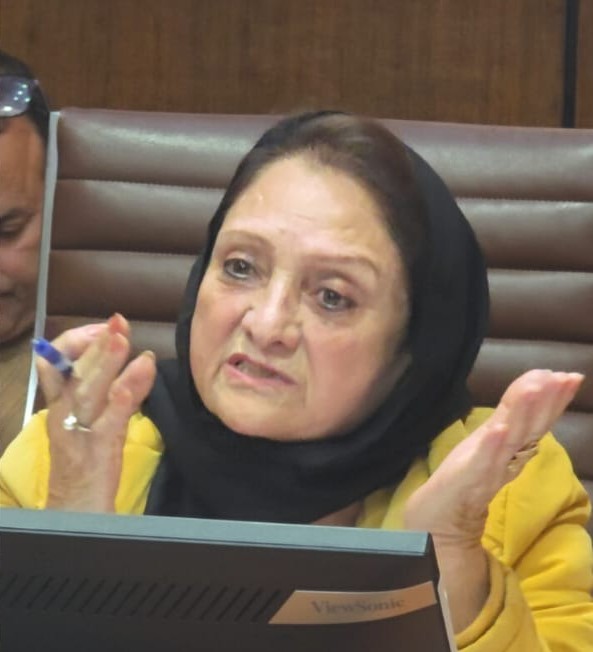
Education and Jal Shakti Minister Shamim Firdous announced this during a review meeting with senior officers of the School Education Department, representatives of private school associations, parents’ associations and members of civil society.
The Minister said the rules governing the implementation of the provision were in the final stage of notification and would be issued shortly. Under the provision, private schools will reserve 25 per cent of their prescribed entry-level seats for eligible children from EWS and disadvantaged groups. The government will reimburse schools for admissible expenditure incurred on providing free and compulsory education to these students in accordance with the applicable rules and procedures.
The proposed implementation is aimed at expanding access to private schooling for children from economically weaker and disadvantaged backgrounds, allowing them to access educational opportunities alongside students enrolled in the existing public education system.
The meeting also examined complaints and concerns relating to the prescription of textbooks, supplementary learning material and the financial burden on parents.
Following deliberations, it was decided that private schools affiliated with the Jammu and Kashmir Board of School Education (JKBOSE) would follow its prescribed curriculum and textbooks containing content aligned with the National Council of Educational Research and Training (NCERT) syllabus. Schools were directed to ensure that the books prescribed by them remained consistent with the applicable academic framework.
Firdous said students should not be burdened with unnecessary additional or supplementary books, noting that the National Education Policy (NEP) 2020 envisages a balanced, flexible and child-centred approach to learning.
She advised private schools to exercise caution while prescribing additional books and educational material, adding that supplementary resources, wherever necessary, could be made available through school libraries, book banks, e-books and other digital learning platforms rather than requiring parents to purchase multiple books.
The Minister also took note of complaints regarding the alleged sale of textbooks at exorbitant prices and said such concerns needed to be addressed seriously. She made it clear that excessive and unnecessary prescription of books would not be tolerated, stressing that the focus should remain on meaningful learning rather than increasing the volume of study material.
Issues relating to school uniforms, notebooks, writing materials and other educational supplies were also discussed during the meeting.
Firdous said parents should have the freedom to purchase uniforms, books, notebooks and other stationery from vendors of their choice. Schools, she said, should not restrict procurement to particular shops or vendors operating within school premises or impose conditions that could place additional financial pressure on families.
Emphasising the need for collective efforts to improve educational standards, the Minister said the education system was evolving towards better learning outcomes and the holistic development of students. She called for greater coordination among the government, school managements, parents and other stakeholders to ensure quality education and safeguard the interests of students and their families.
She said educational institutions should encourage curiosity, creativity and independent thinking among children, with greater emphasis on academic progress, critical thinking and all-round development rather than an excessive dependence on textbooks and supplementary material.