SRINAGAR: The Federation of Chambers of Industries Kashmir (FCIK) has criticised the Reserve Bank of India’s (RBI) Regional Office, Jammu, over what it described as a lack of tangible relief for distressed micro, small and medium enterprises (MSMEs) in Jammu and Kashmir despite repeated review meetings and assurances.
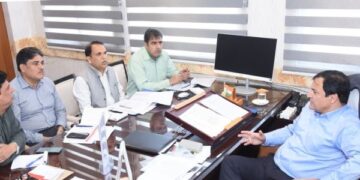
Reacting to the 72nd meeting of the Empowered Committee on MSMEs for Jammu and Kashmir and Ladakh, FCIK said discussions on liberal financing, credit guarantees and revival mechanisms had failed to address longstanding problems faced by struggling industrial units.
Questioning the outcomes of the successive meetings, the industry body sought details of the number of enterprises rehabilitated, financing deficiencies corrected and decisions implemented.
FCIK said the RBI’s Regional Office should ensure that local economic conditions are reflected in banking policies and pursue corrective measures to address credit-related bottlenecks.
The federation said industrial enterprises, particularly in Kashmir, had suffered substantial losses due to prolonged disruptions, shutdowns, restrictions and natural calamities, while interest liabilities, wages and other statutory expenses continued to accumulate.
It claimed that inadequate working capital, delayed financial assistance and emergency borrowings, including overdrafts carrying interest rates of up to 18 per cent, had pushed otherwise viable businesses into financial distress.
Seeking intervention on legacy debt, FCIK called for realistic restructuring, rehabilitation and affordable settlement mechanisms based on borrowers’ repayment capacity and the circumstances that led to financial distress.
The federation also questioned the monitoring of banks’ compliance with the RBI’s Framework for Revival and Rehabilitation of MSMEs, alleging that several enterprises were allowed to become non-performing assets (NPAs) without timely corrective intervention.
It demanded a bank-wise account of eligible enterprises identified before NPA classification, cases considered for corrective action, accounts restructured or revived, and reasons for rejecting rehabilitation proposals.
FCIK further alleged that NPA classification was frequently followed by notices under the Securitisation and Reconstruction of Financial Assets and Enforcement of Security Interest (SARFAESI) Act and e-auction announcements, even when rehabilitation or settlement requests remained unresolved.
The industry body said public recovery notices could damage entrepreneurs’ reputations, business relationships and prospects of revival, particularly in closely knit communities.
Questioning the implementation of the Trade Receivables Discounting System (TReDS), FCIK said repeated appeals for MSME registration on the platform would have limited impact unless government departments and public sector undertakings (PSUs) purchasing from small businesses also registered and accepted eligible invoices within stipulated timelines.
It sought details of departments and PSUs registered on the platform, invoices accepted, amounts financed and timelines followed for invoice acceptance.
The federation also raised concerns over the absence of a Debt Recovery Tribunal (DRT) in Jammu and Kashmir, saying local borrowers were required to pursue proceedings in Chandigarh, involving additional expenses and inconvenience.
While acknowledging that establishing a DRT falls within the Central Government’s jurisdiction, FCIK sought details of the RBI Regional Office’s recommendations and follow-up efforts for setting up a tribunal in the Union Territory or arranging regular circuit sittings in Srinagar and Jammu.
Recalling its engagement with then RBI Governor Y.V. Reddy in 2005, FCIK said earlier interactions had resulted in concessions and stronger monitoring mechanisms through Empowered Committees.
However, it claimed that these committees, along with the State Level Inter-Institutional Committee and its subcommittee established to rehabilitate sick industrial units, had subsequently become ineffective or been discontinued.
FCIK urged the RBI Governor to review the performance of the Regional Office and introduce a time-bound programme for resolving legacy debt, enforcing rehabilitation safeguards, ensuring effective TReDS participation and improving access to debt adjudication.
The federation said repeated meetings and assurances needed to translate into measurable relief for industrial units facing prolonged financial distress.