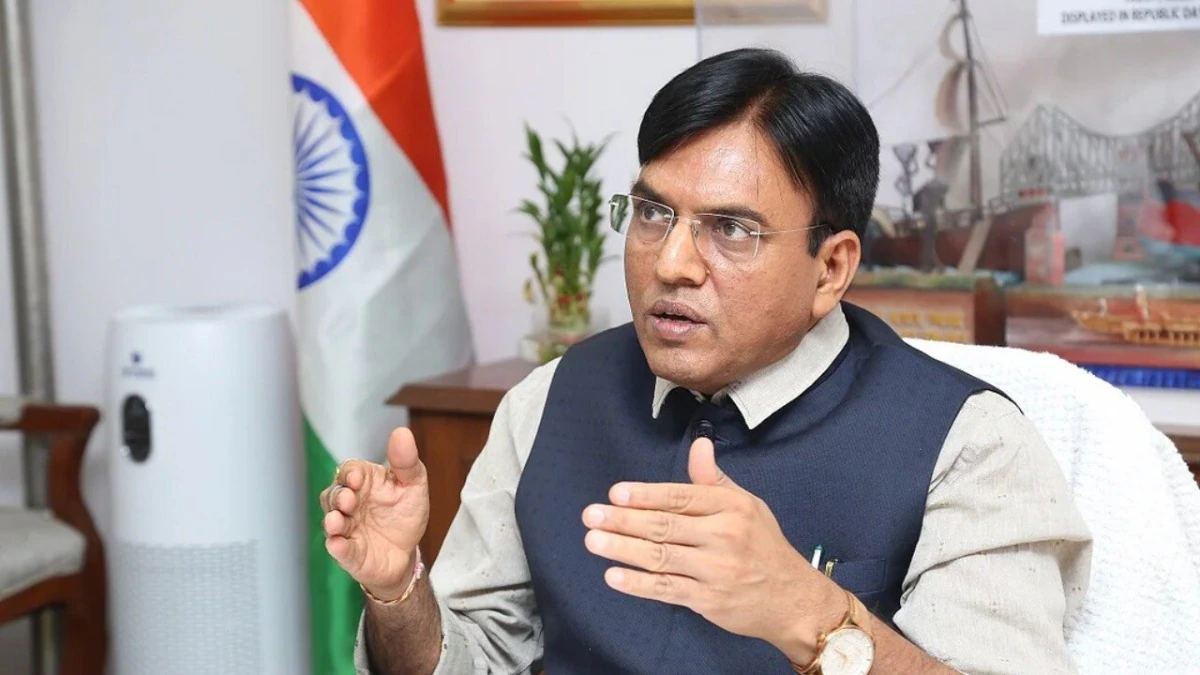
NEW DELHI: India plans to further amend its National Anti-Doping Act to introduce criminal provisions for doping-related violations, including those involving coaches and supply chain stakeholders, Union Sports Minister Mansukh Mandaviya said on Tuesday.
Mandaviya made the announcement while chairing the third formal meeting of the Bureau of the 10th Conference of Parties (COP10) and the fourth formal meeting of the Approval Committee of the Fund for the Elimination of Doping in Sport for 2026-27, held under the UNESCO International Convention against Doping in Sport in New Delhi.
He said the proposed amendment would be taken up in the next session of Parliament to strengthen the country’s legal framework for tackling doping in sport.
India has strengthened its anti-doping framework through the National Anti-Doping Act, 2022, and its 2025 amendment, both of which came into force in July 2026, Mandaviya said.
He said the National Anti-Doping Agency (NADA) conducted more than 7,000 tests and over 350 education and awareness sessions during 2025-26, reaching around 27,000 participants. The agency also focused on risk-based testing and intelligence-led investigations, he added.
Mandaviya said the Know Your Medicine mobile application had recorded more than five lakh searches, helping athletes make informed decisions about medicines and their ingredients.
He said India remained committed to ensuring fairness in sport and preventing athletes from gaining an advantage through prohibited substances or methods.
The minister also highlighted a proposed memorandum of understanding between the Ministry of Youth Affairs and Sports, the Ministry of Education and UNESCO to introduce the Sport Values in Every Classroom Toolkit in India. The initiative aims to promote sporting values, ethics and integrity among school students.
The meeting focused on strengthening international cooperation against doping and improving implementation of the UNESCO convention. Discussions included a framework outlining the roles and responsibilities of public authorities in the global anti-doping system, expanding anti-doping education and academic research, and engaging member states through the National Compliance Platform.
Participants also discussed resource mobilisation, compliance and capacity-building, as well as the Fund’s Operational Strategy for 2026-2031.
The inaugural session was attended by Farid Gayibov, Azerbaijan’s Minister of Youth and Sports and Chairperson of the COP10 Bureau; Luke McCann, Chairperson of the Fund’s Approval Committee; Hari Ranjan Rao, Secretary (Sports), Government of India and Vice-Chairperson of the COP10 Bureau; and Gustavo Merino, UNESCO Director for Social Policies and Inclusion.
Members of the COP10 Bureau and the Fund’s Approval Committee from Zambia, Spain and Russia also attended the meeting.
India represents Group IV as a Vice-Chairperson in the COP10 Bureau.