

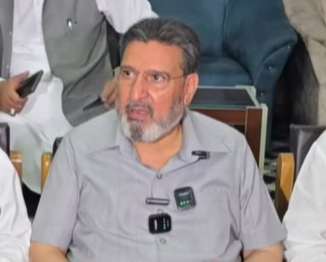

SRINAGAR: Apni Party president Syed Mohammad Altaf Bukhari on Sunday alleged that changes to Srinagar’s Master Plan had caused long-term damage to the city’s character and development, and called for an inquiry into the circumstances under which the alterations were made.
Addressing a public meeting at Chinar Colony in Parraypora, Chanapora constituency, Bukhari claimed that areas originally designated for commercial use had been converted into residential zones, while some residential areas had been opened up for commercial activity.
He alleged that commercial structures had been allowed to come up in residential colonies, adversely affecting residents, and demanded an investigation into who authorised the changes and for what purpose.
Bukhari also sought a probe into what he described as reports suggesting that land was being purchased in the names of local residents to facilitate the settlement of outsiders in Jammu and Kashmir. He alleged that certain local individuals were acting on behalf of outsiders in such transactions and called for an inquiry into the matter.
On political issues, the Apni Party leader reiterated his appeal to Prime Minister Narendra Modi to initiate dialogue with the people of Jammu and Kashmir, particularly the youth, and to ensure constitutional safeguards for the domicile law.
Bukhari said many young people continued to face difficulties related to police verification and employment opportunities. He urged the government to address their concerns and facilitate their integration into mainstream social and economic life.
Referring to Jammu and Kashmir’s accession to India in 1947, Bukhari said the decision taken by the leadership of the time was final and that the Union Territory would remain a part of the country.
He also criticised the ruling National Conference-led government, alleging that several promises made during the 2024 elections had not been fulfilled. Among other issues, he raised concerns over the release of detainees, extension of domicile protections and the implementation of the existing reservation policy.
Bukhari described the current reservation framework as inequitable and called for a review based on population ratios.
The Apni Party chief further alleged that Srinagar continued to face civic challenges, including inadequate drinking water supply, poor drainage infrastructure, shortage of parking facilities, insufficient marriage halls in parts of the city and a lack of housing options.
He also claimed that road macadamisation and development works were being carried out selectively on the basis of political affiliation, an allegation not independently verified.
Addressing the gathering, Apni Party vice-president Mohammad Syed Akhoon accused the National Conference of making promises during the election campaign that could not be fulfilled under the Union Territory framework.
Party general secretary Rafi Ahmad Mir said Jammu and Kashmir faced significant political and environmental challenges and called for greater public engagement on these issues.
Several senior party leaders, including provincial president Mohammad Ashraf Mir, also attended the meeting.