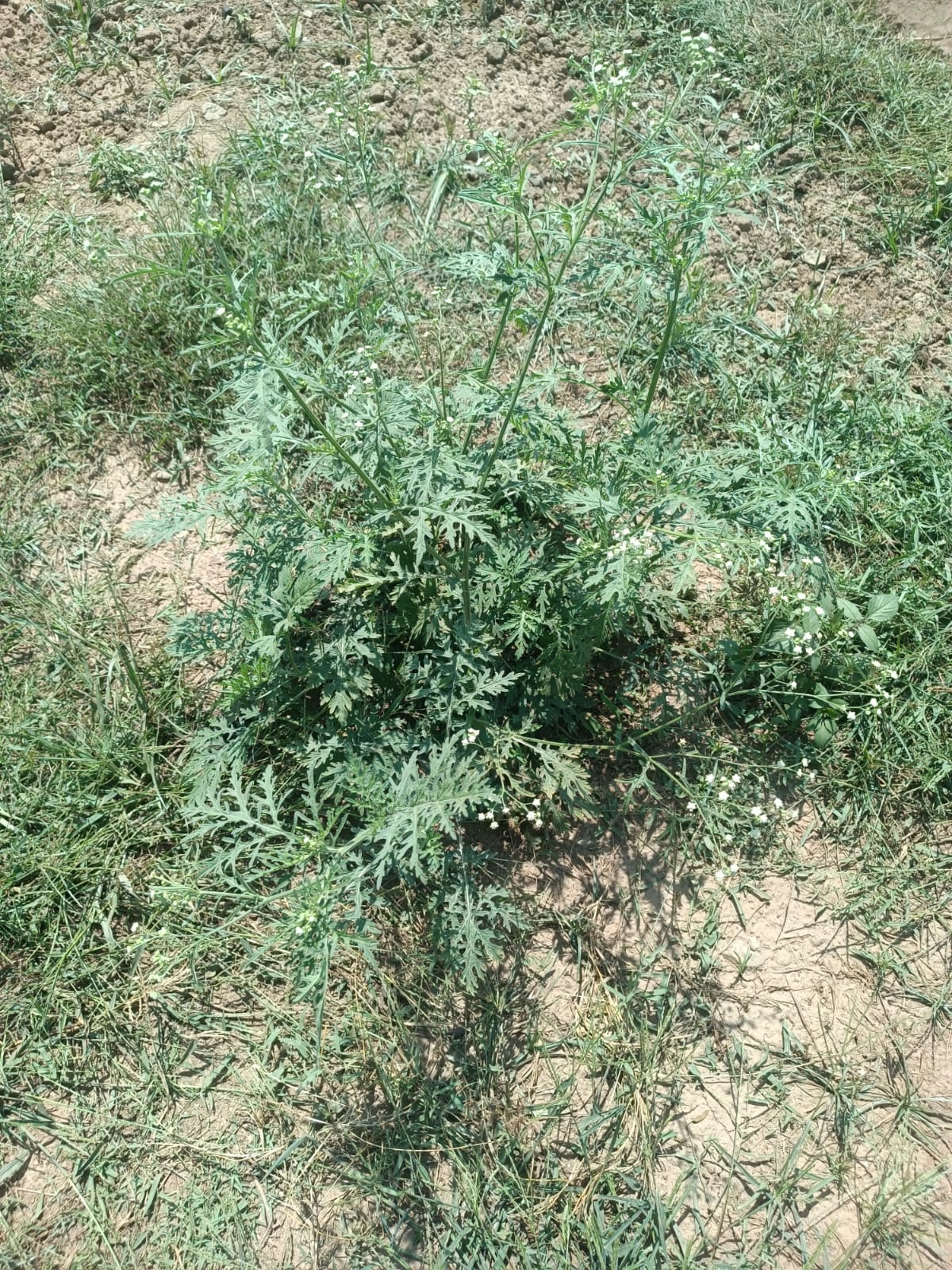
SRINAGAR: Sher-e-Kashmir University of Agricultural Sciences and Technology of Kashmir (SKUAST-K) has issued an advisory urging farmers and agricultural stakeholders to remain vigilant after the invasive weed Parthenium hysterophorus was recently detected in an agricultural field in Srinagar.
The university said the sighting should serve as an early warning and called for heightened surveillance to prevent the species from establishing itself in Kashmir’s agricultural ecosystems.
According to SKUAST-K, Parthenium hysterophorus, a member of the Asteraceae family, is regarded as one of the world’s most aggressive invasive weeds due to its rapid growth, prolific seed production and ability to suppress surrounding vegetation through allelopathic effects. Scientists warned that the species can reduce crop productivity and pose risks to biodiversity and ecosystem health.
The advisory was issued by a team comprising agronomists Prof Purshotam Singh and Prof Amal Saxena, and Director Extension SKUAST-K Prof Raihana Habib Kanth.
The scientists said recent studies have confirmed that the weed can complete its entire life cycle under Kashmir’s temperate climatic conditions. They noted that its seeds can survive winter in the soil, germinate between late March and early May, and produce viable seeds before the onset of autumn frosts.
The experts also cautioned that rising temperatures could create more favourable conditions for the weed’s spread. They said the species can be dispersed through contaminated soil, agricultural machinery, water flow, vehicles and contaminated seed or feed material.
While Parthenium has been reported in Jammu and Kashmir previously, the latest detection provides evidence of its successful adaptation and reproduction in the Valley, the scientists said.
SKUAST-K has recommended an integrated management approach involving regular surveillance, early identification, mechanical removal, targeted eradication measures and long-term monitoring to prevent the weed from spreading across Kashmir’s farmlands.