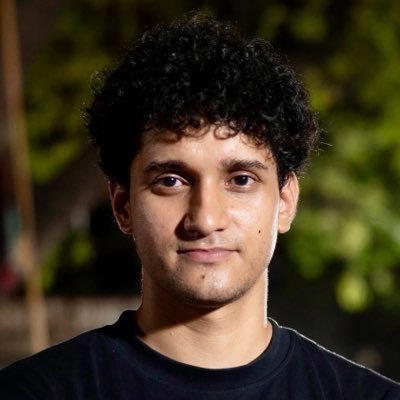
New Delhi: The Cockroach Janta Party (CJP) on Tuesday accused the Centre of delaying action on its assurance to withdraw FIRs against students and protesters and demanded that the outfit’s members be included in the high-powered committee announced by the Supreme Court to examine allegations of police excesses and violence against police personnel.
Speaking to the media outside the Supreme Court, CJP’s chief spokesperson Saurav Das said the apex court during the day’s hearing on the alleged violence against protesters on July 20 in and around Jantar Mantar had asked the government three times to provide a list of FIRs registered against protesters. He demanded that the government submit to the Supreme Court the list of cases that can be quashed.
The court was hearing a batch of pleas alleging police excesses against student protesters during the agitation spearheaded by the CJP and allegations of violence against police personnel.
Das said the petitioners, through their lawyer Vrinda Grover, urged the Supreme Court to invoke Article 142 to quash the FIRs against protesters across the country.
According to Das, Grover told the court that the Centre should have no objection to such a move as its representatives, including Union ministers J P Nadda and Jitendra Singh, had agreed to the demands of the protesters when the agitation was called off on July 25.
“The government has not given a commitment to the Supreme Court today that they are going to give it (the list of FIRs). The Supreme Court said three times to the government today that you should give us this list, only then will we quash it,” Das said.
He claimed the government had also not honoured its assurances on compensation and had failed to hold subsequent meetings with representatives of the CJP.
“If you have given a commitment, then you will have to honour it. You are not honouring all the commitments you have made about compensation, about FIRs. So, you have betrayed the entire country,” Das said.
He said that if the government fails to take steps to meet its commitments, the CJP’s National Working Committee would meet and decide its next course of action.
“If the youth of the country are forced to take to the streets again, then this time it will not be right for the government,” he said.
CJP legal affairs head Ratna Singh said the last meeting between the organisation and the government delegation was on August 2 and a draft, vetted by lawyers, had subsequently been shared.
She alleged that there had been no response from the government to requests for another meeting.
“They even agreed that they will take a stand in the court with respect to invoking Article 142. They have not taken any such stand today,” Singh said, adding that the draft prepared with the government should be brought before the court.
Das said the government had identified around 2,800 “hardened criminals” and argued that those facing serious criminal charges should be dealt with separately from peaceful protesters.
“If you want to take action against them, that is a different issue altogether. But the issue of the students, the issue of the protestors, is related to the FIR,” he said.
On the proposed high-powered committee, Singh said the CJP would want its representatives to be included and insisted that the panel should comprise independent members. “We are sure that the High-Powered Committee will find a solution as long as it is independent. But we would also like the members of the CJP team to be a part of it.”
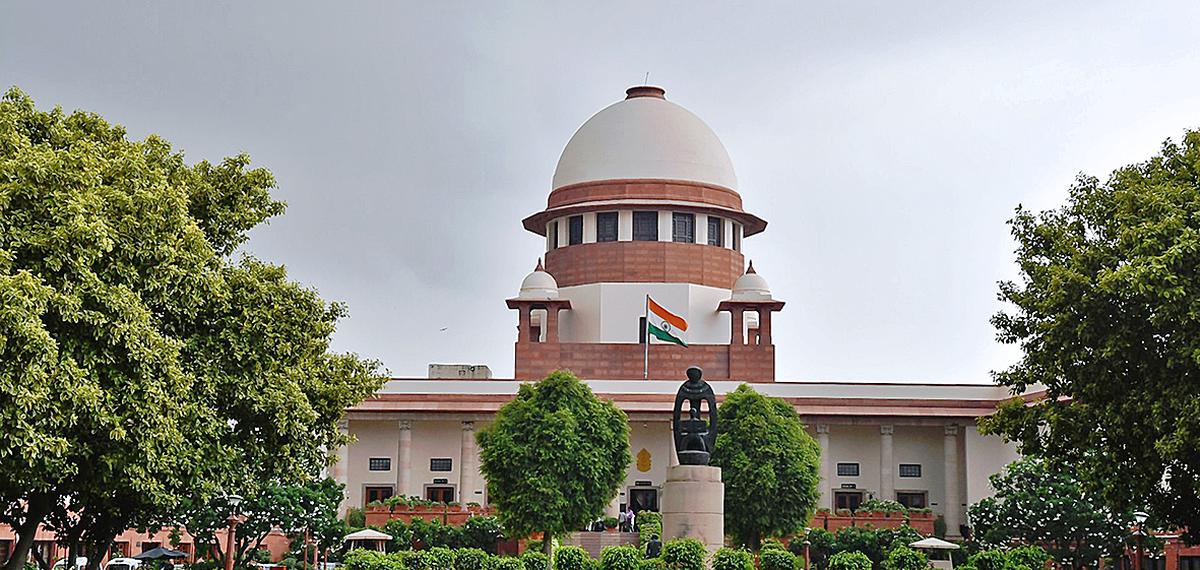
The Supreme Court on Tuesday said it would constitute a high-powered committee comprising retired apex court and high court judges, a former DGP, and an ex-CBI director to examine allegations of police excesses against student protesters and violence against police personnel.
A bench of Chief Justice Surya Kant and justices Joymalya Bagchi and V Mohana said an order for constituting the committee would be released on Wednesday after it receives suggestions from parties on other members to be included in the panel.
Speaking to the media, Das also questioned the use of facial recognition technology during the Jantar Mantar protest, saying protesters were photographed, videographed and monitored through CCTV cameras.
“There are several constitutional questions concerning the facial recognition technology. There is a lot of misuse that can happen. I think safeguards need to be put in place,” Das said, urging the Supreme Court to examine whether such surveillance was constitutional.
Asked about political allegations involving the Aam Aadmi Party (AAP), Das said the CJP did not want to be drawn into a political blame game and asked the government to focus on the students and protesters. Das also alleged that labels like “Urban Naxals” and “Dimaagi Naxals” were aimed at discrediting young people.
The BJP has accused the CJP of being a proxy for AAP.
Das said the CJP had launched a nationwide “School Theek Karo” campaign under which young people were documenting infrastructure problems in schools. The organisation was beginning a nationwide tour and would decide its next course of action based on the government’s response.
“All the demands should be fulfilled,” Das said, questioning the government’s willingness to provide compensation to families of students who allegedly committed suicide over paper leak.
“The youth of the country will not tolerate this. I am warning you again. Please mend your ways. Otherwise, we will be again forced to take some action,” he said.
Das maintained that people should not be required to seek permission to exercise their constitutional right to hold peaceful protest. He said the CJP had cooperated with Delhi Police during the Jantar Mantar demonstration.
He alleged that protesters were subjected to excessive force and sexual assault during the July 20 incident, and these allegations should be examined independently.
“There is nothing to welcome here. Let something concrete happen, then we will welcome,” Das said when asked about the Supreme Court proceedings.
The apex court said that the committee will also look into allegations concerning sexual assault and online harassment of female protestors and victimisation of other vulnerable persons through social media.
“Whosoever is responsible, there can be no excuse and no justification. It must be taken seriously and taken to its logical conclusion. That is why we are constituting a high-powered committee.The committee will look into each and every aspect of these matters,” CJI Kant said.
The top court further said that it would direct the handing over of video footage and CCTV recordings of the violence during the July 20 Parliament march in Delhi to the high-powered committee for examination.