New Delhi: The Congress on Friday attacked the government over the caste census issue, saying that not carrying a list of castes with responses recorded as shared by respondents raises “serious doubts on intent” and there had been no discussion with political parties.
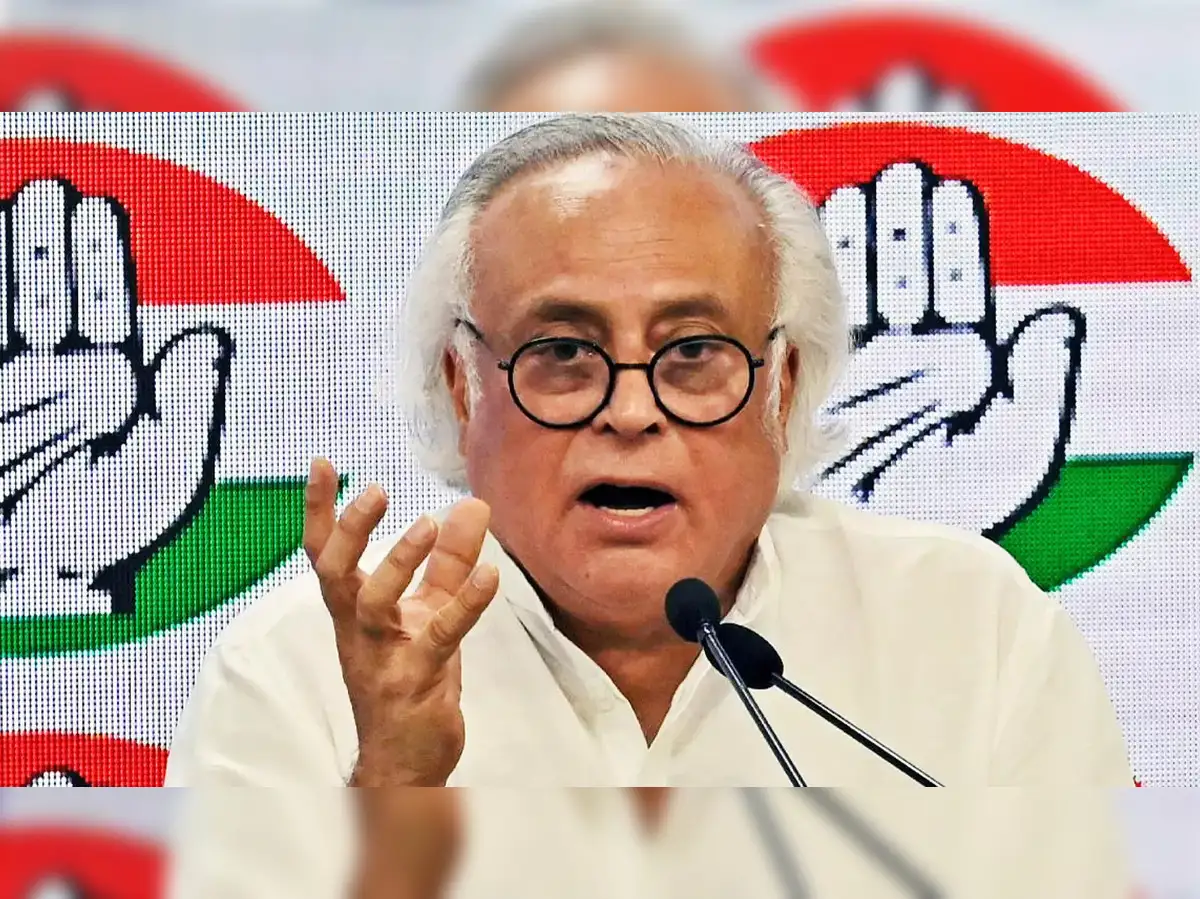
Congress general secretary in-charge communications Jairam Ramesh said it had been widely expected that the caste question will be asked with a pre-prepared state-wise list as had been done in the Bihar and Telangana caste surveys with the response being just ticked appropriately.
“This has, unfortunately, not happened, raising serious doubts on intent,” Ramesh said on X.
Ramesh also shared on X Congress president Mallikarjun Kharge’s letter of May 5, 2025 to Prime Minister Narendra Modi on the caste census.
“His very first and fundamental suggestion has been completely ignored. There has also been no discussion with political parties as demanded by Kharge ji,” Ramesh said.
Kharge had written to Prime Minister Modi in May last year on the government’s caste census decision, urging him to draw upon the Telangana model as well as have a dialogue with all political parties soon on this issue.
Kharge had made three suggestions with the first one being about the design of the census questionnaire.
Caste information has to be collected not for counting purposes but for achieving larger socio-economic objectives, Kharge had pointed out.
The recently-concluded Telangana caste survey was designed and implemented with such goals in mind. The Union Home Ministry must draw upon the Telangana model–both the methodology adopted for finalising the questionnaire as well the final set of questions asked,” the Congress president had said.
The Centre on Friday notified 40 questions with caste, place of Covid vaccination being two of them to be asked of respondents during the population enumeration phase of the Census, set to begin from September 1 in snow-bound areas, a government order said.
The order from Registrar General of India Mrityunjay Kumar Narayan notifies questions such as whether the person belongs to a Scheduled Caste or a Scheduled Tribe and their caste.
The population enumeration in Ladakh and snow-bound non-synchronous areas of Jammu and Kashmir, Himachal Pradesh and Uttarakhand, will take place from September 1 to 30, according to a gazette notification issued earlier this month.
“For the conduct of the above Census, there shall be an option for self-enumeration from August 17 to 31 just before the start of house-to-house population enumeration,” it said.
In the rest of the country, the population enumeration (PE) will begin next year.
This will be the first time when caste details will be collected as part of the Census.
The questionnaire is unlikely to carry a list of castes, and the responses will be recorded as shared by respondents, sources said.
The decision to include caste enumeration was taken by the Cabinet Committee on Political Affairs, chaired by Prime Minister Modi, on April 30 last year.
“In exercise of the powers conferred by sub-section (1) of section 8 of the Census Act, 1948 (Act 37 of 1948), the Central Government hereby instructs and directs that the census officers may, within the limits of the local area for which they have been respectively appointed, ask all such questions of all persons residing within such limits, subject to the items enumerated below, for collecting information through the Household Schedule in connection with the Census of India 2027,” a notification from Registrar General of India said.
The respondents will be asked for personal details, such as marital status, age at marriage, spouse name, nationality, religion, Scheduled Caste (SC)/Scheduled Tribe (ST), caste, particulars of parents, disability, mother tongue, and other languages known, literacy, and digital literacy status, among others.
The biggest head count of the world will be a totally digital enterprise.
Respondents will also be asked for attendance in an educational institution, highest educational level, stream, discipline, if they worked at any time during the last year, category of economic activity, occupation, nature of industry, trade or service, class of worker and if engaged in non-economic activity (for marginal, semi-marginal and non-worker).
Whether they are available for work (for marginal, semi-marginal and non-worker) and if they travel to their place of work will also be part of the questionnaire.
The enumerators will also ask for the birthplace of respondents, place of last residence, reason for migration, duration of stay in this village/town since last migration, and permanent residential address, it said.
The first phase — house listing and housing census (HLO) — is on till September 30.