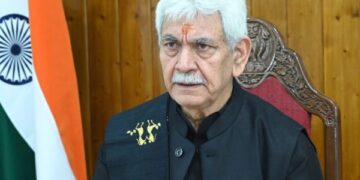
Srinagar: Chief Minister Omar Abdullah on Tuesday met travel, tourism, and business stakeholders here and discussed issues concerning the sectors and also chaired a high-level review meeting on the revival and operationalisation of JKOECL.
The stakeholders highlighted issues concerning the tourism industry, measures to strengthen tourist inflow, ease of travel, and initiatives required to sustain the momentum of tourism in Jammu and Kashmir, an official press release said.
It said the chief minister met delegations representing the travel, tourism and business sectors at the Civil Secretariat and held detailed discussions on issues concerning tourism promotion, business facilitation and the overall growth of the economy in Jammu and Kashmir.
Abdullah assured the representatives that the concerns raised by them would be examined and addressed in a time-bound manner in coordination with the concerned departments.
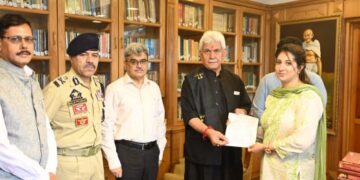
He said that a delegation comprising representatives of leading travel and tourism associations, including Irshad Ahmad (TAAI), Zahoor Qari, President SKAL International Kashmir, Burhan Misgar, Chairman Travel Agents Federation of India (TAFI), and Waseem Goosani, President TASK, called on the chief minister and apprised him of various matters relating to the travel and tourism sector.
They also shared suggestions aimed at improving visitor experience and enhancing Jammu and Kashmir’s position as a preferred tourist destination, the release said.
He said the chief minister heard the delegation and reiterated his government’s commitment to creating an enabling environment for the tourism sector, recognising it as one of the key drivers of economic growth and employment.
Later, Tariq Ghani, Secretary General, Kashmir Chamber of Commerce, also called on Abdullah and discussed a range of issues about business, trade and tourism, the press release added.
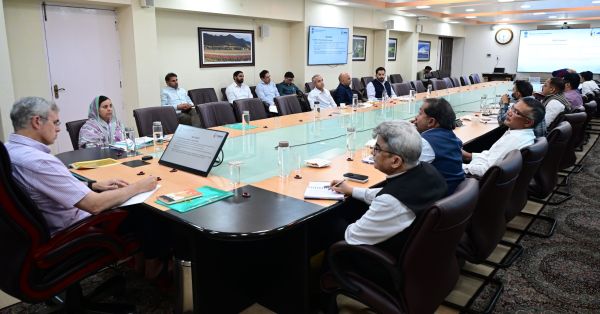
Meanwhile, chairing a high-level review meeting on the revival and operationalisation of JKOECL, CM assessed J&K’s overseas recruitment facilitation infrastructure and stressed the need for a robust institutional framework to ensure safe, transparent and market-driven overseas employment, an official spokesman said.
He said Jammu and Kashmir should focus on creating a globally competitive workforce instead of merely facilitating migration, as he reviewed the roadmap for reviving the Jammu and Kashmir Overseas Employment Corporation Limited (JKOECL).
Reviewing the proposals, the chief minister said, “We should not only send people abroad; we should send skilled people there. Our focus should be on skilling.”
The meeting reviewed a strategy to revive JKOECL as the government’s nodal recruitment agency for overseas employment, with discussions focusing on strengthening institutional mechanisms, expanding international partnerships, aligning skill development with global standards, and creating an integrated ecosystem to prepare youth for international careers.
A detailed presentation by Director Employment J&K Harvinder Singh outlined a phased roadmap for operationalising JKOECL.
The plan includes a digital overseas employment portal, partnerships with licensed recruiting agencies, foreign language and international certification programmes, employer engagement, counselling, pre-departure orientation and post-placement support.
According to the spokesman, the proposed framework envisages JKOECL as the nodal agency coordinating with the Ministry of External Affairs, the Protector of Emigration, Indian missions abroad, skill institutions and licensed recruiting agencies to ensure ethical, transparent and legally compliant overseas recruitment.
Protector of Emigration, Chandigarh, Ministry of External Affairs, Yashu Deep Singh, also made a presentation on emigration trends from Jammu and Kashmir, the region’s contribution to overseas remittances, and employment opportunities available under India’s labour mobility agreements with several countries.
He highlighted sector-wise demand for workers, emerging job roles in global markets and key challenges affecting overseas migration from J&K, including limited awareness of legal migration channels, inadequate institutional outreach, dependence on unverified social media information and the need to develop skills that meet international standards.
The chief minister directed the concerned departments to prepare a time-bound implementation plan and translate the proposed pillars into clearly defined, actionable outcomes.
He also called for adopting best practices from Kerala and Tamil Nadu, which have successfully institutionalised overseas employment facilitation.
Emphasising long-term sustainability, Abdullah directed that the forthcoming Industrial Policy should provide for skill development and training institutes to build an ecosystem capable of meeting international workforce requirements.
He also stressed the need for a complementary industrial policy encouraging greater private sector participation in skill development and employment generation.