

In his autobiography ‘Romancing with Life,’ Bollywood legend, late Dev Anand, rightly observed, ‘Youth is the biggest asset of a nation’. Indeed, among all resources a nation possesses, its youth remain the most precious. This human capital brims with zeal, passion, energy, and unshakable enthusiasm. Given purpose, they can scale the heavens and plumb the depths of oceans and earth. Yet, if misdirected, that same fire can consume both the individual and the society around them. Thus, wise guidance and thoughtful counselling are essential to channel their boundless capacities toward nation-building.
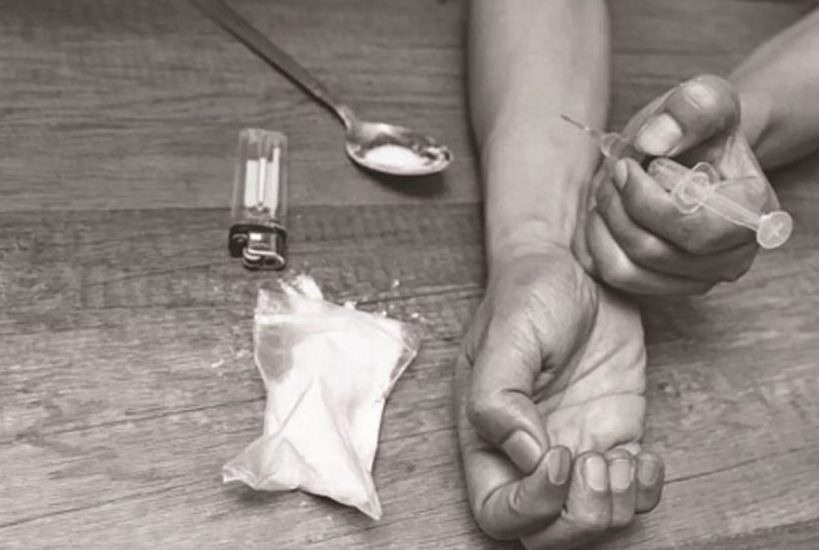
History bears witness to the fact that wherever and whenever nations have risen, youth have stood at the helm as architects of change and harbingers of progress. This age is the season of productivity, courage, and invention. But it is also an age of vulnerability. The young are most susceptible to perilous habits, and none is more devastating today than drug abuse – a menace now spreading like wildfire across the globe. Those between 16 and 25 stand as its worst-afflicted victims. With the advent of the internet, access to contraband has become alarmingly easy, and the epidemic has swelled to frightening proportions.
The descent often begins innocently – with sniffing boot polish, whiteners, thinners, or adhesives like Fevicol SR ( Synthetic Rubber ). But this seemingly trivial curiosity is the first step down a steep slope that ends in marijuana, cocaine, cannabis, heroin, and other narcotics. Once ensnared in the quagmire of this deadly addiction, escape becomes nearly impossible.
The initial rush of euphoria drags a person into a poisonous ocean, deeper and deeper, until they are buried beneath its weight, sometimes forever. Peddlers of death deliberately haunt schools and colleges, for they know young minds are impressionable and easily wheedled. This forces a painful question: why do people surrender to drugs in the first place ? The answers are tangled. Broken families, toxic company, socio-economic despair, flawed parenting, crushing exam pressure, cut-throat peer competition, and the unbearable weight of parental expectations – all become silent pushers. For some, it is not even choice but accident, a single misstep that becomes a life sentence.
Our valley, scarred by turmoil for nearly three decades, is now battling another silent war – the alarming surge of drug abuse. Researchers estimate that 60% to 70% of Kashmir’s students have fallen prey to gateway drugs, and nearly 40% of the state’s youth are trapped in addiction’s grip. This plague spares no one; our daughters stand beside our sons in this suffering. The uncertainty and insecurity bred by conflict have become fertile ground for drug peddling and trafficking. Violence has left deep wounds on young hearts. Many have lost fathers to bullets, others have lost mothers to despair. Dejected and abandoned, these souls seek solace in drugs – a fleeting illusion that promises peace but delivers ruin. Thus, the shadow of conflict is not just measured in blood, but in the slow poisoning of a generation. Violence remains a powerful catalyst behind this devastating spread.
Unemployment is yet another wound that drives our youth toward drugs. It crushes aspirations and dims the light in bright eyes. When political regimes fail to create jobs, even the most qualified and meritorious become easy prey for addiction. And who among us is unaware of the bleak employment landscape in our state? Years of turmoil have left our youth fragile, and rising joblessness has rendered them dangerously vulnerable to narcotics. Yet, to both the educated and the unskilled, I say this: do not lose hope. Do not leap into the blazing flames of drug abuse. With iron will-power and the anchor of family, anxiety can be conquered. Look beyond the mirage of government jobs – dignity and livelihood await in countless other honest paths.
A broken home breaks more than just walls – it breaks lives. Divorce, separation, and domestic violence are silent pushers that enslave countless souls to drug abuse. Children of fractured families stand most exposed to this storm. In the mad race for wealth, many parents grow blind to the child waiting at home.
Neglected and unheard, these children drift until no escape remains but the false refuge of drugs. Yet how many of us pause to ask our children about their dreams, their fears, their quiet longings? Parenting is not a part-time role. Be present. Be their friend when they need laughter, their guide when they need direction, their counsellor when they need healing.
Talk to your teens openly about drugs – name the poison, show its deadly face. And watch closely. If you notice sudden mood swings, a craving for solitude, or excuses to avoid school, step in. Sit with them. Speak with love. One honest conversation can overrule the darkest possibility.
Bad company is yet another gatekeeper to the hell of drug abuse. Schools, colleges, and coaching centers — meant to be temples of learning — too often become the first places where students are introduced to these poisons. Here, the duty of parents and teachers doubles. They must not only teach, but guard. Our children need to be warned, clearly and repeatedly, about the ruin that hides behind a “friend’s” offer. Vigilance is love.
Parents must keep a watchful eye on their teens’ smartphones, computers, and social circles — not to invade, but to protect. And frequent, unsupervised outings should not be a blind right; they must be earned with trust. One wrong friend can undo years of upbringing. Let us not learn that truth too late.
Peer pressure and the weight of parental expectations are silent forces driving teens toward drug abuse. In classrooms, a teacher’s bias can wound deeper than any test score. No child should be marked by intelligence or performance alone. The low performer deserves encouragement, not indifference – every student merits the same warmth, the same faith. Parents, too, must tread gently. Do not ask your children to live the dreams you left unfinished. They are not vessels for your uninterpreted ambitions. Each child arrives with their own stars – their own aspirations, interests, and gifts. To thrust our unfulfilled desires upon them is to plant seeds of stress and anxiety. And from that soil, depression grows. From depression, the desperate search for escape, and too often, that escape is drugs. Even the turbulence of young love and heartbreak can become a trigger. Our duty is to listen, not load ; to guide, not govern.
Easy access is a silent killer. When cannabis and poppy grow in our own backyards, temptation walks into our homes. Curiosity tempts the young to taste them once, and with time, that single taste becomes a chain, that chain becomes a prison. Habit hardens into addiction. We must face a painful truth: in our lawns, orchards, and fields, we are often growing poison for our own children. The cultivation of cannabis and poppy cannot be encouraged, nor ignored. Each plant we allow is a step toward a child’s ruin. Let us take a pledge today – to cleanse our surroundings of this green poison. Let us uproot addiction before it takes root in our homes. Only then can our toddlers breathe free air, play on safe soil, and grow into a healthy, Nasha Mukt generation.
Our pulpits must preach more than prayer. The domain of Islam is not confined to rituals and worship alone, it is a complete code for life. Let the ” mimbar ” of every mosque become a platform for mass awareness. Our respected Imaams should speak boldly against social evils, and today, none is more urgent than the menace of drugs. Teachers, too, carry a sacred duty, especially in high and higher secondary schools, where tender minds are most vulnerable to ruin. A word from a teacher can save a life; silence can lose one. And to parents: your child does not hunger for wealth alone. Money builds houses, but only your time, vigilance, and love build homes. No fortune can replace an hour of listening, a moment of guidance, a lifetime of care. Sit with your children. Know their world. It is not gold but guardianship that secures their safe, happy future.
This is our collective battle, and none of us can afford to be a bystander. Saving our future generations from the grip of drugs and other evils demands action, now, not tomorrow. We call upon the authorities, especially the Police and Excise Departments, to awaken and enforce the laws already enshrined in our books. The ground beneath us is slipping; each day of delay drags us closer to the edge. Any further negligence will not be a mistake, it will be a catastrophe for our very existence.
But laws alone cannot save us. Let us each uphold the morals and ethos that once made our valley paradise. Let conscience be our compass. Let courage be our creed. For the sake of our children, for the soul of Kashmir, let us rise. Say no to drugs. Say yes to life. Say yes to a beautiful world we can still reclaim.
The Author is a Teacher and a Columnist from Bandipora, writing regularly on culture, climate, education, folklore, history and social issues. He can be reached at mushtaqhurra143@gmail.com
mushtaqhurra143@gmail.com


