Pahalgam: “I wanted to see Munni here, but Munni is gone!” joked Mohammad Fadli, an international tour leader from Malaysia, referring to the young protagonist of the Bollywood movie ‘Bajrangi Bhaijaan’.
Yet, standing along the river Lidder where parts of the film was shot, his primary message to the world was far more serious that the entire Kashmir region including Pahalgam is “safe, and very peaceful”.
Fadli’s arrival in Pahalgam on Wednesday with a group of 21 visitors, exactly one year after the terror attack of April 22, 2025 that left 26 people mainly tourists dead, serves as a powerful testament to the valley’s resilience.
Despite the heavy presence of security forces acting as a sombre reminder of last year’s tragedy, Fadli was among a growing number of international travellers helping to turn the tide for local tourism.
A self-proclaimed fan of Indian cinema, Fadli said that the towering pines and rushing Lidder river are iconic landmarks for fans back home. “In Malaysia, we always watch Hindi movies,” he said, specifically mentioning the Salman Khan-starrer filmed in these scenic heights.
Having already accompanied a group of 30 Malaysian tourists through the valley just last month, Fadli remains undeterred by the past.
As his current group snapped photos along the river’s edge, he said that the peace of the landscape has remained intact for his travellers, offering a hopeful glimpse into a future where Pahalgam is defined by its beauty rather than its scars.
Stakeholders feel that tourists like Fadli underscores efforts of recovery for a tourism industry that was nearly paralysed by last year’s incident.
“We are safe. My group is really enjoying it and it is very peaceful here,” Fadli told PTI Videos. While his wife had visited previously, this trip has allowed him to experience the landscape that has long captivated Malaysian audiences through the silver screen.
When asked what he would say to those hesitant to visit Jammu and Kashmir following the tragedy, Fadli was clear in his message: “All people around the world can come here. Don’t worry about anything…the river is beautiful, everything is good. It is safe and very peaceful.”
Meanwhile, Managing Director of Ahad Hotels and Resorts Asif Iqbal Burza thanked the people from the rest of the country for coming back to their favourite destinations despite the inhuman attack last year.
“The people of the rest of the country are sending strong messages to enemies who wanted to disrupt the peace and create a communal divide,” he said and thanked J&K Chief Minister Omar Abdullah for initiating a campaign in favour of the people of Kashmir personally.
Abdullah had earlier camped in Pahalgam and held a cabinet meeting besides cycling on road.
One year on, Pahalgam picks up pieces
It was a day of recall, remembrance and resilience. A year after three terrorists opened fire at tourists in Pahalgam’s Baisaran meadow, 26 families on Wednesday observed the death anniversary of their loved ones and political leaders said in unison that the country would not bow to terror.
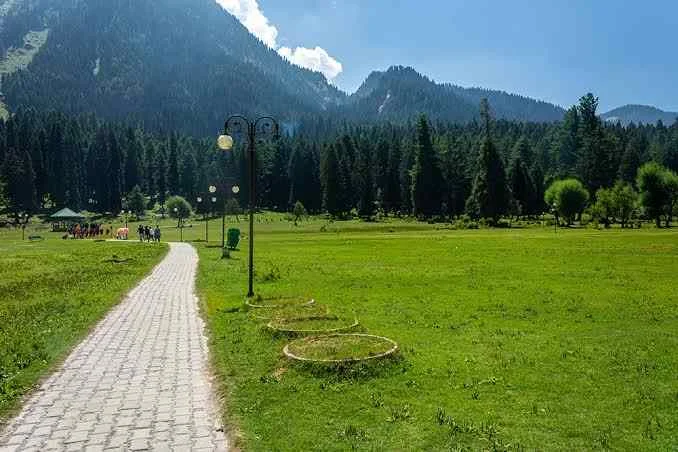
At the picturesque grassland of Baisaran, fringed by mountains and dubbed a mini Switzerland, the months of quiet that followed the terror attack have slowly given way to the bells of pony rides and the shutter-click of cameras as tourists begin to return.
While Baisaran remains closed, other areas in and around are open to visitors.
While cutting across political and ideological lines, various political formations and their leaders paid homage to those killed, away from the political debates, 26 families from across the country mourned their irreparable loss.
“That day, I lost everything in my life. Even today, I cannot forget that incident. Whenever I close my eyes, the incident comes back to me,” said PriyadarshinI Satpathy from Odisha’s Balasore district. Her husband Prashant Kumar Satpathy was among those killed.
“I am managing to somehow survive, because after he left, everything is gone – the happiness of my home and all the happiness in my life,” she said, adding that the government provided Rs 20 lakh as financial assistance but other promises, including a government job and support for her children’s education, are yet to be fulfilled.
In Kochi, Arathi R Menon, whose father N Ramachandran, was killed, addressed a memorial meeting to say that she was proud of India’s strong response to terrorism. “While standing here after one year, I feel that Bharath has given a stronger reply. The world is also aware about it,” she told reporters.
In Karnal, Haryana, Rajesh Narwal, the father of 26-year-old naval officer Vinay Narwal whose bullet-riddled body became the abiding image of the tragedy, said the family is still grappling with the tragedy.
“Though we continue to live as we must, life truly ended for us the day we received this devastating news,” he said.
Vinay Narwal, just 26 years old, and his wife of six days had gone to Pahalgam for their honeymoon.
As the families of the victims begin to pick up the threads of their lives, in Jammu and Kashmir, the mood was determined.
Security was beefed up across the Valley, especially at tourist hotspots.
The union territory’s economy took a hit with the exodus of tourists and many tourist hubs being closed.
It is slowly beginning to change with places now opening following rigorous security audits.
“The security arrangements are great. It does not feel like Pahalgam was the scene of those gory images we saw on TV last year,” said Vishal Ketkar from Maharashtra who travelled to Pahalgam for a holiday.
At the newly erected memorial in Pahalgam town, six kilometres from Baisaran, and nearby selfie points, tourists paused to pay their respects before continuing with their sightseeing.
The April 22, 2025 strike led to a wave of anguish and public defiance, the first in the Valley’s 30-year history of militancy with thousands of people from all walks of life holding rallies and candle marches to express their outrage.
For Narendra Pari from Mumbai, now on his third trip to Kashmir, the public protests were a powerful message to the rest of the country.
Jayishree Patel from Gujarat, who was on her eighth visit to the Valley, said visiting Pahalgam was a moral decision.
“Kashmir relies on tourism. It is the Switzerland of India, and it remains beautiful and safe,” she added.
“I’ve been here twice in the last month. To people around the world: don’t worry, it is safe,” said Mohammed Fadli from Malaysia.
A fan of Bollywood movies, Fadli said he has watched many Hindi movies, including “Bajrangi Bhaijan” shot in the Valley.
“I wanted to see Munni (a child artist from the movie), but she’s gone.”
Asif Iqbal Burza, managing director of Ahad Hotels and Resorts, thanked the people from the rest of the country for coming back to their favourite destinations despite the inhuman attack last year.
“The people of the rest of the country are sending strong messages to enemies who wanted to disrupt the peace and create a communal divide,” he said.
Added Pahalgam Pony Association president Abdul Waheed, “The murder of innocents is the murder of all humanity.”
The road to recovery isn’t easy.
While the footfall of tourists has increased, economic recovery remains an uphill task as many pony owners and local vendors, who previously earned up to Rs 1,800 daily, are now struggling to make Rs 200 as key sightseeing spots remain restricted, said Waheed.