Why is it that when people are alive, we so often fail to tell them what they truly mean to us? Why do our feelings and emotions seem to awaken with their fullest force only after they are gone? Why do we suddenly begin to feel there was so much more we could have done, so much more we could have said, so much more love we could have shown?
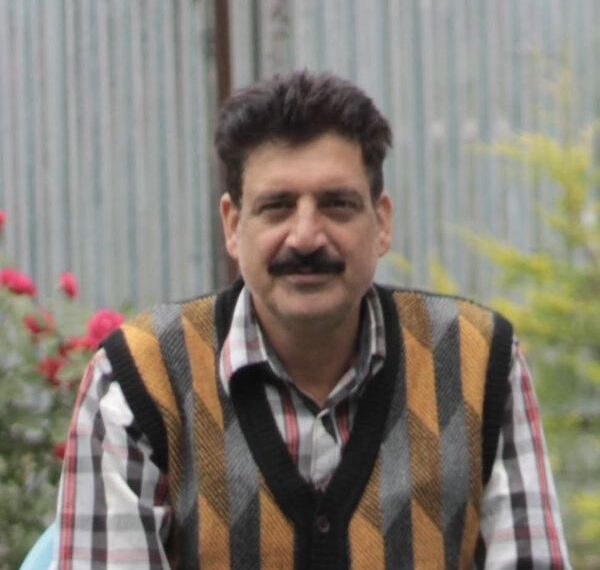
Ever since the passing of my cousin-in-law, Shafiq Ahmad Mir, whom we all lovingly called Baya, these thoughts have not left me. It has been four days, and I find myself carrying a strange and painful feeling of inadequacy. Not because my relationship with him lacked affection or closeness, it did not. My bond with him was always warm, affectionate and full of respect. Yet I cannot stop thinking about the things I wish I had done better, the things I wish I had said more clearly, the time I wish I had spent longer.
Perhaps this is simply what it means to be human. We only fully understand the value of someone when life no longer leaves us another chance.
When someone close to us leaves this world, we are left thinking about all the things we wish we had said or done while they were still with us. We think of our last conversation. We think of the last goodbye. We wonder if we could have spoken more gently, stayed a little longer, loved a little better. We suddenly feel so much motivation to help, to serve and to do favours for the people who are no longer here to receive them.
I have been carrying all of these thoughts since Baya left us.
Baya was not an ordinary person. He was one of those rare souls whose relationship with others was unconditional. Whatever responsibility came with a relationship, he fulfilled it without ever making anyone feel like a burden. He gave what he had with an open heart, and he never let people’s expectations of him burden him, because he was always willing to do more than was expected.
For me personally, he was there during the most difficult and darkest phases of my life. He did not stand beside me as a counsellor, or as someone trying to lecture me or tell me what to do. He stood beside me as a listener.
He listened to me in a way very few people ever do. He understood me more than he tried to make me understand his own perspective. He never said what I wanted him to say merely to comfort me, but somehow he always said exactly what my heart needed. There are some things that are too deep to put into words, and what he did for me belongs to that category. I do not think I will ever be able to fully explain how his support carried me out of the darkest moments of my life.
What breaks me even more is knowing that while he was helping me carry my burdens, he was quietly carrying the weight of his own. He was struggling with serious health problems himself. He needed support too. Yet, despite everything he was going through, he still chose to stand by me and do everything he could to make the difficult moments in my life easier for me to face.
I could never do anything substantial or meaningful for him in return. Whatever little I did came from my heart, but I never considered it a favour, and I never will. Because nothing I did could ever come close to what he did for me.
He had immense love, concern and respect for my parents. Even during our last meeting, when he was in so much pain, he still remembered to ask me about their well-being. Even in his suffering, he was thinking of others.
And that was not something reserved only for me or for my family. That was simply who Baya was.
Shafiq was his given name, and it means compassionate, affectionate, tender-hearted. There are some people who spend their lives trying to live up to their name. But with him, it felt as though the name was not given to him; he was given to the name. He did perfect justice to every meaning it carried. In his kindness, in his concern for others, in the gentleness with which he treated people, he was truly Shafiq in every sense of the word.
His compassion was not selective. It belonged to everyone, to his close relatives and distant relatives, to neighbours, to friends, and even to strangers. Whoever met him felt cared for. Whoever knew him knew that he had one of the kindest hearts.
He always motivated me to become better than I believed I could be. He raised my expectations of myself without ever making me feel small. He saw something in me that I often failed to see in myself.
The last time I met him, I could not spend much time with him. He was very unwell, and I could not bear to stay in that room and see him in so much pain. At the same time, I was carrying the weight of my own problems. Today, that memory hurts me deeply. Because I could not be for him what he had always been for me.
He supported me when he himself needed support.
And that is something I will carry in my heart for the rest of my life.
I will forever remain indebted to him, and this eulogy is still not enough to mention all the unconditional favours, love and support he gave me.
But if there is one thing his life has taught me, it is this: we must not wait until people are gone to tell them what they mean to us. We must not wait until the last goodbye to show our love. We must not leave our gratitude for tomorrow, because sometimes tomorrow never comes.
Baya bore pain with patience, dignity and grace. Allah is merciful to those who bear patience, and he bore it well.
May Allah forgive him, grant him eternal peace, and bless him with the highest place in Jannah. Ameen.