New Delhi: The Lok Sabha on Monday passed a bill to amend the insolvency law to provide for strict timelines, an out-of-court settlement option and enable the framework for cross-border insolvency processes.
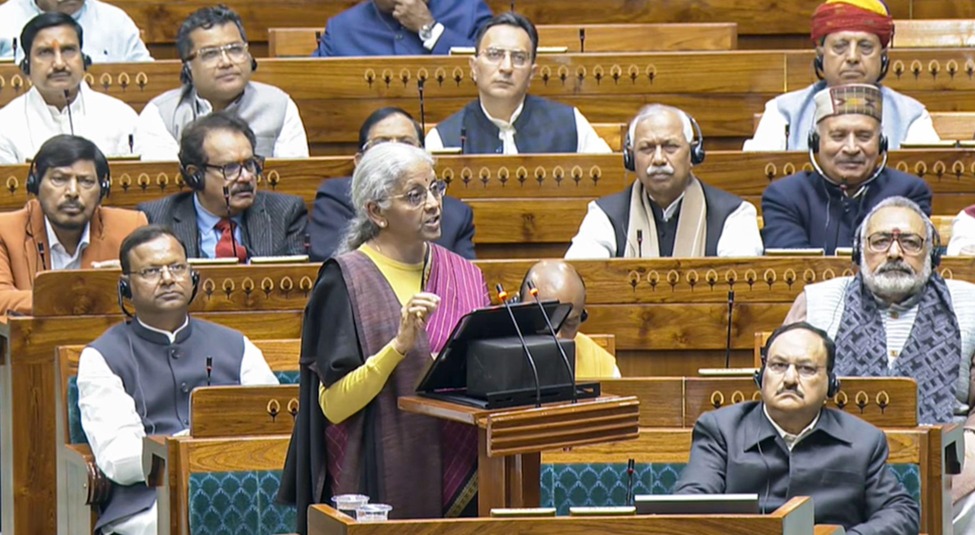
Piloting the bill in the Lok Sabha, Finance and Corporate Affairs Minister Nirmala Sitharaman said that 12 amendments are being made in the Insolvency and Bankruptcy Code (IBC), which came into force in 2016, that would help maximise the value for stakeholders and improve the governing process itself.
Amendments seek to strengthen the existing insolvency framework, as well as address practical challenges, and incorporate evolving global best practices, the minister said, and added that the law has been a major factor in improving the health of the country’s banking sector.
The Lower House cleared the Insolvency and Bankruptcy Code (Amendment) Bill, 2025, as reported by the Select Committee.
On August 12, 2025, the government introduced the bill in the Lok Sabha to amend the Insolvency and Bankruptcy Code (IBC), proposing a raft of changes, including provisions to reduce the time taken for admission of insolvency resolution applications.
The bill was referred to a select committee of the Lok Sabha, which submitted its report in December 2025.
Sitharaman stated that all the committee’s recommendations have been accepted.
IBC has been amended seven times so far.
The bill replaces the underutilised fast-track process with a new creditor-initiated insolvency framework, featuring out-of-court initiation, debtor-in-possession and creditor-in-control model, where management continues to vest in the existing Board of Directors or partners with safeguards, and defined timelines.
Also, there is an enabling framework for group insolvency and cross-border insolvency to promote investor confidence and align domestic practices with best international practices, Sitharaman said.
Stricter timelines will be put in place to ensure the timely resolution of stressed companies, and there will be penalties to deter vexatious and frivolous complaints that delay the process.
Among other changes, an application for initiating the insolvency resolution process has to be admitted within 14 days if the default by a company has been established, and appeals related to IBC before the National Company Law Appellate Tribunal (NCLAT) have to be decided upon within three months.
Sitharaman said the primary cause of delay is extensive litigation and that various steps are being proposed in the bill to address the issue, including new provisions for penalties ranging from Rs 1 lakh to up to Rs 2 crore on persons initiating frivolous proceedings to prevent abuse and delays.
The Adjudicating Authority (AA) has to approve or reject a resolution plan within 30 days of receipt, and there will also be the creditor-initiated resolution process, which is a new out-of-court initiation mechanism with a compressed 150-day timeline, the minister said.
Responding to concerns related to the efficiency of the IBC framework, Sitharaman asserted that companies have been doing well post-resolution and cited a study to mention that the market capitalisation of such firms grew from Rs 2.8 lakh crore to Rs 9 lakh crore in five years after resolution.
Noting that the IBC is a major and very crucial factor in improving the health of the country’s banking sector, the minister said Scheduled Commercial Banks (SCBs) have recovered a total of Rs 1,04,099 crore through various channels and out of the total amount, the IBC channel alone contributed a significant Rs 54,528 crore, accounting for 52.3 per cent of the total recoveries.
She also stressed that workmen’s dues are not ignored under IBC and that such dues are given higher priority and are equivalent to secured creditors.
“It (workmen dues) is above the unsecured financial creditors and even government dues. This proves that the IBC regime wants to ensure workmen are not shortchanged,” she said.