New Delhi: In order to boost manufacturing, the government on Wednesday approved Rs 33,660 crore Bharat Audyogik Vikas Yojna (BHAVYA) to develop 100 plug-and-play industrial parks across the country.
The scheme aims to develop world-class industrial infrastructure, unlocking manufacturing potential and driving India’s growth story, Information and Broadcasting Minister Ashwini Vaishnaw said while briefing reporters on Cabinet decisions.
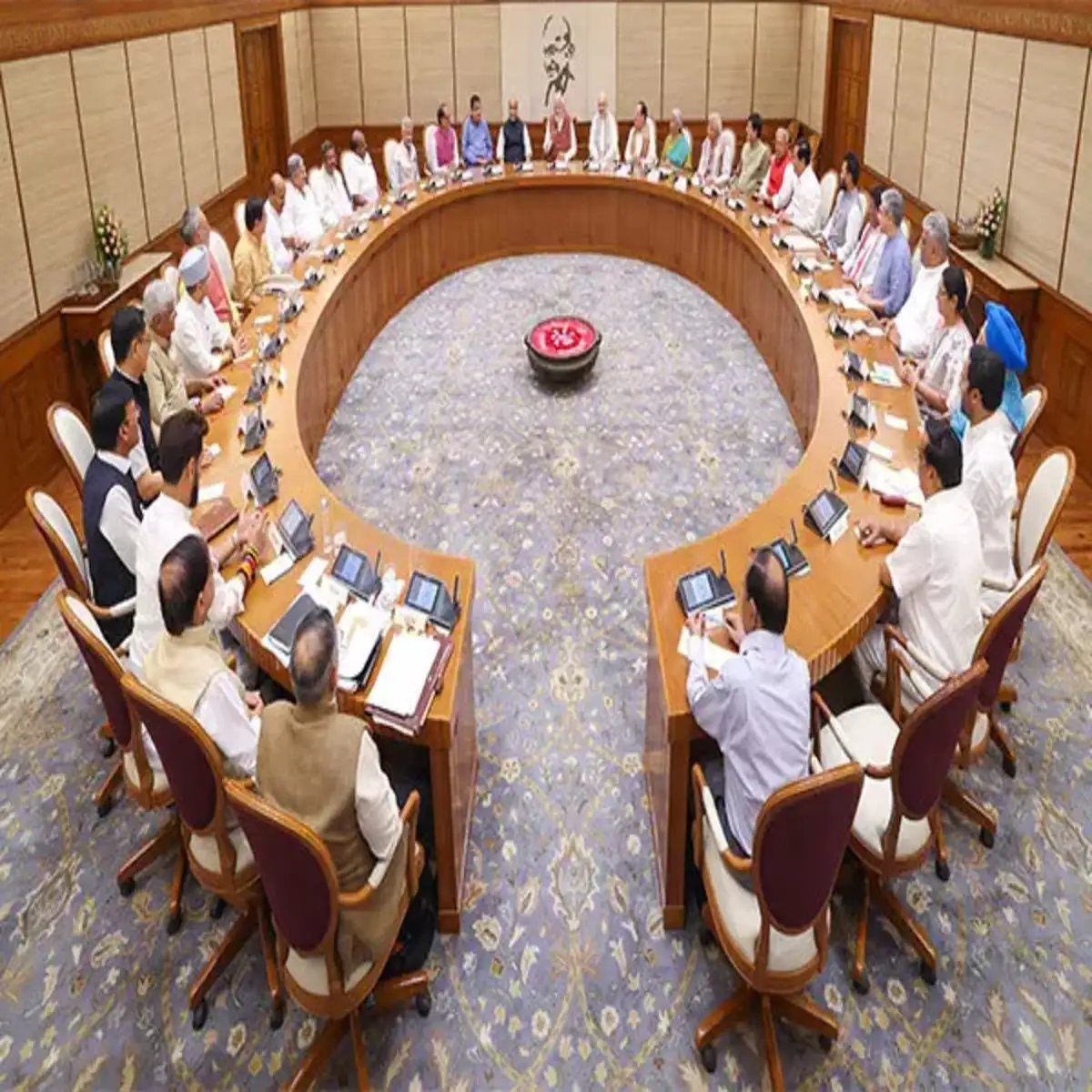
The Cabinet meeting, chaired by Prime Minister Narendra Modi, approved the BHAVYA scheme, which is expected to generate about 15 lakh direct jobs.
Under the scheme, industrial parks ranging from 100 to 1,000 acres will be taken up for the development with financial support of up to Rs 1 crore per acre.
These parks will have core infrastructure like internal roads, underground utilities, drainage, common treatment facilities, ICT and administrative systems.
Besides, there would be value-added infrastructure like ready-built factory sheds, built-to-suit units, testing labs, warehousing and social infrastructure, including houses for workers and other amenities.
Moreover, he said, support for external infrastructure will also be provided up to 25 per cent of the project cost, ensuring seamless connectivity and integration with existing networks.
Project selection will be undertaken through a challenge mode, ensuring that only high-quality, reform-oriented and investment-ready proposals are taken forward.
Building on the success of Industrial Smart Cities developed under the National Industrial Corridor Development Programme (NICDP) framework, Vaishnaw said BHAVYA will be implemented in partnership with states and private sector players.
At the heart of BHAVYA lies a strong push for deregulation and ease of doing business, with streamlined approvals, effective single-window systems, and investor-friendly reforms led by states.
The scheme will deliver plug-and-play industrial ecosystems, enabling industries to move from intent to production with speed and certainty, he said.
With pre-approved land, ready infrastructure, and integrated services, BHAVYA will significantly reduce entry barriers for investors, he added.
The proposed industrial parks will be developed as future-ready and sustainable ecosystems. They will be aligned with the PM GatiShakti principles to ensure seamless multimodal connectivity and efficient last-mile access.
The parks will promote green energy and sustainable resource utilisation, supported by integrated underground utility corridors that enable a ‘no-dig’ environment.
This will facilitate efficient maintenance and ensure uninterrupted industrial operations.
Overall, these parks aim to set new benchmarks in industrial infrastructure by enhancing reliability, reducing inefficiencies, and boosting productivity across sectors.
The BHAVYA scheme is expected to generate large-scale employment, creating significant direct and indirect job opportunities across manufacturing, logistics, and services while attracting substantial investments.
The initiative will be implemented across all states and Union Territories, generating lakhs of employment opportunities nationwide and accelerating industrial growth.
By promoting cluster-based development and enabling the co-location of industries, suppliers, and service providers, BHAVYA will strengthen domestic supply chains, encourage regional industrialisation, and open up new opportunities for millions.
The scheme will directly benefit manufacturing units, MSMEs, startups, and global investors seeking ready-to-use industrial infrastructure, workers, logistics providers, service sector enterprises, and local communities.
The National Industrial Corridor Development Corporation Limited (NICDC), under the Department for Promotion of Industry and Internal Trade (DPIIT), Ministry of Commerce and Industry, is spearheading the development of world-class greenfield industrial smart cities to enhance manufacturing competitiveness, attract investments, and generate employment. NICDC is currently implementing 20 projects across 13 states.
NICDC-led initiatives are built on the concept of plug-and-play industrial parks — ready-to-use ecosystems where land, utilities, approvals, and infrastructure are pre-developed, enabling industries to start operations quickly without delays related to land acquisition or infrastructure setup.