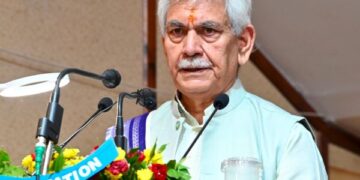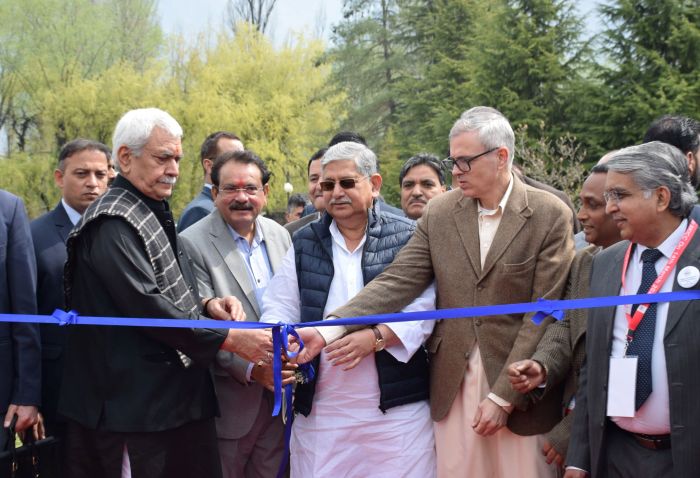
Srinagar: Lieutenant Governor Manoj Sinha on Saturday said Jammu and Kashmir has potential for integrated fisheries development, which can generate jobs and boost fish farmers’ income.
“Jammu Kashmir holds promise as a national model for integrated fisheries development. The value-chain approach will generate jobs, cut post-harvest losses, and boost fish farmers’ incomes,” Sinha said in his keynote address at the National Conference on Cold Water Fisheries, organised by the Department of Fisheries here.
Union Minister for Fisheries, Animal Husbandry & Dairying (MoFAHD) and Panchayati Raj, Rajiv Ranjan Singh, was present at the event.
As per an official press release, Sinha highlighted the “remarkable surge” in fish production in the Union Territory and infrastructure upgrades since 2020, reaffirming the administration’s resolve to empower fish farmers.
“Our strategic initiatives have positioned J&K as the leader in trout production across all cold-water states. Under the Holistic Agriculture Development Programme (HADP), launched in 2022, Rs 233 crore was allocated for fisheries to incentivize entrepreneurship, establish hatcheries, trout farming & value-added ventures,” he said.
The LG said that over recent years, fish production and related infrastructure have seen substantial growth.
“Trout output rose from 1,663 tons in FY 2021-22 to a record 2,650 tons in 2024-25. Private sector trout units increased from 936 to 1,649; hatcheries from 1 to 9; trout feed mills from ‘zero’ to 6 by 2024; RAS units from 2 to 9; and biofloc units from 10 to 59,” he said.
Sinha expressed gratitude to the central government for sanctioning a Rs 100 crore Integrated Aqua Park Project to be established in Anantnag district.
This project will strengthen aquaculture infrastructure, boost cold-water fisheries development, increase fish production and create employment opportunities in the region.
“Under the guidance of Hon’ble Prime Minister Shri Narendra Modi, our focused efforts have made Jammu and Kashmir the top trout producer among India’s cold-water states,” he said.
The LG said that the rapid economic-social progress of Jammu and Kashmir demands relentless effort from every societal segment, especially our farmer brothers.
“At the heart of development lies our vibrant farming community, who are not mere producers, but the bedrock of our identity and economy. Now is the time to honor their role with due respect, investment, and technology,” he added.
Sinha said the fisheries sector faces challenges like climate change impacts, rising water temperatures, water scarcity, slow growth of native species, and fish health risks.
“To unlock its full potential, we must advance cold-water agriculture scientifically, genetically improve trout and carp breeds, prioritize climate-resilient systems, disease diagnostics, and aquatic health management. Innovation in indigenous feeds and robust seed-feed supply chains are vital for the fisheries sector,” he said.
Model Guidelines for the Development of Cold-Water Fisheries was released on the occasion. Best FFPOs, progressive fish farmers, and fisheries start-ups were felicitated. Sanction letters were also handed over to beneficiaries under Kisan Credit Card and other schemes.
The conference brought together policymakers, experts, researchers and stakeholders from various states and UTs to explore collaborative pathways for sectoral advancement. The discussions centered on sustainably harnessing the potential of India’s cold-water fisheries for long-term growth and prosperity.
Omar, Abdullah, Chief Minister; Prof. S P Singh Baghel, Union Minister of State for Fisheries, Animal Husbandry and Dairying; Javid Ahmad Dar, Minister for Agriculture Production, Rural Development & Panchayati Raj, J&K; Dr. Abhilaksh Likhi, Union Secretary, Department of Fisheries; Dr Ashish Chandra Verma, Additional Chief Secretary, Agriculture Production department, J&K; Sagar Mehra, Joint Secretary, Department of Fisheries, GoI; Dr. J.K. Jena, Deputy Director General (Fisheries Science), ICAR; Prof. Nazir Ahmad Ganai, Vice Chancellor, SKUAST-Kashmir, senior officials, policymakers, experts, researchers and stakeholders were present.