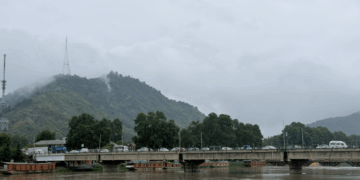
Garbage has quietly become one of the most visible signs of governance failure in Kashmir. Plastic bags flutter along highways, household waste piles up on village roads, and many streams that once carried clear water now resemble slow-moving drains. What was once considered a temporary civic inconvenience is gradually turning into a structural environmental problem.
Yet the irony is that the world has already solved much of this problem.
Many developed countries faced waste crises far worse than what Kashmir experiences today. Their cities were once buried under garbage, rivers were polluted, and landfills were overflowing. But through planning, discipline, and innovative systems, they transformed waste management into a science. In some cases, garbage even became a source of energy and economic value.
Kashmir does not need to reinvent solutions. It only needs to study what has already worked elsewhere.
One powerful example comes from Sweden, where waste is treated as a resource rather than a burden. The country has developed an extensive network of waste-to-energy plants that convert garbage into electricity and heating. Instead of dumping waste in landfills, it is incinerated in highly controlled facilities that capture energy and reduce pollution. So effective is the system that Sweden recycles or recovers almost all of its municipal waste and sometimes even imports garbage from other countries to keep its plants running. For a region like Kashmir, where winter heating and electricity shortages are recurring concerns, such technology offers an opportunity to turn waste into power.
Japan provides another important lesson: discipline in waste segregation. In many Japanese cities, residents separate their garbage into multiple categories such as burnable waste, plastics, glass bottles, metals, and paper. Collection schedules are strictly enforced, and improperly sorted waste may not be collected at all. The result is a remarkably efficient recycling system and minimal landfill use. The fundamental principle is simple – garbage becomes manageable only when it is sorted at the source. Kashmir’s waste crisis, by contrast, is largely the result of mixed garbage being dumped together, making recycling almost impossible.
Germany demonstrates how recycling can be built into the economy itself. Through its famous deposit-return system, consumers pay a small deposit when purchasing bottled beverages. When the bottle is returned to a collection machine, the deposit is refunded. This system has achieved return rates of more than ninety percent for bottles and cans. What would otherwise become litter on streets or riverbanks instead circulates within a recycling economy. In Kashmir, where plastic bottles increasingly appear in orchards, forests, and streams, such a system could significantly reduce environmental damage while creating small financial incentives for citizens.
South Korea offers yet another innovative approach through its “pay-as-you-throw” system. Residents must purchase official garbage bags for disposing household waste. The more waste a household generates, the more it pays. At the same time, food waste is collected separately and converted into compost or animal feed. This policy has dramatically reduced landfill waste and encouraged households to minimize unnecessary garbage. It also reminds citizens that waste disposal carries a real environmental cost.
Finally, Singapore illustrates the importance of enforcement and civic discipline. The city-state has built one of the cleanest urban environments in the world not only through efficient waste systems but also through strict penalties for littering and illegal dumping. Cleanliness is treated not as an optional virtue but as a civic responsibility.
The lessons from these countries are clear. Waste management succeeds when technology, public participation, and enforcement work together.
Kashmir’s challenge is therefore not a lack of solutions but a lack of systematic implementation. Segregation at source, recycling incentives, waste-to-energy projects, and disciplined enforcement could dramatically transform how garbage is handled across the Valley.
If adopted thoughtfully, these approaches could shift the narrative from waste as a nuisance to waste as a resource. In a region celebrated for its natural beauty, learning from global models may be the most practical step toward ensuring that Kashmir’s landscapes remain worthy of that reputation.
The path from waste to wealth has already been charted. The question is whether Kashmir is ready to follow it.