Leh: “Ladakh’s Pashmina, renowned for its unparalleled quality, craftsmanship, and heritage, is poised to become a global benchmark of luxury. With its unmatched softness, durability, and authenticity, Ladakh’s Pashmina is ready to capture discerning markets worldwide, combining tradition with modern innovation to create a world-class luxury brand.”
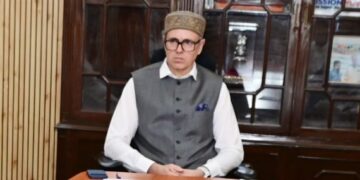
This was stated by the Lt Governor of Ladakh, Kavinder Gupta, while addressing the Pashmina Conclave 2026, highlighting Ladakh’s vision to transform its iconic Pashmina into a globally recognised luxury brand.
The Conclave brought together shepherds, artisans, self-help groups, cooperatives, industry representatives, financial institutions, researchers, and government officials under one roof to chart a sustainable and inclusive path for the Pashmina sector.
Kavinder Gupta emphasised that Pashmina is not merely a luxury fabric, but the very identity, heritage, and pride of Ladakh. He noted that the delicate fibre tells a story of dedication, perseverance, and craftsmanship. “In the icy, harsh winds of Changthang, our shepherds nurture the Changra goats with unparalleled care, and our skilled artisans transform this raw fibre into textiles of the highest global standards. This is more than production; it is a living example of harmony between nature, culture, and human skill,” he said.
Addressing a crucial aspect of Ladakh’s Pashmina economy, Kavinder Gupta observed that while the region produces the finest raw Pashmina in the world, much of its value is often realized outside Ladakh. He stressed the need to move from being merely a source of raw material to becoming a centre of value creation. “Our goal is clear: Pashmina should be processed, branded, and marketed from Ladakh, recognised globally for authenticity, quality, and ethical production,” he said.
Kavinder Gupta outlined a comprehensive vision to achieve this transformation. He emphasized that all policies would prioritise the welfare, knowledge, and rights of Changpa shepherds and artisans, keeping their expertise and contribution central to every initiative. Modern institutional frameworks are planned for quality testing, fibre grading, certification, design innovation, and branding to ensure that Ladakhi Pashmina gains certified, credible, and globally recognized standards. He further stressed that this growth must be sustainable and environmentally responsible, acknowledging the fragile ecology of Changthang and the challenges posed by climate change and pasture management. Every step will integrate scientific planning with community participation to safeguard both heritage and nature.
The Lt Governor underlined that the Conclave should serve as more than a platform for dialogue. “This is a foundation from which ideas become policies, recommendations turn into institutional frameworks, and resolutions evolve into commitments that strengthen Ladakh’s heritage and economic future,” he said.
Kavinder Gupta also addressed the youth of Ladakh, calling Pashmina a golden opportunity for their generation. He urged them to embrace modern skills in technology, design, marketing, and entrepreneurship to take Ladakh’s Pashmina to every global market and establish a strong, internationally recognized Ladakhi brand. He assured the government’s full support in training, financial assistance, technical collaboration, and market linkages to empower the youth to realize the full potential of this invaluable fibre.
Concluding his address, Kavinder Gupta called upon all stakeholders to join in a collective pledge: to make Ladakh’s Pashmina a global benchmark of luxury, Ladakh’s labour a symbol of international respect, and Ladakh’s heritage a source of strength for generations to come. He reiterated that Ladakh must evolve from being just a supplier of raw material to becoming a global centre of excellence for Pashmina, recognized for ethical production, traceability, sustainability, and unmatched craftsmanship.
Chief Secretary Ashish Kundra highlighted efforts to unite all stakeholders—from herders to designers and government agencies—to protect Ladakh’s Pashmina value chain. Producing 40–50 tonnes annually, much of the profit currently goes to traders outside the region. He stressed the need for a holistic approach, enabling Ladakh to produce luxury cashmere shawls, attract the next generation, and position Pashmina as a high-end global product, benefiting all stakeholders.
Secretary, Cooperatives, Bhupesh Chaudhary emphasised the role of the Cooperatives Department in the overall growth of the Pashmina sector in Ladakh, highlighting factors affecting its growth such as climate change, the need for collective approaches including cooperative farming, and the potential benefits of adopting successful cooperative models such as AMUL.
Secretary, Youth Services & Sports, Moses Kunzang highlighted the Pashmina Matrix adopted by the Department of Industries and Commerce for the growth of the sector in Ladakh, with emphasis on collaborative functioning across departments as well as focused interventions wherever required.
Secretary, Industries & Commerce, Shashanka Ala briefed participants about the sessions planned during the day, namely Fibre Source and Sustainability; Processing and Purity-Quality; Grading and Standardisation Gaps; Yarn to Loom—Artisan Livelihoods and Design Relevance; and Brand, Market and Value Capture—Positioning Pashmina Ladakh as a Global Luxury Brand.
Among those present were representatives from Central Government bodies including the Central Wool Development Board (Ministry of Textiles, Government of India) and the Textile Committee (Statutory Body under Ministry of Textiles, Government of India); officials from Department of Industries & Commerce, Department of Sheep Husbandry/Animal Husbandry, Department of Handloom & Handicrafts, Rural Development Department, and Social & Tribal Welfare Department; Pashmina herder representatives from Changthang, Pashmina processing and dehairing units, women-led MSMEs, cooperatives and self-help groups, local designers and entrepreneurs along with distinguished fashion designers and industry leaders such as Samir Mehra (Founder, EZMA), Suket Dhir (SUKETDHIR), Rajesh Pratap Singh (Rajesh Pratap Singh Label), Kulbhushan Ahuja (Founder, Ahujasons), and Karan Ahuja (Director, Ahujasons).