JAMMU: The Jammu and Kashmir Legislative Assembly today passed grants amounting to ₹61,575.88 lakh for the General Administration Department (GAD), ₹47,648.38 lakh for Planning, ₹12,408.31 lakh for Information, ₹12,54,383.63 lakh for the Power Development Department (PDD), ₹52,37,955.90 lakh for Finance, ₹7,742.54 lakh for Parliamentary Affairs, ₹75,028.93 lakh for the Law Department (excluding the Election Department), ₹78,461.35 lakh for Revenue, ₹4,22,783.97 lakh for Housing & Urban Development (H&UDD), ₹66,622.88 lakh for Tourism, ₹40,749.54 lakh for Hospitality, Protocol & Estates, ₹17,622.31 lakh for Culture, and ₹1,46,098.46 lakh for Disaster Management, Relief, Rehabilitation & Reconstruction (DMRRR).
The grants were passed following extensive two-day discussions in the House.
The Assembly also passed 19 supplementary grants amounting to ₹3,52,341.28 lakh.
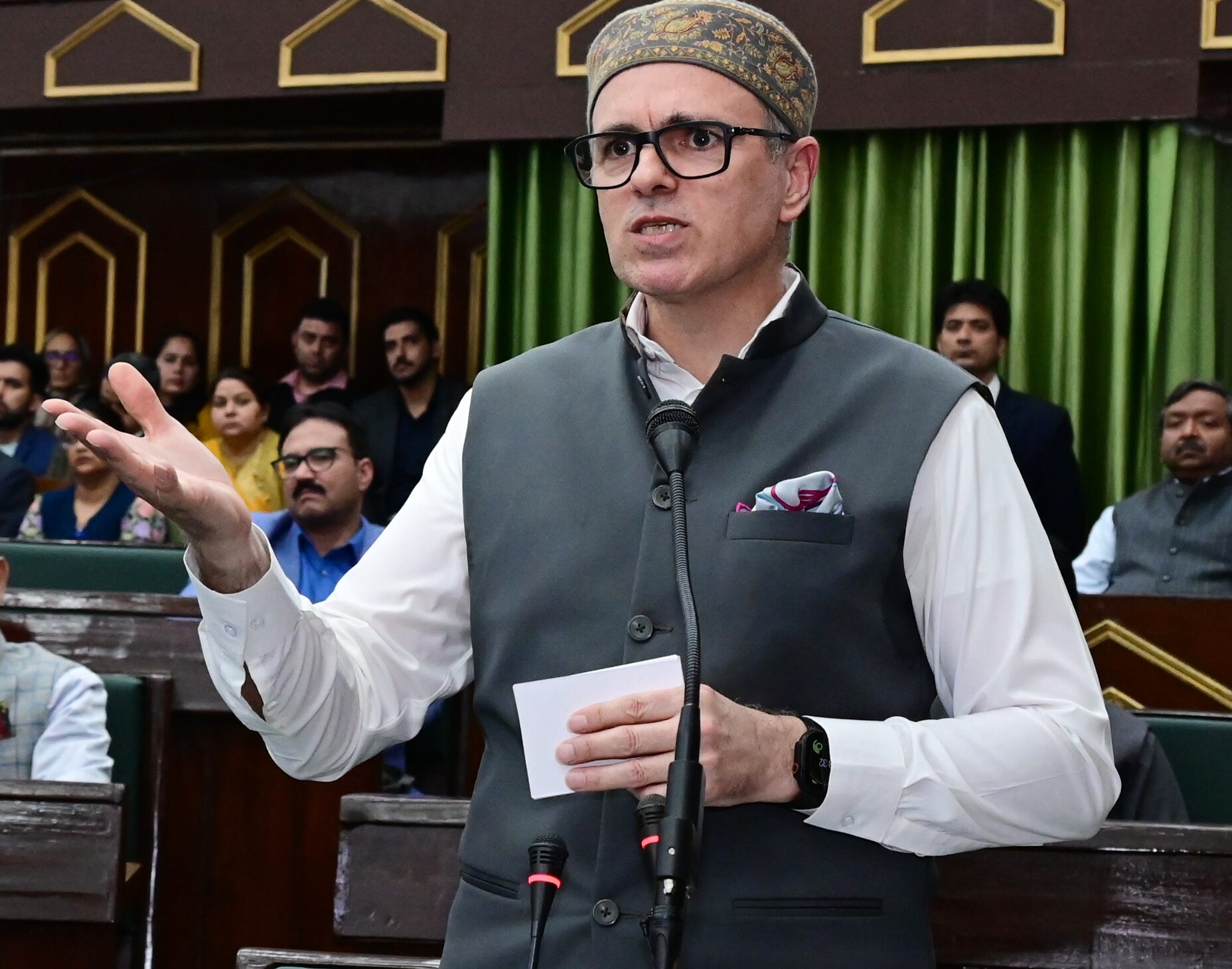
Replying to the discussion on Demands for Grants, Chief Minister Omar Abdullah, who is also Leader of the House, expressed gratitude to the legislators for their active participation, noting that 43 members took part in the debate.
“I would like to thank all the honourable MLAs for taking part in the discussion. By listening to them, we get an opportunity to learn, to understand, and to correct some mistakes,” the Chief Minister said.
He also appreciated the efforts of the administrative machinery, including secretaries, heads of departments, officers and staff, particularly in view of the record number of cut motions.
“As you said, there were more than 500 cut motions. Each and every query was answered. The pile of papers on my table is the result of their hard work,” he remarked.
Highlighting the efforts to revive tourism following the Pahalgam terror attack in April 2025, Chief Minister Omar Abdullah announced on Thursday that all currently closed tourist destinations are expected to reopen by May.
He also revealed that the government is working on plans to introduce nine new tourist destinations to further strengthen and diversify the tourism industry in the Union Territory.
Winding up the discussion on Demands for Grants in the legislative Assembly here, Abdullah said his government worked “step by step” to revive tourism in the aftermath of the April 22, 2025, Pahalgam terror attack, at a time when many in the industry believed visitors would not return to the Union Territory for years.
He said the administration engaged extensively with tourism stakeholders, rebuilt confidence through sustained outreach, and gradually restored activity despite several destinations remaining closed and restrictions in place at key locations.
The chief minister mentioned that improving tourist infrastructure is a key priority, as visitors often point out that while Pahalgam, Gulmarg, and Sonamarg are exceptionally beautiful, they lack adequate basic facilities such as toilets and other conveniences. “The government is committed to addressing these gaps,” Abdullah said.
The chief minister emphasised that attracting first-time visitors to J&K is not difficult, but true success lies in ensuring they return. “Repeat tourism is the real benchmark of a strong and sustainable tourism industry, and that is where the government is now placing its focus.”
“Tourism is a very important sector for Jammu and Kashmir. The reality is that when we were discussing the budget and grants last year, we had no idea that we would face such difficult circumstances (the Pahalgam attack that left 26 persons, mostly tourists, dead).
“We revived tourism at a time when we were forced to tell people that ‘you can come to Kashmir, but you cannot visit Doodhpathri or Yousmarg’. We even had to tell tourists that ‘you may go up by the gondola (cable-car), but you cannot move beyond the roadside eateries on the right side’. Despite all this, we gradually brought tourism back to life,” the chief minister said.
He stated that while the Centre has ordered the reopening of many tourist destinations, some sites remain closed.
“There are certain things I cannot state openly, but I can assure you that discussions have taken place with the Central government. They also have certain constraints. However, you can assume that by May, all these destinations will reopen,” the chief minister said.
3,500 MW of J&K’s 18,000 MW hydropower potential developed so far: CM Abdullah
Chief Minister Omar Abdullah on Thursday said the Union Territory has an estimated hydropower potential of around 18,000 megawatts, of which only about 3,000-3,500 MW has been developed so far.
The chief minister said that with the planned addition of new projects, total power generation in Jammu and Kashmir is expected to rise to nearly 7,000 MW in the coming years.
Detailed project reports and proposals for harnessing the remaining 11,000 MW of hydropower potential would be prepared in coordination with the central government and implemented in a phased manner over the next 10 to 15 years, he added.
The chief minister said the power sector presents both a challenge and an opportunity, noting that J&K currently consumes more electricity than it generates and does not fully realise revenue from usage.
“If we properly harness our power potential, we may not need to depend on central assistance to the same extent,” he said.
With the planned addition, total generation would rise to nearly 7,000 MW, Abdullah said, adding that detailed project reports and proposals for the remaining 11,000 MW would be prepared in coordination with the central government to be realised over the next 10–15 years.
The chief minister said the long-term goal is to make J&K self-sufficient in power and enable it to supply electricity to other parts of the country, particularly during peak summer demand.
Emphasising that generation alone is insufficient, Abdullah said the distribution network must be strengthened under the Revamped Distribution Sector Scheme (RDSS). While some districts have implemented the scheme effectively, others have seen delays, he said, adding that he is personally monitoring progress and assured full implementation.
On revenue, Abdullah said that electricity consumption must be paid for, with government support for those who genuinely cannot afford it, including provisions such as up to 200 free units under schemes like PM Surya Ghar.
He said the government is committed to ensuring proper metering and addressing discrepancies transparently, including cases where departmental collusion may have occurred.
Responding to concerns over privatisation, the chief minister said there is no proposal or necessity to privatise power distribution companies.
“Our focus will be on improving accounting, budgeting and strengthening financial guarantees to improve their financial health,” he said.