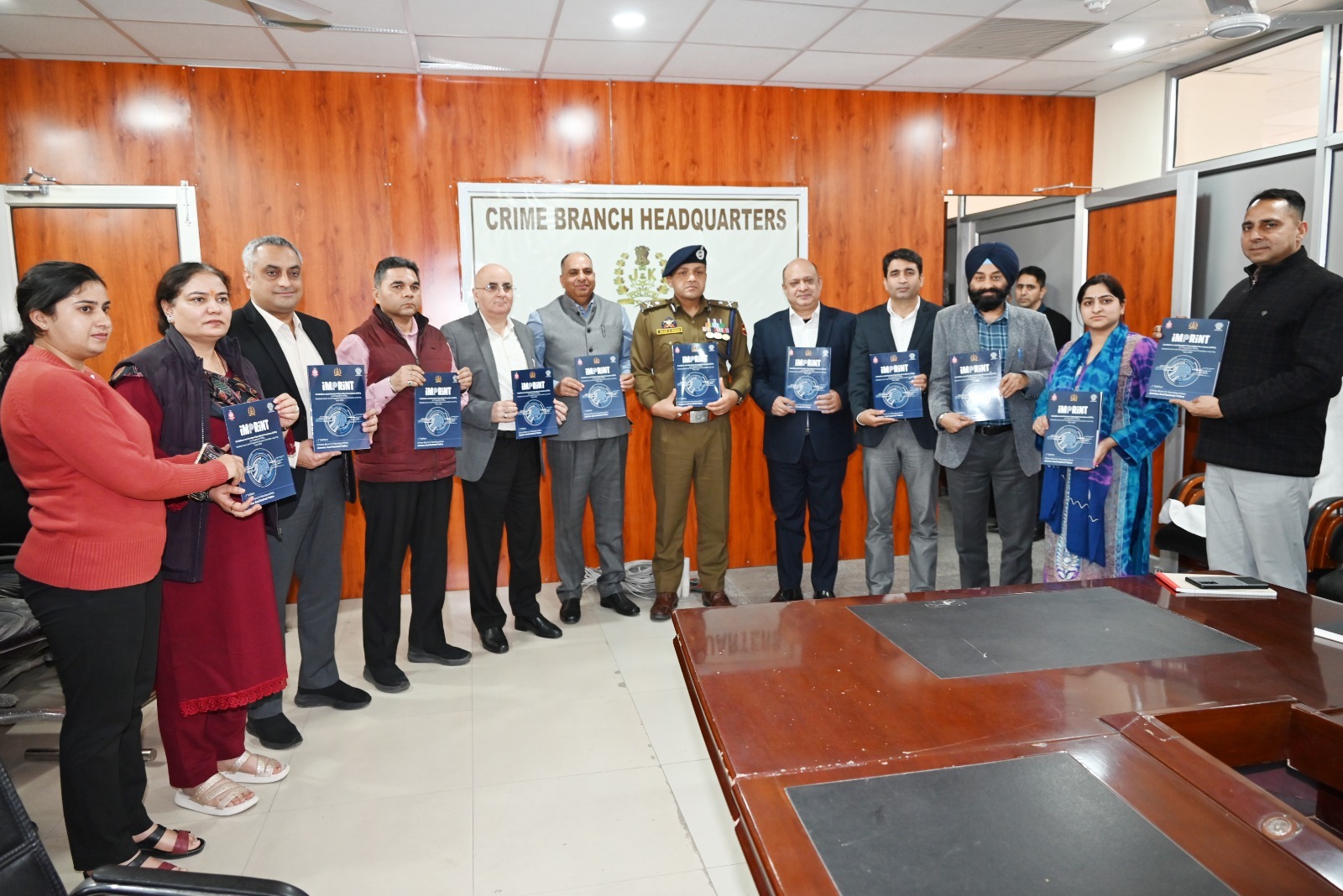
Jammu: The maiden edition of the Fingerprint Bureau Magazine of Jammu and Kashmir Police, incorporating Standard Operating Procedures (SOPs) and operational guidelines for investigating officers, was formally released on Monday by Inspector General of Police (Crime Branch) Sujit Kumar Singh (IPS) at a function held at the Crime Branch Headquarters in Jammu.
The publication has been prepared as a comprehensive reference manual for field staff to strengthen investigation practices and improve conviction rates in compliance with the Ministry of Home Affairs (MHA) guidelines. The programme was organised under the supervision of Senior Superintendent of Police, Fingerprint Bureau, Mohd Yousuf, and was attended by the Director Prosecution and all Senior Superintendents of Police of the Crime Branch from across Jammu and Kashmir.
The magazine focuses on enhancing scientific investigation within the police force. It provides detailed procedures covering every stage of fingerprint evidence handling — from lifting chance fingerprints at crime scenes to their submission into the National Automated Fingerprint Identification System (NAFIS). It also explains the implementation of the Crime and Criminal Tracking Network–based CrPIS Measurement Collection Unit system developed by the National Crime Records Bureau under the guidance of the MHA.
Addressing the gathering, IGP Crime Sujit Kumar Singh stressed strict adherence to SOPs related to NAFIS operations, Measurement Collection Units (MCUs) and the functioning of the Fingerprint Bureau. He said the use of scientific evidence and digital fingerprint identification is essential for ensuring accuracy, transparency and efficiency in criminal investigations, besides significantly improving conviction rates and enabling inter-state crime tracking.
The publication also outlines crime-scene management protocols, standards for fingerprint collection and preservation, and coordination mechanisms with national forensic databases.
Jammu and Kashmir Police reiterated its commitment to modernization, capacity building and adoption of technology-driven investigative methods in line with the Ministry of Home Affairs guidelines.