Kashmir—the paradise on earth— famous for its pleasant climate and stunning natural beauty. Snow-capped lofty peaks, crystal-clear waters, and mesmerizing green meadows add immensely to its charm and breathtaking landscapes. Besides these features, the valley is also known for its many mountain passes: Sinthan Top leading to Kishtwar, Zojila opening towards Ladakh, Sadhna Top leading to Karnah valley, and Z-Gali connecting to Machil valley of Kupwara district.
In Bandipora district—famous for Ilm, Adab, and Aab—the renowned Razdan Pass serves as the gateway to the enchanting Gurez Valley. Gurez, one of the three Legislative Assembly segments of Bandipora district, comprises the two tehsils of Tulail and Gurez. I had never visited this valley before, but last week I finally decided to explore this stunningly beautiful region, surrounded on all sides by towering mountains.
I left my Ganderbal residence early in the morning and reached Sumbal, from where I boarded a Sumo bound for Bandipora. Upon reaching Bandipora, I refreshed myself with a few sips of hot tea at a local hotel and then took my middle seat in the Sumo heading toward Dawar, the main town of Gurez. Within an hour, we reached the first halt station, Tragbal—the main headquarters of the Border Security Forces responsible for handling security-related matters on the Bandipora–Gurez road. We were not permitted to proceed further as the road had become slippery at multiple locations due to freezing snow accumulated after the higher reaches received the season’s first snowfall. We were made to wait until 1:30 p.m., after which we were allowed to proceed following rigorous security checks.
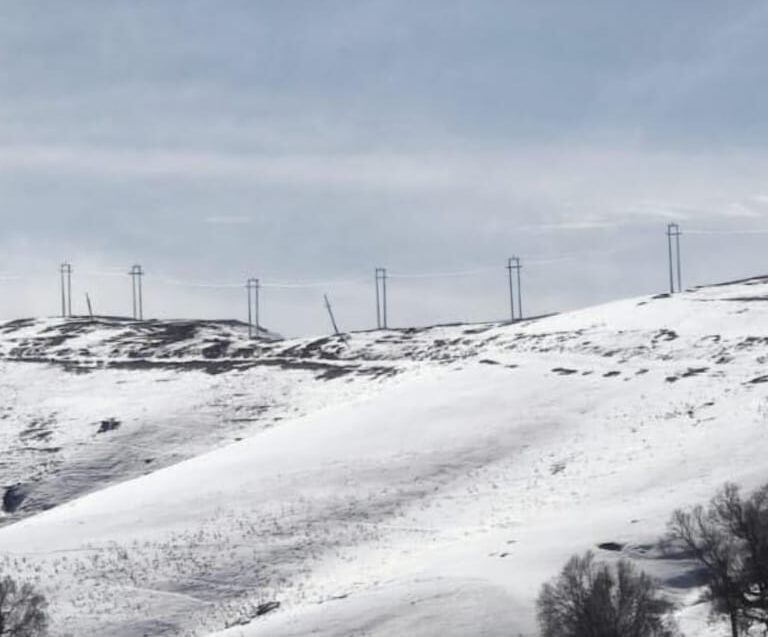
Passing through zigzag curves along an extremely fascinating yet frightening route gave me a completely new experience, as I had never travelled on such dangerous roads before. At every curve and blind turn on this prestigious road, one could read warning lines written on signboards advising drivers to limit speed, remain extra cautious, and avoid reckless driving. The mountainous terrain beyond Tragbal was completely shrouded in a silvery blanket of a few inches of snow. Traffic on the road was sparse, as very few vehicles ply during November and December due to the extremely frosty and chilly conditions. I took out my phone and clicked several photographs, and through videography preserved the fascinating scenes and breathtaking sights.
Another point close to Gurez Valley where our identities were checked was the famous TCP Kanzalwan. Moving a few kilometres ahead, I witnessed the first habitable location, Koragbal, on this historical route. A small colony of about forty to fifty homes, one wonders how the residents manage to live in harmony with nature, far away from the hustle and bustle of densely populated areas. One of the most fascinating sights during the journey was the Kishanganga Power Project and its mighty dam, majestically built between two lofty mountains. After crossing a couple of other habitable villages, I finally reached Dawar, the main administrative centre of Gurez Valley, at about 4:30 p.m. Immediately after disembarking from the vehicle, the chilling gusts of icy wind forced me to search for a comfortable room for a safe night’s stay, as the temperature at that time had dropped to minus 9°C. The Sumo driver, a local resident of Mintrigam village, kindly helped me arrange a decent room. I took hot sips of tea at a nearby stall and requested the same driver to show me some beautiful and historical places in the main Gurez Valley.
We visited the Shina Cultural Centre, Wanpora village, and a few other places of interest. By evening, we returned, and I took some rest in the rented room. After having dinner at a local hotel, I retired to bed early. By 9 p.m. on 12 November 2025, the temperature had plunged to minus 14°C. The next morning, when I woke up, the water taps refused to flow, as the bone-chilling cold had frozen them completely. With great difficulty, I managed to perform ablution and offered the dawn prayers.
At 10:30 a.m., I boarded a Sumo heading towards Bandipora to return to my workplace, and by 3:30 p.m., I was back in Bandipora. On our return journey, the passengers requested a short halt at Tragbal to have tea. Indeed, it was a wonderful and memorable trip—one that I will cherish for years to come—as the route passes through some of the most naturally untouched and breathtakingly beautiful places.
Gurez a remote valley in Kashmir Himalyas is 86 Kilometers from district headquarter Bandipora, situated at 2400 metres above sea level and surrounded by snow-capped mountains. It’s inhabitants often called as Dards, speak Shina language and have their ancestral connections with Gilgit valley. The pyramid shaped mountain peak in Gurez is named after 16th century poetess Habba Khatoon – the Nightingale of Kashmir. It is believed that when Yousuf Shah Chak was imprisoned by Mughal emperor Akbar, her wife Habba Khatoon was looking for him near the peak. He too belonged to Dard tribe of Gilgit. The roar of mighty Kishanganga river and the log wood houses make Gurez truly an epitome of beauty that lulls a visitor to a sound sleep.
Writer is a columnist based in Qazigund Kashmir.