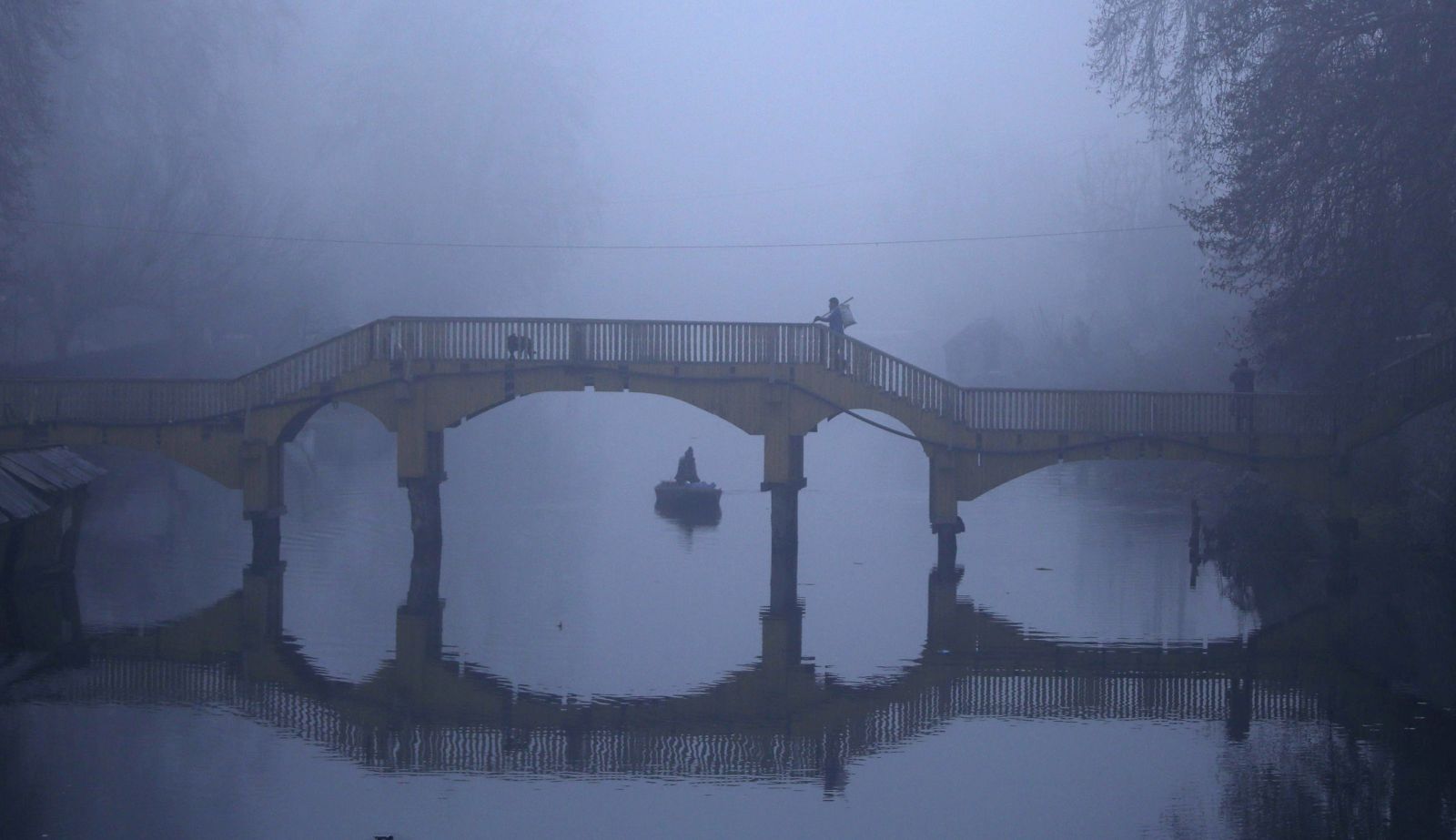
Srinagar: Kashmir’s well-known mountain air is turning dangerously polluted, as the Valley’s air quality dipped into the ‘Severe’ category this week.
Data from AQI.in, showed the Air Quality Index (AQI) in parts of Jammu and Kashmir touching 288, while Srinagar recorded between 147 (“Poor”) and 172 (“Unhealthy”) in the past 24 hours.
As per data obtained by the news agency—Kashmir News Observer (KNO), pollution levels remained high with PM10 ranging between 136 and 243 micrograms per cubic metre and PM2.5 between 86 and 167 micrograms per cubic metre, both far above the World Health Organization’s safe limits.
Environmental observers say a mix of stagnant cold air, vehicle emissions, open burning and widespread use of firewood for heating has turned the Valley into a “pollution bowl”. “It is alarming to see the Valley’s AQI entering the severe zone. The air looks clean but feels heavy and unhealthy,” said an environmental researcher.
Locals in Srinagar and adjoining areas also complained of feeling a burning sensation in the eyes and breathing discomfort, especially during the early morning and evening hours.
“The air feels dusty and burns the eyes when we step out. You can even smell smoke in the breeze,” said Fayiq Ahmad, a resident of Lal Bazaar.
Meanwhile, weather conditions across Kashmir remain unfavourable for air quality improvement, with temperatures dipping to around minus 4°C amid very calm surface winds. These conditions are trapping pollutants close to the ground, allowing smoke, dust and other emissions to accumulate instead of dispersing.
Independent weather forecaster Faizan Arif Keng said the present calm and cold pattern is creating an atmospheric “lid” over the Valley.
“Cold, dense air near the surface combined with calm wind speeds prevents vertical mixing of the atmosphere,” he explained. “This forms a stagnation layer in which pollutants remain trapped close to the ground instead of rising or getting blown away.”
He added that although weak Western Disturbances have been influencing the region, they are too feeble to generate rainfall, snowfall, or stronger winds needed to cleanse the air.
“These systems are insufficient to flush out pollutants. Without meaningful precipitation or an increase in wind speeds, the air will stay stagnant and polluted,” Keng said. “Until a stronger Western Disturbance brings rain or snow, the current poor air quality is likely to persist.”
To understand the readings of Air Quality Index (AQI), Analysis by KNO shows, between 0 and 50 means clean air, while 51 to 100 is moderate, and 101 to 200 is unhealthy for sensitive people. Levels from 201 to 300 are considered severe and can affect everyone’s health, and anything above 300 is hazardous to breathe.
Moreover, KNO also tried to contact the Jammu and Kashmir Pollution Control Board for detailed insights and expert opinions on the matter, but despite an office visit and repeated calls and messages, no one responded.