
• About us
  • Contact us
  • Our team
  • Terms of Service
Friday, November 13, 2026
Kashmir Images - Latest News Update
Epaper
  • TOP NEWS
  • CITY & TOWNS
  • LOCAL
  • BUSINESS
  • NATION
  • WORLD
  • SPORTS
  • OPINION
    • EDITORIAL
    • ON HERITAGE
    • CREATIVE BEATS
    • INTERALIA
    • WIDE ANGLE
    • OTHER VIEW
    • ART SPACE
  • Photo Gallery
  • CARTOON
  • EPAPER
No Result
View All Result
Kashmir Images - Latest News Update
No Result
View All Result
Home ART SPACE

Beyond Aesthetic:  How Madhubani Painting Helped Save Forests

Ghazala Fatima by Ghazala Fatima
June 28, 2025
in ART SPACE
A A
0
Beyond Aesthetic:  How Madhubani Painting Helped Save Forests
FacebookTwitterWhatsapp

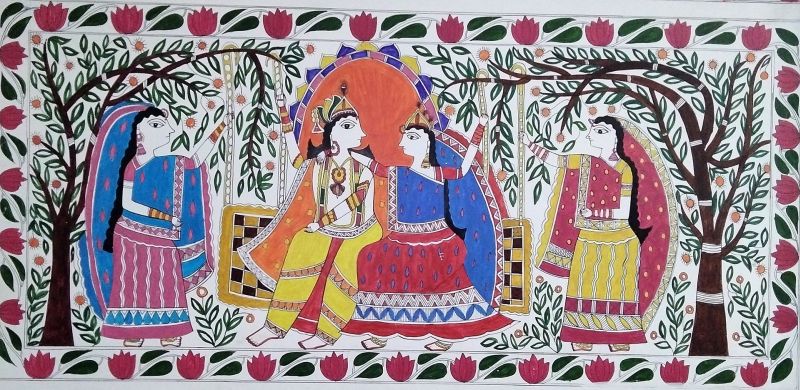
Madhubani Art, also known as Mithila Art, is a traditional style of painting that originates from the Mithila region, which spans parts of northern Bihar in India and the eastern Terai of Nepal. The art form takes its name from the Madhubani district of Bihar, a major hub where this vibrant folk tradition continues to thrive and evolve. Madhubani is an ancient art form and its also famous for  its powerful environmental role that goes beyond its aesthetic and cultural value.

The Madhubani painting tradition played a pivotal role in environmental conservation efforts in Bihar, India, in 2012. Amidst increasing deforestation in the region, local artists began painting traditional Madhubani motifs—often featuring religious, cultural, and nature-inspired themes—on tree trunks. These sacred and decorative paintings discouraged people from cutting down the trees, as harming them would be seen as disrespectful. This creative and culturally rooted protest not only helped save many trees but also highlighted the power of indigenous art in promoting ecological awareness. .

More News

In the Depths of Love:  Parvez Manous Bhat’s Literary Journey and the Impact of ‘Ishq Jisne Bhi Kiya’

THE LAST CALL

A Thousand Years and Beyond: India’s Architecture Carved in Stone

Load More

The logic was simple but profound- in the deeply spiritual culture of rural Bihar, trees painted with images of deities like Durga, Shiva, or Krishna would not be easily cut down, out of reverence and religious fear. These painted trees became living canvases, transforming stretches of forest roads into open-air galleries of environmental protest.

The impact of this creative and innovative step was immense, not only  Local authorities and loggers began to hesitate or refrain entirely from cutting these painted trees but the initiative gained national and international attention and forest belt around the Jitwarpur and Ranti villages remained protected. The campaign not only slowed deforestation, but also revived interest in Madhubani art, bringing economic and cultural value to the region.

This story of Madhubani art is a compelling reminder of how traditional practices can be repurposed as tools of activism. It also shows that art is not just for galleries—it can live on trees, protect ecosystems, and become a powerful voice of environmental awareness.

Previous Post

Voices of Peace

Next Post

Satish Sharma inaugurates EVCL League trials at Doon School, Srinagar

Ghazala Fatima

Ghazala Fatima

Related Posts

In the Depths of Love:  Parvez Manous Bhat’s Literary Journey and the Impact of ‘Ishq Jisne Bhi Kiya’

Regional-bilateral significance of Nepal PM Dahal’s India visit
November 7, 2026

Parvez Manous Bhat, a distinguished novelist, poet, and short story writer, has etched his name in the annals of literary...

Read moreDetails

THE LAST CALL

Regional-bilateral significance of Nepal PM Dahal’s India visit
November 7, 2026

  Muzamil Manzoor  “All I can see is that you never put your phone on silent mode, my friend,” he...

Read moreDetails

A Thousand Years and Beyond: India’s Architecture Carved in Stone

A Thousand Years and Beyond: India’s Architecture Carved in Stone
October 24, 2026

A thousand years ago, someone stood in front of an unfinished stone pillar and decided where to strike next. We...

Read moreDetails

A title may tell the world where we stand, but our character reveals who we are.

Regional-bilateral significance of Nepal PM Dahal’s India visit
October 24, 2026

Isn’t it strange how much of our identity is tied to what we do, the profession we belong to, or...

Read moreDetails

The Shoe That Never Walked

Regional-bilateral significance of Nepal PM Dahal’s India visit
October 24, 2026

I once saw a man with only one leg. At first, I looked at him with the kind of sympathy...

Read moreDetails

What is always yours to carry

Regional-bilateral significance of Nepal PM Dahal’s India visit
October 17, 2026

One of the hardest truths life teaches is how differently people can treat you once they no longer need anything...

Read moreDetails
Next Post

Satish Sharma inaugurates EVCL League trials at Doon School, Srinagar

  • About us
  • Contact us
  • Our team
  • Terms of Service
E-Mailus: kashmirimages123@gmail.com

© 2025 Kashmir Images - Designed by GITS.

No Result
View All Result
  • TOP NEWS
  • CITY & TOWNS
  • LOCAL
  • BUSINESS
  • NATION
  • WORLD
  • SPORTS
  • OPINION
    • EDITORIAL
    • ON HERITAGE
    • CREATIVE BEATS
    • INTERALIA
    • WIDE ANGLE
    • OTHER VIEW
    • ART SPACE
  • Photo Gallery
  • CARTOON
  • EPAPER

© 2025 Kashmir Images - Designed by GITS.