• About us
  • Contact us
  • Our team
  • Terms of Service
Friday, November 13, 2026
Kashmir Images - Latest News Update
Epaper
  • TOP NEWS
  • CITY & TOWNS
  • LOCAL
  • BUSINESS
  • NATION
  • WORLD
  • SPORTS
  • OPINION
    • EDITORIAL
    • ON HERITAGE
    • CREATIVE BEATS
    • INTERALIA
    • WIDE ANGLE
    • OTHER VIEW
    • ART SPACE
  • Photo Gallery
  • CARTOON
  • EPAPER
No Result
View All Result
Kashmir Images - Latest News Update
No Result
View All Result
Home BUSINESS

Manmohan Singh blended growth with green goals

Press Trust of india by Press Trust of india
December 27, 2024
in BUSINESS
A A
0
FacebookTwitterWhatsapp

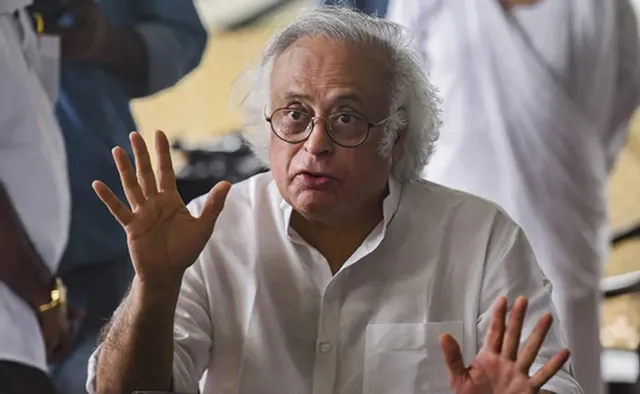
New Delhi:  Manmohan Singh, often hailed as the architect of modern India’s economic reforms, also championed environmental conservation and climate action during his decade-long tenure as prime minister (2004-2014).

Under his leadership, India launched the National Action Plan on Climate Change (NAPCC), passed the landmark Forest Rights Act (FRA) to protect the rights of tribal communities and established the National Green Tribunal (NGT) to safeguard the environment through swift legal action.

More News

Indian economy has been ‘shining star’ in otherwise ‘gloomy world’: NITI Aayog VC

Retail inflation breaches RBI’s upper tolerance band at 6.09%; rate hike likely next month

Earlier PM said ‘sab changa si’, now it is ‘sab mehnga si’: Cong taunts govt over price rise

Load More

For centuries, India’s tribal communities were sidelined from decisions about their own land. The UPA-1 government under Singh flipped that script.

His government passed the Forest Rights Act in 2006, handing back the control of forests to the people who lived in and protected them.

Around 25 lakh land titles, including more than 23.7 lakh individual titles, have so far been granted to the Scheduled Tribes (STs) and other traditional forest dwellers under the FRA.

In July 2008, Singh urged all chief ministers to act swiftly to grant tribals their rights over forest land.

“It is primarily the responsibility of the state governments to ensure that a very vulnerable section of the population of our country finally gets its basic rights over the land which has historically been in its possession,” he wrote in a letter.

In 2008, the Manmohan Singh government delivered the NAPCC, an eight-fold strategy to tackle global warming.

The NAPCC’s eight core missions include the National Solar Mission, which laid the groundwork for the country to emerge as a global clean energy leader, and the Green India Mission, which focuses on improving biodiversity, restoring degraded lands and enhancing climate resilience.

“Greater use of clean energy obviously contributes to sustainability…. This issue will become more important in the years ahead,” Singh said at the 4th Clean Energy Ministerial in 2013 in New Delhi.

The veteran Congress leader was also aware that “the impact on the global climate would be simply unsustainable” if developing countries follow the industrialised countries in meeting their energy requirements through fossil fuel-based energy.

He strongly advocated for climate justice. Speaking at the Washington office of the Council on Foreign Relations on November 23, 2009, he made it clear that India would not accept unfair carbon shackles.

“India was a latecomer to industrialisation. And as such, we have contributed very little to the accumulation of greenhouse-gas emissions that cause global warming. But we are determined to be part of the solution to the problem. We are willing to work towards any solution that does not compromise the right of developing countries to develop and lift their population out of poverty,” he said.

Singh also attended the Copenhagen climate conference in 2009, the first one to be elevated to the heads of government level.

Under Singh’s watch, India set up the NGT in 2010 to fast-track environmental justice.

Over the years, the NGT became the watchdog the country needed for delivering speedy judgments on critical issues like pollution, deforestation and wildlife conservation.

Unassuming, erudite, soft-spoken and a consensus builder, Singh died at Delhi’s All India Institute of Medical Sciences (AIIMS) on Thursday. He was 92.

The Congress leader, who steered India for 10 years from 2004 to 2014 and helped set up the country’s economic framework as finance minister before that, was a renowned name in the global financial and economic sectors.

 

Previous Post

Union Cabinet hails Manmohan Singh as eminent statesman, distinguished leader

Next Post

Singh’s contributions as architect of India’s economic reforms have left indelible mark: RBI guv

Press Trust of india

Press Trust of india

Related Posts

Indian economy has been ‘shining star’ in otherwise ‘gloomy world’: NITI Aayog VC

Indian economy has been ‘shining star’ in otherwise ‘gloomy world’: NITI Aayog VC
November 12, 2026

New Delhi: The Indian economy has been the "shining star" in an otherwise "gloomy world", as the country has maintained...

Read moreDetails

Retail inflation breaches RBI’s upper tolerance band at 6.09%; rate hike likely next month

Wholesale inflation hits three-month high of 0.53% in March
November 12, 2026

New Delhi: Retail inflation surged to 6.09 per cent in October, breaching the Reserve Bank's upper tolerance limit for the...

Read moreDetails

Earlier PM said ‘sab changa si’, now it is ‘sab mehnga si’: Cong taunts govt over price rise

PM leaving no stone unturned to save ‘flailing image’: Cong slams UGC’s ‘selfie points’ directive
November 12, 2026

New Delhi: The Congress on Thursday targeted the Modi government over rising prices, and said the public wants inflation to...

Read moreDetails

World leaders urge stronger and faster action at UN climate talks over inadequate response

World leaders urge stronger and faster action at UN climate talks over inadequate response
November 11, 2026

Antalya (Turkiye):  World leaders began formal talks at the United Nations climate conference in Turkiye on Wednesday, seeking agreement on...

Read moreDetails

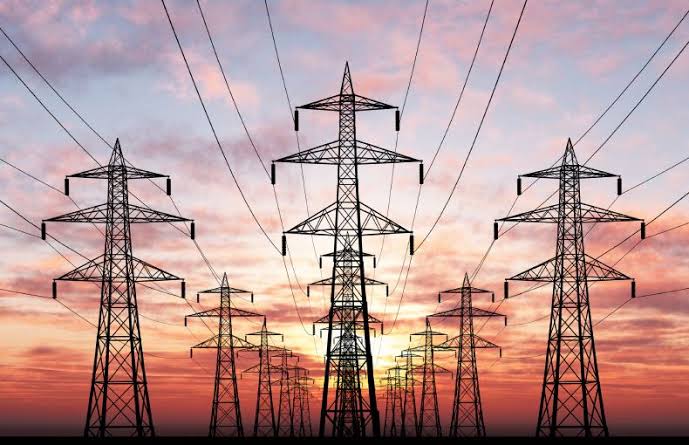
India’s renewable energy expansion averts $100 bn in fuel imports, savings seen at $240 bn by 2030

‘J&K leading the charge in electricity sector reforms’
November 11, 2026

New Delhi: India's rapid expansion of renewable energy has helped the country avoid more than USD 100 billion (about Rs...

Read moreDetails

Govts investing heavily in bioeconomy; India best example of demand, supply growing together: WEF

Global recession likely in 2023; India may benefit from diversification of supply chains: WEF survey
November 10, 2026

New Delhi: Governments across the world are investing heavily in bioeconomy development and India provides the clearest example of demand...

Read moreDetails
Next Post

Singh's contributions as architect of India's economic reforms have left indelible mark: RBI guv

  • About us
  • Contact us
  • Our team
  • Terms of Service
E-Mailus: kashmirimages123@gmail.com

© 2025 Kashmir Images - Designed by GITS.

No Result
View All Result
  • TOP NEWS
  • CITY & TOWNS
  • LOCAL
  • BUSINESS
  • NATION
  • WORLD
  • SPORTS
  • OPINION
    • EDITORIAL
    • ON HERITAGE
    • CREATIVE BEATS
    • INTERALIA
    • WIDE ANGLE
    • OTHER VIEW
    • ART SPACE
  • Photo Gallery
  • CARTOON
  • EPAPER

© 2025 Kashmir Images - Designed by GITS.