New Delhi: India, projected to house 350 million children by 2050, must navigate critical challenges like extreme climate and environmental hazards to ensure their well-being and rights, according to a new UNICEF report.
It underlined that although India will see a decline of 106 million children compared to today, it will still account for 15 per cent of the global child population, sharing this responsibility with China, Nigeria, and Pakistan.
UNICEF’s flagship State of the World’s Children 2024 report, The Future of Children in a Changing World, was launched in New Delhi on Wednesday, spotlighting three global megatrends, demographic shifts, climate crises, and frontier technologies that are set to reshape the lives of children by 2050.
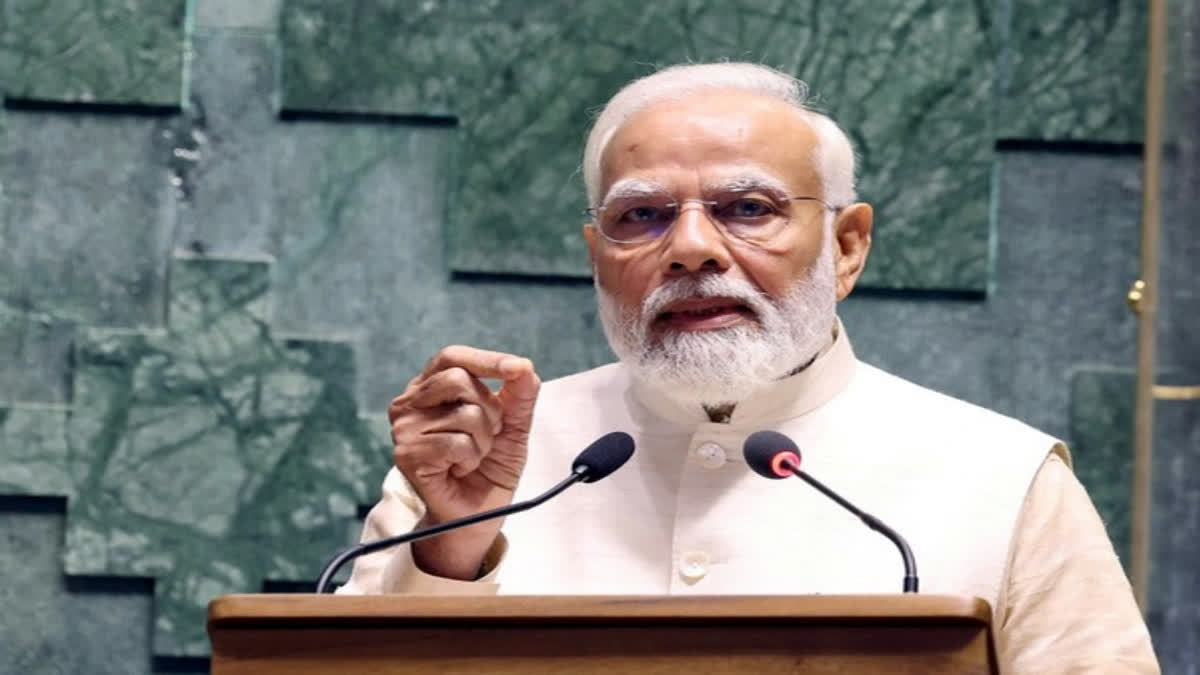
The report was unveiled by Cynthia McCaffrey, UNICEF India Representative, alongside Suruchi Bhadwal of The Energy Research Institute (TERI), UNICEF Youth Advocate Kartik Verma.
The report pointed out that by the 2050s, children will face dramatically increased exposure to extreme climate and environmental hazards and nearly eight times more children are expected to be exposed to extreme heatwaves compared to the 2000s.
This escalation of the climate and environmental crisis is compounded by the fact that more children will be living in today’s interpretation of lower-income countries, particularly in Africa, where resources to tackle these challenges may be limited without significant, strategic investments.
The report underscored that India, projected to house 350 million children by 2050, must navigate critical challenges to ensure their well-being and rights. Although India will see a decline of 106 million children compared to today, it will still account for 15% of the global child population, sharing this responsibility with China, Nigeria, and Pakistan.
“Decisions made today will shape the world our children inherit,” said McCaffrey. “Placing children and their rights at the centre of strategies and policies is essential for building a prosperous, sustainable future,” she said.
With nearly one billion children worldwide already exposed to high-risk climate hazards, India ranks 26th in the Children’s Climate Risk Index.
Indian children face acute risks from extreme heat, floods, and air pollution, particularly in rural and low-income communities.
The report predicts that climate crises will disproportionately impact their health, education, and access to essential resources like water.
Bhadwal emphasised the urgent need for climate action: “Children are vulnerable to direct and indirect impacts of climate change. By involving them as active agents of change, we can address these challenges collectively.”
Frontier technologies, including artificial intelligence, hold both promise and peril for children.
However, the digital divide remains stark, with only 26% of people in low-income countries connected to the internet, compared to over 95% in high-income countries.
The report called for inclusive technological advancements to bridge this gap and ensure safe, equitable access for children.
The report outlines the need for India to prioritise investments in health, education, skilling, and sustainable urban infrastructure.
Nearly half of India’s population is projected to live in urban areas by 2050, necessitating child-friendly and climate-resilient urban planning.
Kartik Verma, who represented UNICEF India at COP29, highlighted the importance of climate education: “Climate change is a child rights crisis. Empowering children with knowledge and tools can make them part of the solution.”
The report’s launch coincided with World Children’s Day, marked by illuminating iconic monuments across India, including Rashtrapati Bhavan, India Gate, and Qutub Minar, in UNICEF’s signature blue.
The #GoBlue campaign reinforced the importance of inclusion, equality, and non-discrimination for every child.