Jammu: The Bhagwati Nagar base camp in Jammu has become a hub of activity as the 62-day Amarnath Yatra gathers momentum. The camp is bustling with thousands of pilgrims embarking on their journey to the cave shrine in the south Kashmir Himalayas. To ensure that no devotee goes hungry, numerous ‘langars’ are serving as the lifeline for the pilgrims.
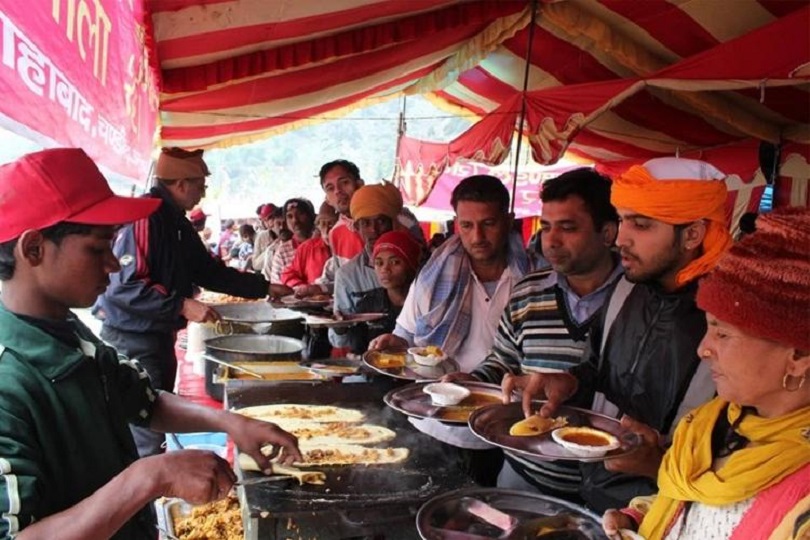
With 30 ‘langars’ (community kitchens) spread across Jammu, the needs of over 4,000 to 5,000 pilgrims arriving daily from various parts of the country are being met. The langars embody the spirit of generosity, offering free vegetarian meals that showcase culinary diversity from different regions.
“Various social and religious organisations have set up a number of langars in Jammu city, the highest number of them located at Bhagwati Nagar base camp. This is the service of God. We express our gratitude to them all,” Corporator Sanjay Baru said.
Pilgrims from different parts of the country, including locals, have come forward to establish langars for the Yatra.
“From morning till late at night, we provide simple yet satisfying dishes like dal, chawal and ambal, and other popular delicacies from Jammu to all pilgrims,” said Raj Kumar Gupta, the head of one ‘Bajrang langar’ set up at the base camp.
MP Jugal Kishore Sharma said, “Thousands of people contribute to this greatest act of humanity, providing free langars to pilgrims during the two-month-long Yatra.”
Hundreds of volunteers also work tirelessly round the clock for the community kitchens to ensure that every pilgrim’s needs are satisfied.
Rahul Kumar, a volunteer who hails from Madhya Pradesh, expressed his enthusiasm for the work at the langar. “Our dedicated team has eagerly awaited the start of the Amarnath Yatra. Now, we are serving pilgrims day and night, pouring our hearts into this selfless service,” he said.
Pilgrims have also expressed their satisfaction with the food management at the langars, appreciating the wide variety of options available at the base camp.
Narinder Kumar from Pune said, “The langars here have exceeded our expectations. The diverse range of dishes from various langars truly represents the unity of our nation and we are grateful for it.”
Apart from providing nourishing meals, the base camp also offers daily musical shows and cultural performances, providing entertainment and respite for the pilgrims.
“The musical shows and mandalis held here are a wonderful way to unwind after the arduous journey. They bring joy and create a sense of community among the pilgrims,” Sushma Rathore from Jaipur said.
The Baba Amarnath Bavalpuri Seva Mandal from Punjab has been setting up langars in Jammu and Kashmir for the past 23 years. They provide morning tea, lunch, evening tea, and dinner to pilgrims at the Chandanwari base camp.
Vinod Kumar, the head of the community kitchen, said he was honoured to serve the devotees of Lord Shiva and that providing meals and beverages is the langar’s contribution to the sacred pilgrimage.
The langars also strictly adhere to the government’s ban on over 40 food items during the Yatra, which was issued following directives of the shrine board.
“We diligently follow the orders of the shrine board, ensuring that no banned items are sold or prepared here,” said Rahul Kumar, the langar’s food in charge.
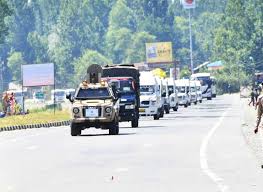
The 62-day annual pilgrimage to the 3,888-metre-high cave shrine in the south Kashmir Himalayas commenced from the twin tracks of Pahalgam in Anantnag district and Baltal in Ganderbal district on July 1. Over 65,000 pilgrims have paid obeisance at Amarnath, while over 36,000 pilgrims have left the Jammu base camp for the Kashmir Valley in seven batches.
Meanwhile. healthcare workers, including doctors and paramedical staff, are working round the clock at the 100-bedded specialty hospital at the Amarnath Yatra base camp here in Jammu and Kashmir’s Ganderbal district, ready to tackle any eventuality.
Last year, flash floods near the holy cave shrine killed 15 people and injured many others.
The J&K administration has set up two specialty hospitals at the base camps of Baltal, in Sonamarg area of central Kashmir’s Ganderbal, and Chandanwari, in Pahalgam area of south Kashmir’s Anantnag district, the twin routes for the Yatra.
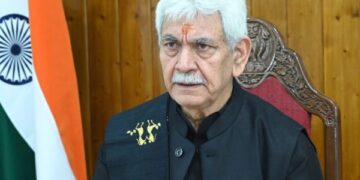
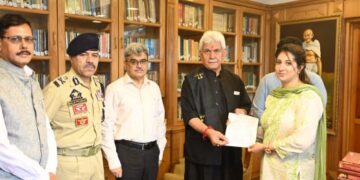
Both the hospitals — 100-bedded each — were built by the DRDO in a record time of 15 days. They were inaugurated by Lieutenant Governor Manoj Sinha on June 28.
The two makeshift and state-of-the-art hospitals are equipped with the most advanced equipment, separate blocks for doctors and nursing staff, ICU wards, oxygenated wards and triage areas and other required inventories for all critical medical care.
At the Baltal hospital, chief medical officer (CMO), Ganderbal, Dr Afroza Shah said the medical facility carries 100 beds, which include 30 residential beds and 70 clinical beds.
“Among these, 29 are oxygen beds and nine are triage beds. The Intensive Care Unit has four beds,” she informed.
The CMO said the staff working at the hospital has been acquired from all over the country and has been facilitated by the Ministry of Health and Family Welfare.
“Around 1,200 healthcare workers — both doctors and paramedical workers — including from outside Jammu and Kashmir, are working here,” Shah said.
The official said the hospital has two separate OPDs for male and female patients.
Abundant space is available in the form of a waiting area including washroom facilities. Fully functional and well-equipped laboratories are also available where all kinds of tests can be performed, she added.
Radiologists, X-rays, ultrasonography machines, and cardiac monitors are provided. A liquid medical oxygen plant has been installed here, the CMO said.
Shah said to cater to high-altitude-related sickness, oxygen is readily available at the facility including medium size, portable and bulk oxygen cylinders.
A total of 16 oxygen booths are set up along the 16-kilometre track, that is from Baltal to Domail — out of which six booths are permanent and the rest 10 are mobile, she said.
“Where the hill becomes steeper, four to five mobile booths are also provided along the stairs,” she added.
Patients and their attendants visiting the hospital expressed satisfaction with the facilities.
“All the facilities at the hospital are impressive. I am amazed after seeing such a fully-equipped hospital,” Kushal Goyel, a pilgrim from Chandigarh, said.
It is just like any other upscale private hospital, he added.
Zubair Gulzar from Kulgam said the facilities at the hospital were quite well and hygiene was also taken care of.
Asked whether the hospital was ready to deal with any kind of eventuality including of the magnitude like the last year, the CMO Ganderbal said the facility is fully equipped and prepared for dealing with any possibility including a natural disaster.
“To deal with any kind of natural disaster and to handle any emergency, we are fully equipped and prepared for that. A team of disaster management is also available here in order to tackle any kind of emergency,” she said.
Apart from the state-of-the-art hospital, there are four more hospitals along the Baltal axis — Base Hospital Baltal, Base Hospital Panchtarni, Base Hospital Lower Holy Cave, and Base Hospital Holy Cave — where all kinds of facilities are available to cater to any possibility including the breathlessness issues often confronted by the pilgrims, according to officials.