New Delhi: Constitutional morality can never be a ground for judicial review to decide essential religious practices and beliefs in a religion, the Centre told the Supreme Court on Wednesday while stressing that two previous verdicts on decriminalisation of consensual gay sex and adultery provisions based on this doctrine were “not a good law”.
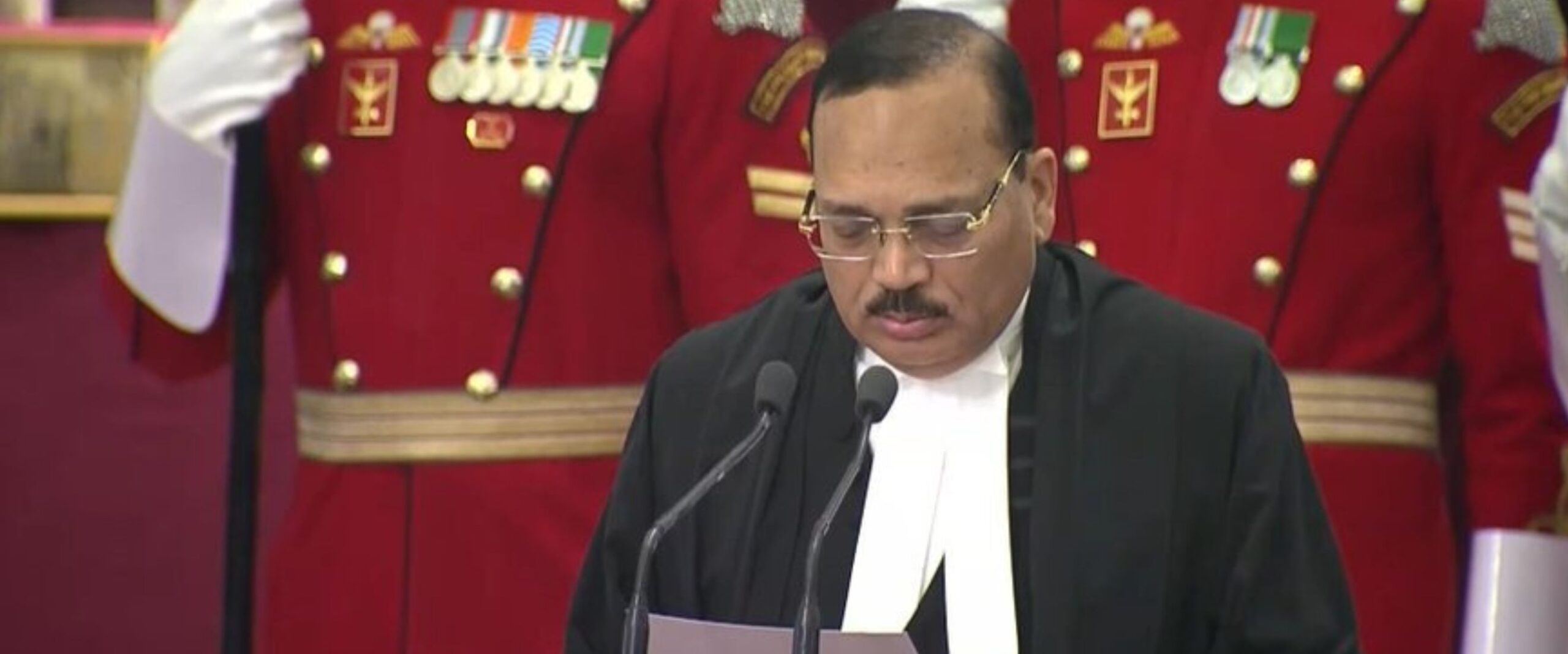
A nine-judge Constitution bench headed by Chief Justice Surya Kant was told by Solicitor General Tushar Mehta that constitutional morality is a “vague and subjective doctrine”, and the judgements based on it coupled with the views of foreign legal experts and precedents cannot be a basis to test the correctness of religious beliefs in the country.
Mehta submitted before the bench that the wrongly applied concept of constitutional morality by this court in some of the judgements later became the basis for deciding the 2018 Sabarimala case, permitting women of all age groups to enter the hilltop shrine in Keralam though the presiding deity Lord Ayappa is a Naishtika Brahmachari (perennial celibate).
The submission was made before the bench, also comprising Justices BV Nagarathna, MM Sundresh, Ahsanuddin Amanullah, Aravind Kumar, Augustine George Masih, Prasanna B Varale, R Mahadevan and Joymalya Bagchi, during the hearing on petitions related to discrimination against women at religious places, including the Sabarimala temple in Keralam, and on the ambit and scope of religious freedom practised by multiple faiths.
“Constitutional morality is a doctrine of political science how functionaries are to function, whether a person who is facing a serious criminal charge should step down or not – these are constitutional conventions but it is not one of the grounds to exercise judicial review. The judicial review has to be exercised as per the Constitution,” the SG told the court on the second day-long hearing.
He said if a religious practice relates to public order, morality and health, then the court can examine it, but the 2018 Sabarimala verdict said it will not go by societal morality, which is a mob morality, but by constitutional morality.
Justice Nagarathna said that public morality is from the point of view of the followers, and constitutional morality, which is very subjective, is a constitutional dharma.
The top court also questioned how persons who are not devotees of Lord Ayyappa could challenge the customs of the Sabarimala temple in Keralam.
The top court has framed seven questions on the scope of religious freedom. One of the questions was as to what is the scope and extent of the word ‘morality’ under Articles 25 and 26 of the Constitution, and whether it is meant to include Constitutional morality?”
Mehta submitted that the concept of constitutional morality is a sentiment and it is not a doctrine upon which a legislation or religious practice can be tested.
“In a country governed by democratic principles, it is always the majoritarian view which prevails, particularly when it comes to testing a law, because it is the majority which enacts the law.
“How do you then define morality on that basis? Thereafter, subsequently, there may be an evolution or change in understanding,” Mehta said.
Dealing with the issue of the scope of judicial review, Mehta referred to the top court’s judgements of 2018 in decriminalising adultery (Joseph Shine) and same-sex consensual relationships (Navtej Singh Johar).
CJI Kant said that the offence of adultery was rightly held unconstitutional, being one-sided and discriminatory, as only men were to be penalised while women indulging in the act were not.
Justice Nagarathna said the court need not have to go into the issue of constitutional morality and views of Western experts, and the provision of adultery could have been struck down for being violative of Article 14 of the Constitution.
“Some ‘Feminist Legal Methods’ by Katharine T. Bartlett, Harvard Law Review, is quoted in the adultery judgement which is a law under Article 141 of the Constitution and binds 140 crore Indians,” Mehta said, adding the court does not need to rely on Western legal experts and all it needs to refer to is Indian jurisprudence.
The CJI said that the Joseph Shine judgment cites Jeffrey A. Segal as a well-known American legal scholar. “Who is this Segal? He has almost been referred to here as if he is the second Dr BR Ambedkar?” the CJI said.
The SG criticised the foreign law and journals cited in the apex court judgement on adultery and said the courts should not base binding law on “individual and subjective views” drawn from selective academic writings, podcasts or foreign opinions.
He argued that treating constitutional morality as a standalone test for judicial review is “alien” to the doctrine of separation of powers and termed the concept as “vague”.
At the outset, the bench observed that it has the right and jurisdiction to hold what is a superstitious practice in a religion after the Centre submitted that a secular court cannot decide the issue as judges are experts in the field of law, not religion.
In September 2018, a five-judge bench, by a 4:1 majority verdict, had lifted the ban that prevented women between the ages of 10 and 50 from entering the Sabarimala Ayyappa temple and held that the centuries-old Hindu religious practice was illegal and unconstitutional.
Later, on November 14, 2019, another five-judge bench headed by the then CJI Ranjan Gogoi, by a majority of 3:2, referred the issue of discrimination against women at various places of worship to a larger bench.