
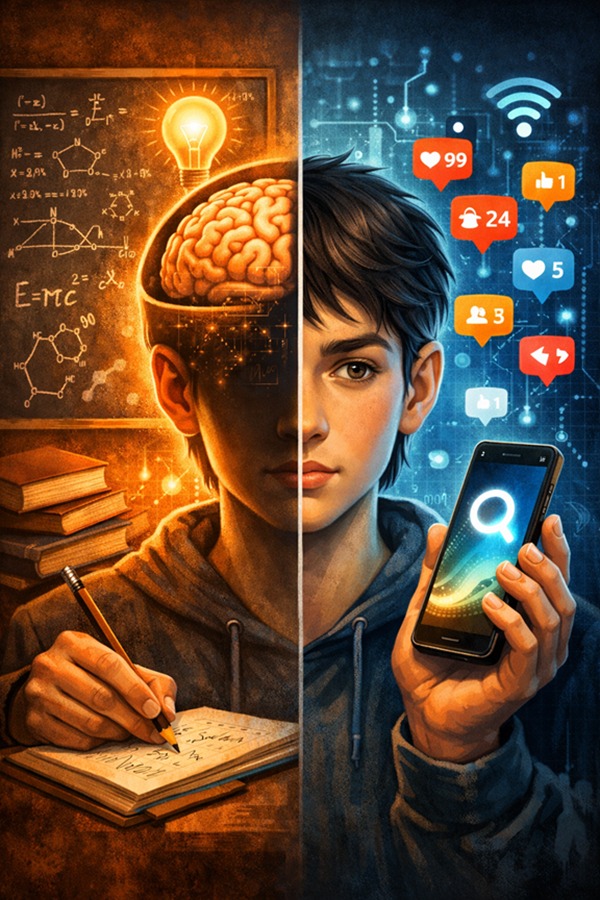
For decades, we believed that each new generation was smarter than the one before it. Better education, improved nutrition, and modern living were thought to steadily increase human intelligence. Today, that belief is being challenged. New research suggests that this long upward trend may have slowed, or even started to reverse.
Throughout most of the twentieth century, average IQ scores rose steadily. This pattern, known as the Flynn Effect, showed an increase of about three IQ points per decade. Experts linked this rise to wider access to education, better healthcare, and environments that encouraged problem-solving and abstract thinking. By these measures, each generation appeared smarter than the last.
Recent studies, however, paint a different picture. Research from several developed countries suggests that IQ scores have stopped rising and may now be declining. Early findings from 2026 indicate that Generation Z could be the first generation to score lower on average than Millennials and their parents. Scientists point to possible reasons such as heavy screen use, over-reliance on digital tools, and constant exposure to short, fast-moving online content that weakens focus and deep thinking.
Supporters of younger generations argue that intelligence should not be measured by IQ scores alone. Today’s youth have unmatched access to information and technology. They are highly skilled at using digital tools, learning new software quickly, and finding information efficiently. Education is more global and inclusive than ever before, opening doors that were once closed.
At the same time, concerns remain about the cost of this digital dependence. Research suggests that constant device use may reduce attention spans, memory, and reading skills. The problem is not technology itself, but how it is used. When thinking is outsourced to devices, the brain gets less practice.
This has led experts to promote a “brain-first, AI-later” approach. The idea is simple: technology should support human thinking, not replace it. Small daily habits can help keep the brain active. Writing by hand, doing simple math without a calculator, navigating without GPS, or memorizing poems and phone numbers all strengthen memory and focus. Learning a new language or musical instrument also helps build strong mental skills.
How artificial intelligence is used also matters. When AI is treated as a tool for ideas rather than ready-made answers, it can encourage creativity instead of weakening thinking. Questioning AI responses and asking for explanations rather than quick results keeps critical thinking alive.
Good digital habits are equally important. Limiting screen time, avoiding phones first thing in the morning, and focusing on one task at a time help protect attention and mental clarity. Physical exercise, spending time outdoors, and meeting people face to face improve brain health and emotional understanding, areas where machines cannot replace humans.
In the end, intelligence is not one single quality. Younger generations often excel at digital skills, while older generations may be better at practical problem-solving and working without technology. Some experts also believe that younger people show stronger social awareness and concern for global issues.
It is also possible that humanity has reached a natural limit in IQ growth. Improvements in health and education may no longer boost intelligence scores as they once did. Instead of becoming smarter overall, each generation may simply be developing the skills needed for its time.
So, is the next generation smarter? The answer depends on how intelligence is defined. While young people today have powerful tools and more information than ever, true intelligence may lie not in technology itself, but in how wisely it is used. Questioning AI outputs, cross-checking information, and asking “why” and “how” instead of simply “what.” This shifts the emphasis from passive consumption to active reasoning.
Digital hygiene also matters. Setting boundaries, such as limiting social media use, avoiding phones in the first hour of the day, and reducing multitasking, helps protect the brain’s capacity for deep work. Physical exercise, face-to-face social interaction, and time spent in nature further support cognitive health by improving memory, emotional intelligence, and focus, areas no algorithm can fully replicate.
At the heart of the generational intelligence debate lies a crucial distinction: intelligence is not a single, fixed trait. Younger generations often excel at digital problem-solving and rapid information processing, while older generations may display greater personal resourcefulness, repairing physical objects, navigating without digital aids, or solving problems through experience rather than search engines. Some researchers also suggest that Generation Z may lead in emotional intelligence, showing heightened social awareness and concern for global and community issues.
Another possibility is that humanity has reached a natural cognitive ceiling. Gains once driven by better nutrition and basic education may no longer deliver dramatic increases in measured IQ. Instead of becoming universally “smarter,” generations may simply be adapting to the specific demands of their time.
Ultimately, whether the next generation is smarter depends entirely on how intelligence is defined and measured. While today’s youth are undeniably better equipped with powerful tools and unprecedented access to information, this does not automatically translate into higher intelligence in the traditional sense. The real question may not be whether intelligence is rising or falling, but whether societies can learn to use technology in ways that strengthen, rather than substitute, the human mind.
The author is a painter, writer, and senior marketing professional with more than 25 years of experience working with leading semiconductor companies and can be reached at aijazqaisar@yahoo.com.