New Delhi: India is expected to witness a warmer February with below normal rains, particularly in the Himalayan region where a drier winter can be linked to climate change, the India Meteorological Department (IMD) said on Saturday.
Addressing a press conference here, IMD Director General Mrutyunjay Mohapatra said monthly rainfall in February for the country as a whole is expected to be below normal and both the minimum and maximum temperatures are expected to remain above normal.
He said the above-normal temperatures may accelerate crop growth and shorten crop duration of rabi crops, particularly in northwest and central India.
“Crops like wheat and barley may experience forced maturity, leading to sterile spikelets and chaffy grains, resulting in yield reduction,” the top meteorologist said.
He said that monthly rainfall in February over Northwest India — comprising East Uttar Pradesh, West Uttar Pradesh, Uttarakhand, Haryana, Chandigarh and Delhi, Punjab, Himachal Pradesh, Jammu and Kashmir and Ladakh — is most likely to be below normal.
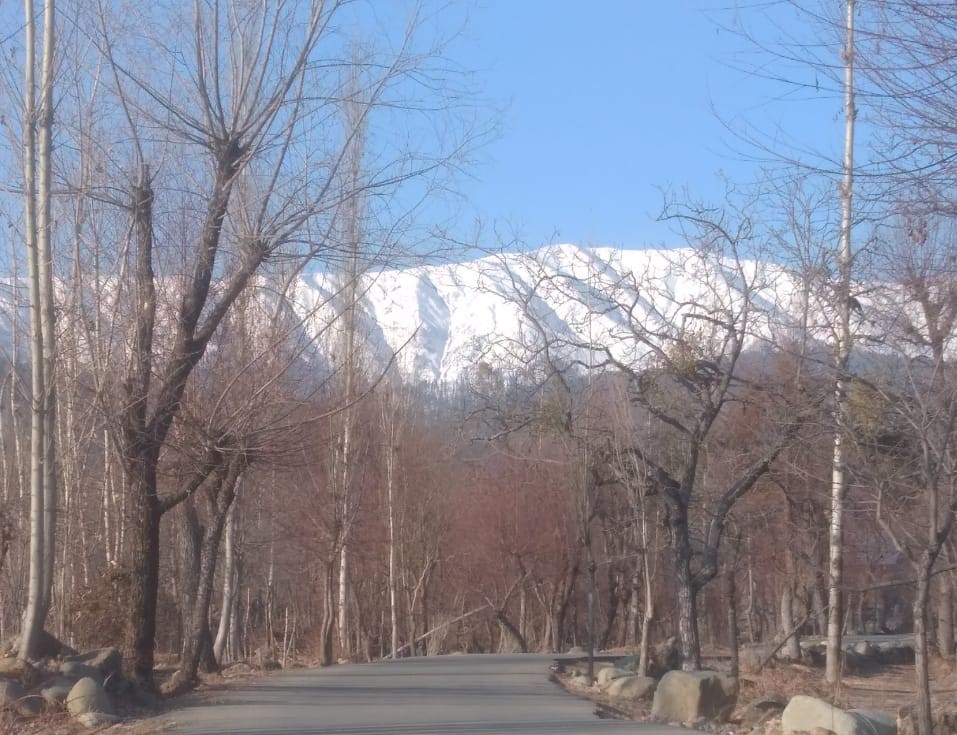
The absence of western disturbances in December and most of January, he said, had resulted in drier winters in the western Himalayan region, which experienced snowfall only after January 20.
“Over the period of time, rainfall over western Himalayas has shown a decreasing trend, which has been attributed to climate change by studies carried out by the IMD and other institutes,” he said.
However, he said, it was difficult to point out which particular aspect of climate change was the cause of the decline in rainfall in the western Himalayan region.
“Attribution studies are very difficult not only in India, but also the world over,” Mohapatra said.
He said two back-to-back western disturbances brought rains to the western parts of the country — regions west of the 80 degrees east on the longitude — while the eastern regions remained dry.
A depression in the Bay of Bengal in January, which travelled to northeast Sri Lanka, kept the eastern parts of the country, except the northeastern region, without rains.
Mohapatra said the minimum temperatures in February are likely to be above normal over most parts of the country, except some regions of south peninsular India, where normal minimum temperatures are expected.
Similarly, maximum temperatures are also likely to remain above normal over most parts of the country, barring isolated regions of central India and southern peninsular India, where normal maximum temperatures are likely.
Chillai Khurd signals milder cold ahead in Kashmir
The night temperature settled below the freezing point across Kashmir, but rose in most areas, officials said, as Saturday marks the beginning of ‘Chillai Khurd’ and end of the harshest winter period.
The meteorological department, however, has forecast light to moderate rain or snow, especially in the higher reaches, they said.
The minimum temperature in Srinagar city settled at minus 0.1 degrees Celsius on Friday night, down from the previous night’s 1.3 degrees Celsius. This was 0.5 degrees above the seasonal normal.
While the temperature data for several places, including Sonamarg in Ganderbal district, was not available, the ski resort of Gulmarg in Baramulla district was the coldest recorded place in Jammu and Kashmir at minus 6.5 degrees Celsius — up from the previous night’s minus 10.6 degrees.
Officials said Pahalgam tourist resort in south Kashmir recorded a low of minus 2.6 degrees Celsius, up from minus 5.3 degrees Celsius the previous night.
In Qazigund, the minimum temperature settled at minus 2.2 degrees, up from minus 0.3 degrees, while Kokernag and Kupwara recorded lows of minus 3.0 degrees and minus 2.5 degrees Celsius, respectively.
A 20-day ‘Chillai Khurd’ (small cold) began on Saturday, after the culmination of the 40-day harshest winter period, ‘Chillai-Kalan’. Chillai Khurd will be followed by the 10-day ‘Chillai Bachha’ (baby cold).
The meteorological department has said the weather will remain cloudy, and there is a possibility of light to moderate rain or snow, especially in the higher reaches, with thunder or gusty winds at many places on Saturday and Sunday.
Light rain, with snow in the higher reaches, is possible at scattered to many places on February 2-3, officials said.