JAMMU: For decades, governance in Jammu & Kashmir was shaped by its geography—mountains, remoteness and access gaps that often made service delivery slow and uneven. Today, that geography is no longer a constraint.
Over the past few years, the Union Territory has witnessed not incremental digitisation, but its first comprehensive IT-led governance transformation—one that has unfolded steadily, strategically and with enduring impact.
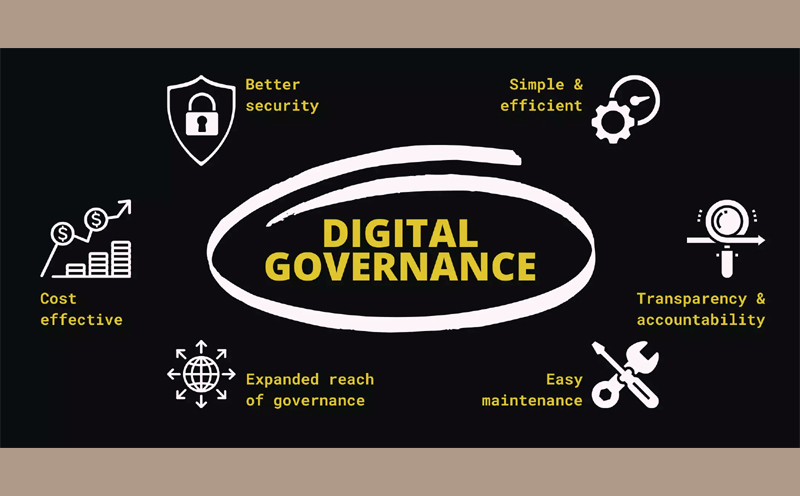
This transformation is not defined by isolated mobile applications or stand-alone portals. Rather, it marks a systemic shift in the way governance is conceived, delivered and monitored, with technology now embedded into the core architecture of administration.
The Architecture of Change
At the heart of this transformation are 35 pioneering IT interventions implemented across 20 departments, developed in close partnership with BISAG-N. These initiatives have replaced fragmented, paper-intensive processes with integrated digital platforms that are real-time, transparent and citizen-centric.
What distinguishes Jammu & Kashmir’s IT journey is not the scale alone, but the manner in which technology has been deployed—not as an add-on, but as a redesign of governance itself. From agriculture and healthcare to welfare delivery, grievance redressal and industrial planning, departments now function on shared dashboards, live data streams and outcome-based monitoring systems.
This decisive shift—from file movement to field visibility—marks the true inflection point in governance over the last two years.
Agriculture Goes Digital: Farmers at the Centre
The transformation is perhaps most visible in agriculture, a sector that sustains a significant portion of Jammu & Kashmir’s population. The Daksh Kisan Portal, India’s first Learning Management System (LMS) dedicated exclusively to farmers, represents a quiet yet path-breaking intervention.
For the first time, farmers have access to structured, certified digital learning modules tailored to local crops, climate conditions and farming practices. Through videos, assessments and progress tracking, Daksh Kisan moves beyond advisories to genuine capacity building—empowering farmers with knowledge rather than instructions and bridging long-standing gaps in extension services.
This initiative is complemented by Kisan Khidmat Ghar (KKG) and the Kisan Sathi 360 Dashboard, which together integrate data from multiple agricultural schemes under the Holistic Agriculture Development Programme (HADP). Administrators and farmers alike now have a unified, real-time view of progress, outputs and outcomes.
Processes that once required multiple visits, registers and follow-ups are now visible on a single screen, making agriculture governance more predictable, responsive and accountable.
Empowering Youth, Enterprise and Innovation
IT interventions have also reshaped youth engagement with the economy. The digital ecosystem under Mission YUVA goes far beyond online applications. Its AI-based Detailed Project Report (DPR) generator—a national first—enables aspiring entrepreneurs to convert ideas into structured, bankable business plans with minimal procedural friction.
For youth in remote and rural blocks, this translates into seamless access to financial assistance, skill development modules, career counselling and market linkages—without navigating multiple bureaucratic layers. The result is not only ease of doing business, but also enhanced confidence to participate in economic activity.
Healthcare, Grievances and Citizen-Centric Governance
In healthcare, JK SEHAT has brought tele-consultation, hospital discovery and service availability directly to citizens’ fingertips, particularly benefiting populations in far-flung areas. Telemedicine services, geo-tagged health facilities and multilingual access have significantly reduced travel, waiting times and uncertainty for patients.
Similarly, JK Samadhan, the unified grievance redressal and monitoring system, has institutionalised accountability across departments. Citizens no longer pursue offices for redressal; grievances are digitally logged, tracked and reviewed through centralized dashboards, enabling senior officers to identify systemic issues rather than isolated complaints.
These platforms signify more than convenience—they represent a shift in governance power dynamics by placing information, visibility and accountability firmly in the hands of citizens.
AI, Geospatial Intelligence and Smart Administration
A defining feature of Jammu & Kashmir’s IT transformation is its calibrated adoption of AI-driven governance tools. From AI-based GST fraud detection systems to intelligent search engines that allow officials to query multiple databases through natural language, technology is increasingly being used to anticipate risks, prevent leakages and support informed decision-making.
Advanced geospatial mapping of industrial assets, healthcare facilities, welfare coverage and infrastructure has introduced a level of planning precision rarely seen at the sub-national level. Policy decisions are now guided by live, location-specific data rather than assumptions.
Several of these interventions are already being recognised as unique in the country and readily replicable by other states and Union Territories.
A Greener Footprint of Governance
Beyond efficiency, the digital shift has also delivered environmental gains. The transition to paperless systems, online surveys, digital certifications, tele-consultations and remote monitoring has led to a substantial reduction in carbon footprints.
Fewer physical visits, reduced paperwork and optimised logistics together represent a quieter yet meaningful contribution to sustainable governance—an outcome seldom associated with administrative reform, but deeply embedded in Jammu & Kashmir’s digital transformation.
A Journey Still Unfolding
Officials describe the current phase as only the beginning. With robust foundational platforms now firmly in place, the next phase will focus on deeper AI integration, predictive analytics, enhanced cross-departmental interoperability and more anticipatory governance models.
What Jammu & Kashmir has achieved over the past two years is not a digital makeover, but a structural reset of governance. From being viewed as a late entrant in e-governance, the Union Territory is now advancing on the IT path like never before—setting benchmarks that resonate well beyond its borders.The revolution may be quiet, but its impact is unmistakable.